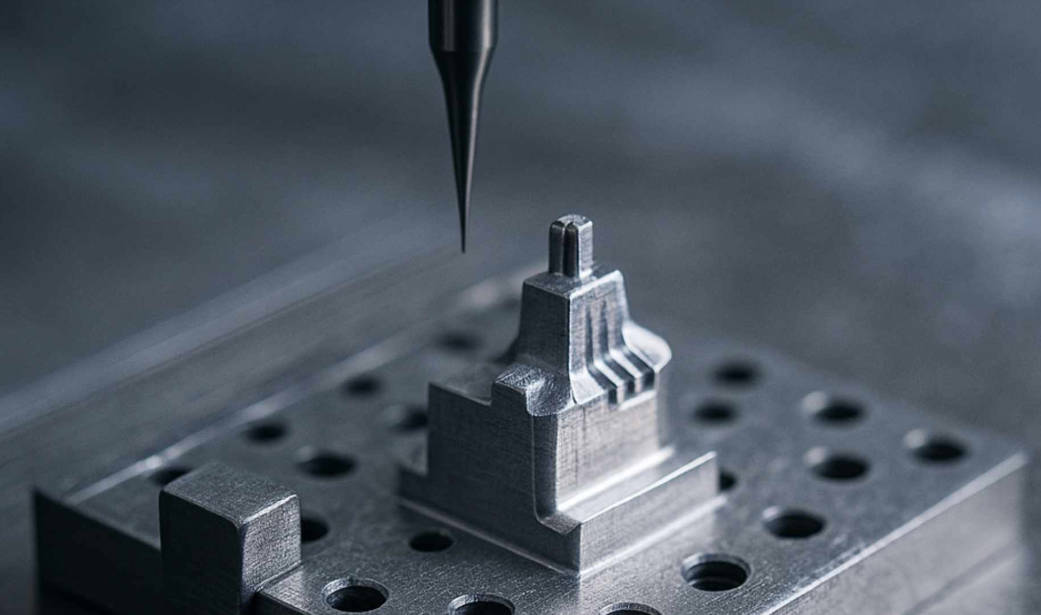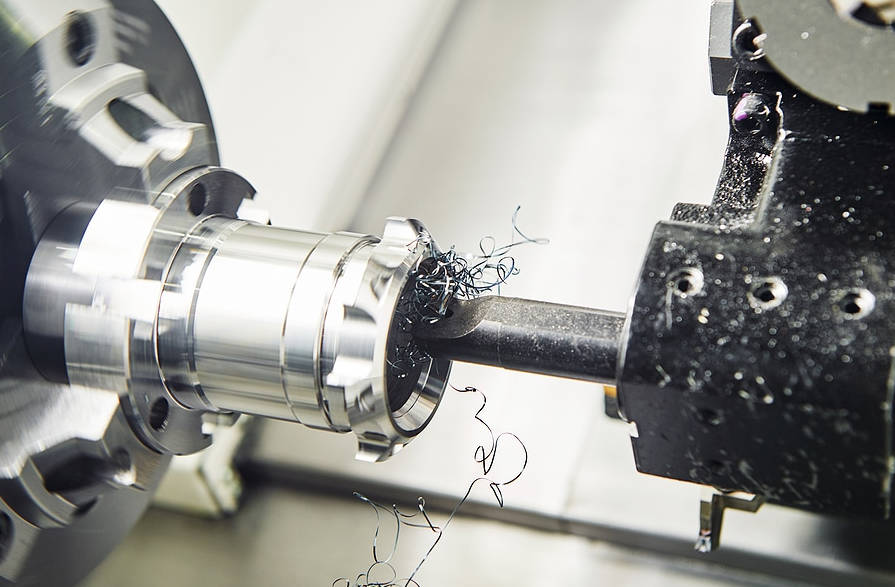
CNC machining cost factors include material selection, part complexity, machining time, tolerances, surface finish, quantity, fixture requirements, inspection needs, and delivery schedule. For custom CNC parts, the price is not based only on size or weight. A small part with tight tolerances, difficult materials, deep features, and complex finishing can cost more than a larger but simpler component.
For buyers, understanding CNC machining price factors helps avoid unclear quotations, unnecessary design cost, and production delays. It also helps engineers and procurement teams make better decisions before sending drawings to suppliers.
When sourcing custom CNC parts, the goal should not be to choose the lowest price immediately. The better goal is to understand what drives the cost, identify which requirements are truly necessary, and work with a supplier that can balance function, manufacturability, quality, and delivery.
HKAA Industrial supports custom CNC machining for buyers who need metal and plastic parts based on drawings, samples, or 3D models. For projects involving complex components or parts with both turned and milled features, CNC turning and milling machining can also be considered during process planning.

Why CNC Machining Prices Vary So Much
CNC machining is a subtractive manufacturing process. Material is removed from a solid block, bar, plate, casting, or other stock form to create the final part. The final price depends on how much material must be removed, how difficult the material is to machine, how many setups are required, and how tightly the final dimensions must be controlled.
Two parts with similar size may have very different costs because their machining requirements are different.
For example:
| Part Example | Why Cost May Be Different |
| Simple aluminum plate with holes | Easy setup, common material, standard tolerances |
| Thin-wall aluminum housing | More clamping control, deformation risk, longer machining time |
| Stainless steel shaft with tight diameter tolerance | More tool wear control and inspection required |
| Brass connector with threads and side holes | Requires turning, drilling, threading, and possibly secondary operations |
| Complex CNC part with multiple surfaces | More setups, more programming, more inspection |
| Polished stainless steel part | Requires machining plus finishing and cosmetic control |
CNC machining price is mainly driven by the manufacturing effort required to make the part correctly and repeatably.
This is why a professional quotation should consider drawings, material, quantity, tolerance, finish, inspection, and application—not only part dimensions.
Main CNC Machining Cost Factors
The following table summarizes the major factors that affect custom CNC parts cost.
| Cost Factor | How It Affects Price | Buyer’s Practical Advice |
| Material | Different materials vary in price, machinability, tool wear, and waste | Choose material based on function, not habit |
| Part complexity | Deep pockets, thin walls, slots, undercuts, and tight spaces increase machining time | Simplify non-functional features where possible |
| Tolerances | Tight tolerances require more careful setup, slower finishing, and inspection | Apply tight tolerances only to critical dimensions |
| Quantity | Setup cost is shared across more parts when quantity increases | Ask for price breaks at different quantities |
| Machining time | Longer cutting time increases labor, machine use, and tool wear | Reduce unnecessary material removal |
| Setup and fixturing | Multiple setups or custom fixtures add engineering and production time | Design parts with stable locating surfaces |
| Surface finish | Anodizing, polishing, plating, painting, and bead blasting add secondary processes | Define finish requirements early |
| Inspection | Special reports, CMM inspection, or critical checks add quality control time | Specify only necessary inspection requirements |
| Lead time | Urgent delivery may require priority scheduling | Provide realistic delivery expectations |
| Packaging and shipping | Finished or delicate parts may require protective packaging | Clarify shipping and packaging requirements |
1. Material Selection
Material is one of the first CNC machining cost factors buyers should consider. The material affects raw stock price, cutting speed, tool wear, dimensional stability, surface finish, and scrap risk.
Common CNC machining materials include aluminum, stainless steel, carbon steel, brass, copper, titanium, POM, PEEK, Nylon, ABS, and other engineering plastics.
| Material | Cost Impact | Common Considerations |
| Aluminum 6061 | Usually economical and machinable | Common for housings, brackets, prototypes, fixtures |
| Aluminum 7075 | Higher material cost than 6061 in many cases | Used for stronger lightweight parts |
| Stainless Steel 304 / 316 | More demanding than aluminum | Corrosion resistance, strength, tool wear control |
| Brass | Good machinability in many applications | Fittings, connectors, electrical parts |
| Copper | Can be more challenging to machine cleanly | Conductivity, thermal applications |
| Titanium | More difficult and time-consuming | Aerospace, medical, high-performance applications |
| POM / Delrin | Stable engineering plastic | Gears, bushings, sliding parts |
| PEEK | High-performance plastic, usually higher material cost | Medical, chemical, high-temperature applications |
| Nylon | Useful for wear-resistant plastic parts | Moisture behavior and stability should be considered |
Changing material can significantly change CNC machining price, even when the part design remains the same.
Buyers should avoid selecting an expensive or difficult material unless the application requires it. In many projects, a more machinable material can reduce cost while still meeting the functional requirement.
2. Part Geometry and Design Complexity
Part geometry directly affects machining time, setup difficulty, tool access, and scrap risk. A simple block or shaft is usually easier to machine than a part with deep cavities, thin walls, small radii, complex slots, or multiple angled surfaces.
High-cost design features may include:
- Deep pockets
- Thin walls
- Long slender shafts
- Sharp internal corners
- Very small holes
- Deep threaded holes
- Narrow slots
- Complex undercuts
- Multiple setups
- Hard-to-reach surfaces
- Large material removal volume
- Cosmetic surfaces on many sides
The more difficult it is for tools to reach and machine the required features, the higher the custom CNC parts cost will usually be.
For example, sharp internal corners often require very small tools or additional processes because standard milling cutters create rounded internal corners. Deep pockets may need longer tools, which can increase vibration and reduce cutting efficiency. Thin walls may deform during clamping or machining, requiring more careful process control.
3. Machining Time
Machining time is one of the most direct cost drivers. It includes roughing, finishing, drilling, tapping, threading, contouring, deburring, and any additional operations needed to complete the part.
Machining time increases when:
- A large amount of material must be removed.
- The material is hard or difficult to cut.
- The part requires slow finishing passes.
- The geometry needs multiple tools.
- The part has many holes or threads.
- Surface finish requirements are demanding.
- Tolerances require repeated checks and adjustments.
For buyers, one effective way to reduce machining cost is to avoid unnecessary material removal. If a pocket, groove, or relief feature does not serve a real function, simplifying it may reduce cycle time.
4. Tolerances and Precision Requirements
Tolerance is one of the most important CNC machining cost factors. A tolerance defines the acceptable variation from the nominal dimension. Tight tolerances require more stable machines, better fixtures, controlled tools, careful inspection, and sometimes slower machining.
Not every dimension needs tight tolerance. A cost-effective drawing separates critical dimensions from general dimensions.
| Feature Type | Tolerance Strategy |
| Bearing seat | May require tighter tolerance |
| Shaft diameter | Often functionally important |
| Locating hole | May need positional control |
| Sealing surface | May need tight flatness or surface finish |
| Clearance hole | Usually does not need very tight tolerance |
| Cosmetic outer edge | Often suitable for general tolerance |
| Non-contact surface | Avoid over-specification if function does not require it |
Over-specifying tolerances is one of the most common reasons CNC machining quotes become unnecessarily expensive.
If a dimension does not affect fit, movement, sealing, alignment, or product performance, it may not need a tight tolerance. Buyers should review drawings before RFQ and mark only truly critical features as tight tolerance requirements.
5. Setup, Fixturing, and Workholding
Setup refers to preparing the machine, tools, fixtures, workholding, datum references, and program before machining begins. Even if only one part is made, setup time still exists.
Fixturing cost increases when:
- The part has an unusual shape.
- It cannot be held easily.
- Multiple sides need machining.
- The part is thin or easy to deform.
- The part requires custom jaws or fixtures.
- Datum control is critical.
- Feature relationships must be tightly controlled.
For simple parts, standard vises, chucks, or clamps may be enough. For complex parts, a custom fixture may be needed to ensure stable clamping and repeatability.
When a part has both turned and milled features, CNC turning and milling services may help reduce secondary setups in some applications. This can be useful for shafts with flats, connectors with side holes, bushings with slots, and other complex CNC components.
6. Quantity and Batch Size
Quantity affects unit price because setup and programming costs are shared across the batch. A one-piece order may have a high unit cost because the setup cost is distributed over only one part. A larger batch can often reduce the unit price.
| Quantity Situation | Cost Behavior |
| One prototype | High setup cost per part |
| Small batch | Setup cost is shared, unit price may decrease |
| Medium batch | Better material planning and process stability |
| Repeat order | Existing process knowledge may reduce communication and setup risk |
| Large batch | Tool wear, inspection planning, and production scheduling become more important |
However, larger quantity does not always reduce price dramatically if the part is complex, the material is expensive, or inspection requirements are strict.
Buyers should ask for quotation at multiple quantities, such as 1 piece, 10 pieces, 50 pieces, 100 pieces, or 500 pieces. This helps compare cost structure and decide the most practical purchasing quantity.
7. Surface Finish and Post-processing
Surface finish can significantly affect CNC machining cost. Some parts only need an as-machined finish, while others require anodizing, polishing, bead blasting, passivation, plating, painting, powder coating, or other surface treatments.
| Surface Finish | Cost Impact | Common Use |
| As-machined finish | Usually lower cost | Internal parts, functional prototypes |
| Bead blasting | Adds secondary processing | Matte appearance, aluminum housings |
| Anodizing | Adds treatment and color control | Aluminum parts, corrosion resistance |
| Hardcoat anodizing | More demanding than standard anodizing | Wear-resistant aluminum parts |
| Polishing | Labor and process intensive | Stainless steel, appearance or smoothness |
| Passivation | Additional chemical treatment | Stainless steel corrosion resistance |
| Plating | Adds coating process and thickness control | Conductivity, corrosion resistance, appearance |
| Painting / powder coating | Adds coating and masking requirements | Enclosures, visible parts, outdoor components |
Surface treatment may also affect dimensions. Coating thickness, polishing material removal, or masking requirements should be clarified before production.
If tight tolerance areas must remain untreated, the drawing should identify masking areas clearly.
8. Inspection and Quality Requirements
Inspection is essential for precision CNC machining, but different inspection requirements create different costs. Basic dimensional checks are not the same as full inspection reports, CMM inspection, material certification, first article inspection, or process documentation.
Inspection cost increases when:
- Many dimensions require measurement.
- Tight tolerances must be verified.
- CMM inspection is required.
- Material certificates are needed.
- Surface roughness reports are required.
- Batch traceability is required.
- Every part needs full inspection.
- Special gauges or fixtures are needed.
For critical parts, inspection requirements are necessary. But for non-critical parts, excessive inspection can add cost without improving practical function.
A good RFQ should clearly state which dimensions need inspection reports and which dimensions can be checked according to standard quality control.
9. Lead Time and Delivery Requirements
Urgent delivery can affect CNC machining price because it may require priority scheduling, overtime, faster material sourcing, express finishing, or faster shipping.
Lead time is affected by:
- Material availability
- Machine schedule
- Programming complexity
- Fixture preparation
- Machining time
- Surface treatment
- Inspection
- Packaging
- Shipping method
If buyers need urgent delivery, they should provide complete drawings, material requirements, quantity, finish, and inspection needs at the beginning. Incomplete RFQs slow down quotation and production.
10. Drawing Completeness and Engineering Communication
An incomplete drawing can increase cost because the supplier must ask more questions, make assumptions, or include risk in the quotation.
A complete CNC machining quotation package should include:
| Information | Why It Matters |
| 3D CAD file | Helps review geometry and generate toolpaths |
| 2D drawing | Defines tolerances, threads, datums, and surface finish |
| Material grade | Affects material cost and machining strategy |
| Quantity | Determines setup cost allocation |
| Surface treatment | Affects finishing cost and dimensional planning |
| Critical dimensions | Helps control functionally important features |
| Application | Helps supplier identify risk areas |
| Inspection requirements | Clarifies reporting and measurement needs |
| Delivery target | Helps production scheduling |
| Packaging requirements | Protects finished parts during shipping |
A clear RFQ package can reduce quotation uncertainty and help suppliers provide a more accurate CNC machining price.
How to Reduce CNC Machining Cost Without Sacrificing Function
Reducing cost does not mean reducing quality. It means removing unnecessary complexity while protecting the features that matter.
Practical Cost Reduction Tips
| Cost Reduction Method | How It Helps |
| Use practical tolerances | Reduces unnecessary precision machining and inspection |
| Simplify geometry | Shortens machining time and reduces tool changes |
| Avoid sharp internal corners | Allows larger tools and faster milling |
| Reduce deep pockets where possible | Improves tool stability and machining efficiency |
| Choose machinable materials | Reduces tool wear and cycle time |
| Standardize hole sizes | Reduces tool changes |
| Clarify surface finish | Avoids rework and late finishing changes |
| Order practical quantities | Spreads setup cost across more parts |
| Provide complete drawings | Reduces communication delay and quotation risk |
| Confirm critical features | Helps supplier focus quality control correctly |
For example, if a part has a non-functional pocket that removes a large amount of material, redesigning the feature may reduce machining time. If every dimension has a tight tolerance by default, reviewing functional requirements may reduce inspection and finishing cost.
Low Price vs Cost-effective CNC Machining
The lowest CNC machining price is not always the most cost-effective option. A very low quote may exclude surface finish, inspection reports, packaging, material certification, or proper tolerance control.
Buyers should compare quotations based on:
- Material grade
- Tolerance assumptions
- Surface finish included or excluded
- Inspection scope
- Delivery time
- Packaging
- Communication quality
- Supplier experience with similar parts
- Ability to handle design changes
- Support for repeat orders
A slightly higher quotation may be more reliable if it includes clearer process planning, inspection, finishing, and communication. For B2B procurement, the real cost includes not only the part price but also rework risk, delivery delay, assembly failure, and supplier management time.
How to Choose a CNC Machining Supplier for Cost Control
A capable CNC machining supplier should help buyers understand cost drivers instead of only providing a number. The supplier should be able to review drawings, identify manufacturability risks, suggest practical tolerance changes, and explain how material, structure, surface finish, and quantity affect the quote.
| Supplier Evaluation Point | What Buyers Should Check |
| Drawing review ability | Can the supplier identify cost-increasing features? |
| Process capability | Can they handle milling, turning, and complex CNC parts? |
| Material experience | Can they machine the required metal or plastic efficiently? |
| Tolerance knowledge | Can they explain which features need precision control? |
| Surface treatment coordination | Can they manage anodizing, polishing, plating, or coating? |
| Inspection capability | Can they check critical dimensions properly? |
| Communication quality | Can they explain quotation details clearly? |
| Batch flexibility | Can they support prototypes, small batches, and repeat orders? |
HKAA Industrial provides custom CNC machining support for buyers who need machined parts based on drawings, samples, or project requirements. For complex parts involving multiple operations, the engineering discussion may include process selection, material review, tolerance control, and surface treatment planning.
Common Mistakes That Increase Custom CNC Parts Cost
Mistake 1: Adding Tight Tolerances Everywhere
Tight tolerances should be used only for functional features. Applying them to every dimension increases cost without necessarily improving performance.
Mistake 2: Choosing Expensive Material Without Functional Need
A high-performance material may be necessary in some applications, but not every part needs it. Material should be selected based on load, environment, corrosion resistance, temperature, and wear requirements.
Mistake 3: Ignoring Machining Access
If tools cannot easily reach a feature, machining becomes slower and more expensive. Deep slots, sharp corners, and narrow internal features often increase cost.
Mistake 4: Deciding Surface Finish Too Late
Surface treatment affects cost, lead time, and sometimes dimensions. It should be defined before quotation, not after machining.
Mistake 5: Sending Incomplete Drawings
A 3D model alone may not define tolerance, threads, surface finish, material grade, or inspection requirements. A complete drawing package helps reduce quotation uncertainty.
Mistake 6: Comparing Quotes Without Checking Scope
One supplier may include finishing and inspection, while another may quote machining only. Buyers should compare the same scope before choosing.
FAQ
What are the main CNC machining cost factors?
The main CNC machining cost factors include material, part complexity, machining time, tolerances, quantity, setup, surface finish, inspection requirements, lead time, and packaging or shipping needs.
Why is CNC machining expensive for some custom parts?
CNC machining becomes more expensive when parts require difficult materials, tight tolerances, complex geometry, multiple setups, long machining time, special surface finishing, or detailed inspection.
How can I reduce CNC machining cost?
You can reduce CNC machining cost by simplifying non-functional features, using practical tolerances, choosing machinable materials, avoiding unnecessary deep pockets or sharp corners, ordering practical quantities, and providing complete drawings.
Does material affect CNC machining price?
Yes. Material affects raw stock cost, machinability, cutting speed, tool wear, dimensional stability, and finishing requirements. Aluminum is often more machinable than stainless steel or titanium, while high-performance plastics such as PEEK may have higher material cost.
Do tight tolerances increase custom CNC parts cost?
Yes. Tight tolerances usually increase cost because they require more careful setup, stable fixtures, controlled tooling, slower finishing in some cases, and more detailed inspection.
Why does quantity affect CNC machining unit price?
Quantity affects unit price because setup, programming, and process preparation costs are shared across more parts. A one-piece prototype usually has a higher unit cost than a small or medium batch.
What should I send to get an accurate CNC machining quote?
You should send a 3D CAD file, 2D drawing, material grade, quantity, tolerance requirements, surface finish, inspection needs, delivery target, and any application information that helps the supplier understand critical features.
Conclusion
CNC machining cost is affected by many connected factors, including material, design complexity, machining time, tolerance, setup, quantity, surface finish, inspection, and lead time. For buyers, understanding these cost drivers makes it easier to prepare drawings, compare quotations, and reduce unnecessary manufacturing expense.
The most effective way to control custom CNC parts cost is not simply to demand a lower price. It is to design parts with manufacturability in mind, define only necessary tight tolerances, select suitable materials, clarify surface finish requirements, and provide complete RFQ information.
HKAA Industrial supports custom CNC machining for buyers who need practical engineering communication, machining process review, and production-oriented support for custom metal and plastic parts.