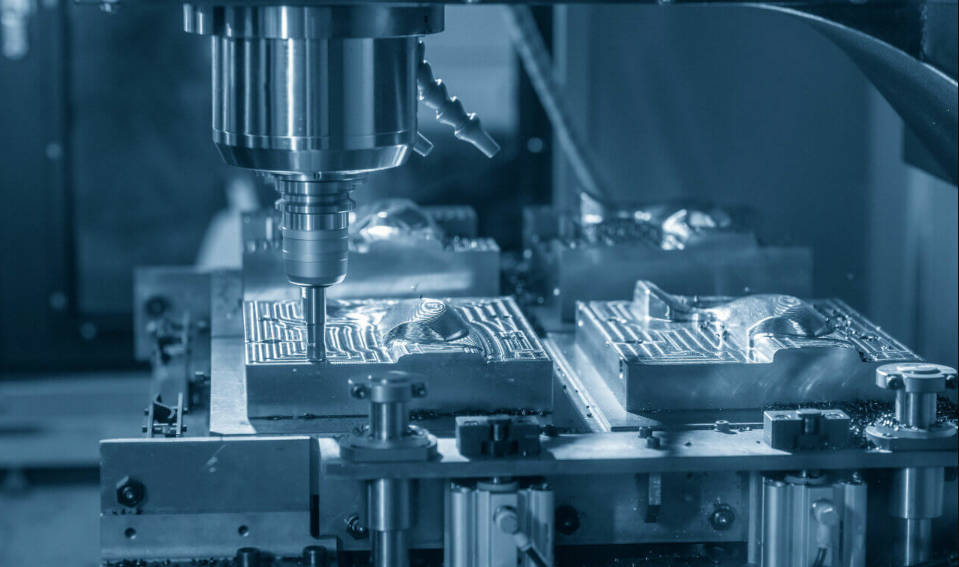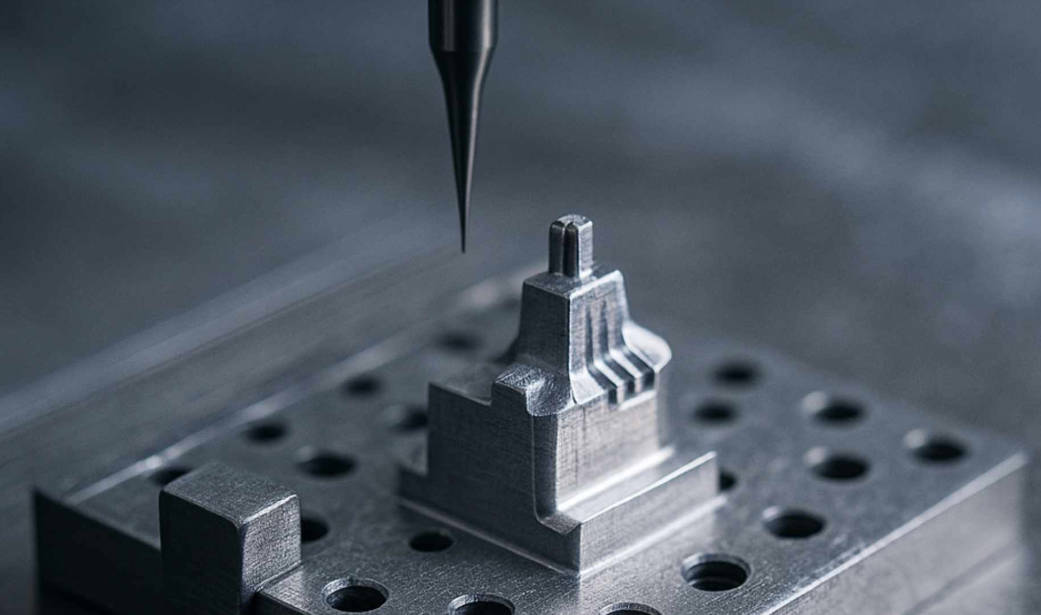
Plastic CNC machining is suitable for prototypes, low-volume parts, functional components, jigs, fixtures, and engineering plastic parts that require accurate dimensions without mold tooling. Compared with injection molding, CNC machining is often more flexible when the quantity is low, the design is still changing, or the part needs to be made from a specific engineering plastic such as POM, PEEK, ABS, Nylon, PTFE, PP, or acrylic.
For B2B buyers, plastic CNC machining is not just a substitute for metal machining. Plastic materials behave differently during cutting, clamping, cooling, and inspection. Material selection, wall thickness, tolerance planning, tool sharpness, heat control, and fixture design all affect the final quality of CNC machined plastic parts.
HKAA Industrial supports custom CNC machining for metal and plastic parts based on drawings, samples, or 3D models. For buyers who need functional plastic components, custom CNC machining support can help review material choice, tolerance requirements, surface finish, and production feasibility before manufacturing.
What Is Plastic CNC Machining?
Plastic CNC machining is a subtractive manufacturing process that uses CNC milling, CNC turning, drilling, tapping, boring, engraving, and other cutting operations to remove material from plastic stock and produce the required part shape.
Plastic stock may come in the form of sheet, plate, rod, block, or tube, depending on material and part geometry. The CNC machine follows programmed toolpaths based on the CAD model and machining strategy.
Common plastic CNC machining operations include:
| Process | Common Use |
| CNC milling | Housings, plates, fixtures, slots, pockets, complex shapes |
| CNC turning | Bushings, sleeves, rollers, spacers, round plastic parts |
| Drilling | Holes for fasteners, alignment, assembly, or fluid flow |
| Tapping | Threaded holes in suitable plastic materials |
| Boring | Accurate internal diameters |
| Engraving | Marking, labels, functional grooves |
| Deburring | Removing sharp edges and machining burrs |
Plastic CNC machining is especially useful when buyers need real engineering material performance before committing to tooling or mass production.
This makes it valuable for functional prototypes, testing parts, medical device components, automation parts, electrical insulation components, low-friction guides, and wear-resistant mechanical parts.
Plastic CNC Machining vs Injection Molding
CNC machining and injection molding can both produce plastic parts, but they serve different project stages and quantity requirements.
| Comparison Point | Plastic CNC Machining | Injection Molding |
| Tooling requirement | No dedicated mold required | Mold tooling required |
| Best quantity range | Prototypes, small batches, low-volume production | Medium to high volume production |
| Design flexibility | Easier to revise CAD and machine new versions | Design changes may require mold modification |
| Lead time | Often practical for early samples and small batches | Mold design and manufacturing take additional time |
| Material form | Machined from plastic stock | Molded from resin pellets |
| Unit cost at high volume | Usually higher than molding | Usually lower after tooling cost is absorbed |
| Design freedom | Good for many functional shapes, but tool access matters | Good for molded plastic geometry, but needs mold design rules |
| Ideal use | Functional testing, fixtures, engineering samples, custom parts | Stable designs requiring repeat mass production |
Plastic CNC machining is usually the better choice when the design is not finalized, the quantity is low, or the buyer needs a functional part quickly without mold investment.
Injection molding becomes more attractive when the design is stable and the production volume can justify the mold cost.
Common Materials for Plastic CNC Machining
Plastic material selection should be based on strength, stiffness, wear resistance, temperature resistance, chemical resistance, dimensional stability, friction, electrical properties, and cost.
| Material | Common Applications | Key Considerations |
| POM / Delrin | Gears, bushings, rollers, sliding parts, precision plastic components | Good dimensional stability and low friction in many applications |
| PEEK | Medical, aerospace-related, chemical-resistant, high-performance components | Higher-performance engineering plastic, often used where heat or chemical resistance matters |
| ABS | Prototypes, housings, covers, product development samples | Easy to machine in many cases, suitable for appearance and functional prototypes |
| Nylon | Wear-resistant parts, guides, bushings, rollers | Moisture absorption and dimensional behavior should be considered |
| PTFE | Low-friction components, seals, insulation parts | Soft material, requires careful machining and tolerance planning |
| Acrylic / PMMA | Transparent covers, panels, optical-looking parts | Brittle compared with some plastics; polishing may be needed |
| PP | Chemical-resistant parts, lightweight components | Lower rigidity than some engineering plastics |
| PVC | Industrial components, chemical handling parts | Material grade and application environment should be confirmed |
| PA66 + GF | Reinforced plastic components | Glass fiber can improve stiffness but affects machining and tool wear |
No single plastic material is suitable for every application. The right choice depends on the operating environment and mechanical requirements.
POM CNC Machining
POM, also known as acetal or Delrin in some markets, is widely used for precision plastic parts because it offers good machinability, dimensional stability, and low friction in many applications.
POM CNC machining is often used for:
- Bushings
- Gears
- Rollers
- Spacers
- Sliding blocks
- Guide rails
- Mechanical fixtures
- Wear-resistant plastic parts
- Precision plastic components
POM CNC machining is often selected when buyers need a stable engineering plastic for moving, sliding, or precision-fit components.
However, designers should still consider wall thickness, sharp corners, stress concentration, and tolerance requirements. POM is machinable, but thin sections may still deform if the part is not properly supported during machining.
PEEK CNC Machining
PEEK is a high-performance engineering plastic used in demanding applications where heat resistance, chemical resistance, mechanical strength, or biocompatibility-related requirements may be important depending on grade and application.
PEEK CNC machining is commonly considered for:
- Medical device components
- Aerospace-related plastic parts
- Chemical-resistant parts
- High-temperature components
- Electrical insulation parts
- Precision bushings and spacers
- Custom high-performance plastic parts
PEEK is usually more expensive than general engineering plastics, so it should be selected when the application justifies its performance. Buyers should avoid choosing PEEK only because it sounds advanced. If POM, Nylon, or ABS can meet the requirement, a more economical material may be more practical.
ABS Machined Parts
ABS is commonly used for prototypes, housings, covers, enclosures, and early product development samples. ABS machined parts can be useful when buyers need to test shape, fit, appearance, or function before injection molding.
ABS CNC machining is often used for:
- Product housings
- Covers and panels
- Assembly prototypes
- Consumer product samples
- Electronic enclosure prototypes
- Functional mockups
- Low-volume plastic parts
ABS is generally easier to machine than many high-performance plastics, but it is not suitable for every environment. Heat resistance, strength, chemical exposure, and long-term durability should be checked before choosing ABS for final-use parts.
Plastic CNC Machining Tolerances
Tolerance planning for plastic parts is different from metal parts. Plastics are generally softer and more sensitive to heat, clamping pressure, material stress, and environmental conditions. Some plastics may expand, deform, absorb moisture, or move slightly after machining.
Plastic CNC machining tolerances should be defined according to material behavior, part geometry, wall thickness, and functional requirements—not copied directly from metal part drawings.
Factors that affect plastic machining tolerances include:
| Factor | Impact on Tolerance |
| Material type | Different plastics have different stiffness, thermal expansion, and stability |
| Wall thickness | Thin walls can deform during clamping or cutting |
| Part size | Larger plastic parts may show more dimensional variation |
| Heat generation | Excess cutting heat can affect dimensions and surface quality |
| Fixture design | Poor workholding can deform softer plastics |
| Tool sharpness | Dull tools can create burrs, heat, and poor edge quality |
| Moisture behavior | Some plastics may change dimensions with moisture exposure |
| Inspection timing | Parts may need time to stabilize before final measurement |
For tight tolerance plastic parts, the supplier should review whether the material and design are suitable for the requested precision.
Design Guidelines for CNC Machined Plastic Parts
Good design can improve machining stability, reduce cost, and improve part quality.
1. Avoid Extremely Thin Walls
Thin walls may bend, vibrate, or deform during machining. If the wall does not need to be very thin, increasing wall thickness can improve stability.
2. Use Practical Internal Radii
CNC milling tools create internal radii. Sharp internal corners are difficult and may require smaller tools or additional processes. Use larger internal radii where function allows.
3. Avoid Deep Narrow Slots
Deep narrow slots increase tool deflection, heat, and machining difficulty. Wider, shallower features are usually easier to machine.
4. Support Long or Flexible Features
Long thin arms, tabs, and ribs can flex during cutting. Add support, increase thickness, or discuss machining feasibility before production.
5. Specify Only Necessary Tight Tolerances
Overly tight tolerances increase cost and risk, especially for plastics. Critical features such as mating holes, sliding surfaces, bearing seats, and alignment areas should be controlled, while non-critical features can use practical tolerances.
6. Consider Thread Strength
Plastic threads may not be as strong as metal threads. For repeated assembly, threaded inserts or design changes may be more suitable depending on the application.
Surface Finish for CNC Machined Plastic Parts
Plastic CNC parts often need less surface treatment than metal parts, but surface finish still matters. The final surface depends on material, toolpath, tool sharpness, feed rate, and post-processing.
Common finish approaches include:
| Finish Option | Suitable Use |
| As-machined finish | Functional plastic parts, internal components, prototypes |
| Fine machined finish | Parts requiring cleaner appearance or smoother contact |
| Polishing | Acrylic, transparent parts, display components |
| Bead blasting in limited cases | Matte appearance depending on plastic type |
| Painting | Appearance prototypes, housings, product samples |
| Edge deburring | Functional and handling safety requirement |
For plastic parts, buyers should be cautious with cosmetic expectations. Some materials machine with visible tool marks, while others may show burrs, stress marks, or slight surface variation. If appearance is important, the desired surface standard should be discussed before production.
Typical Use Cases for Plastic CNC Machining
Plastic CNC machining is used across many industries because it allows fast production of functional parts without dedicated mold tooling.
| Industry / Application | Example Parts |
| Automation equipment | Guides, fixtures, positioning blocks, rollers, insulation parts |
| Medical device development | Prototype housings, test parts, precision plastic components |
| Electronics | Enclosures, insulating parts, brackets, covers |
| Robotics | Lightweight parts, spacers, sliding blocks, custom mechanisms |
| Industrial machinery | Wear pads, bushings, rollers, protective covers |
| Automotive development | Prototype interior parts, brackets, clips, functional samples |
| Aerospace-related projects | Lightweight engineering plastic components |
| Consumer products | ABS prototypes, appearance models, functional samples |
Plastic CNC machining is especially useful for custom parts where the design changes frequently, the quantity is limited, or material performance must be tested before tooling.
When to Use CNC Turning and Milling for Plastic Parts
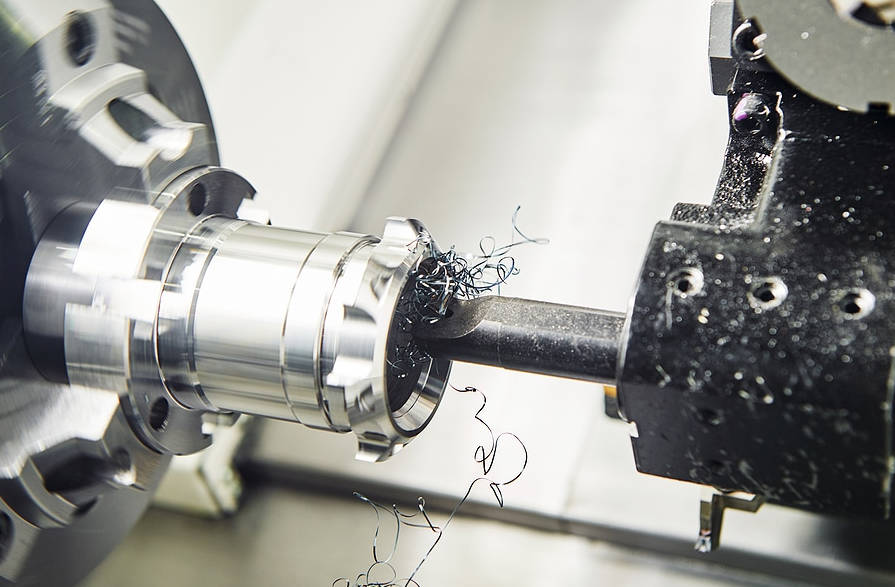
Some plastic parts are mainly round, such as bushings, rollers, spacers, and sleeves. These may be produced by CNC turning. Other parts require flat surfaces, pockets, slots, or complex features, which may require milling.
Some components need both. For example:
- Plastic bushings with side holes
- Rollers with grooves
- Sleeves with flats
- Spacers with milled slots
- Cylindrical parts with cross-drilled holes
- Complex plastic components with turned and milled features
For these designs, CNC turning and milling services may be useful when the part requires both rotational and milled features. This can help reduce unnecessary handling and improve feature relationship control in many applications.
Plastic CNC Machining Cost Factors
The cost of CNC machined plastic parts depends on more than material price.
| Cost Factor | Why It Matters |
| Material type | PEEK is usually more expensive than ABS or POM |
| Stock size | Larger stock increases raw material and material removal cost |
| Geometry | Deep pockets, thin walls, and complex features increase machining time |
| Tolerances | Tight tolerances require more process control and inspection |
| Surface finish | Polishing, painting, or special finish adds process steps |
| Quantity | Setup cost is shared across more parts in larger batches |
| Fixture requirement | Flexible or thin parts may need special workholding |
| Inspection | Critical parts may require more detailed dimensional checks |
| Lead time | Urgent delivery can affect scheduling and cost |
To reduce cost, buyers should simplify non-functional features, choose a suitable material, avoid unnecessary tight tolerances, and provide complete drawings.
What Buyers Should Send for a Plastic CNC Machining Quote
A complete RFQ package helps the supplier review feasibility and provide a more accurate quotation.
| Information | Why It Matters |
| 3D CAD file | Helps review geometry and generate toolpaths |
| 2D drawing | Defines tolerances, datums, threads, and surface finish |
| Material grade | Plastic properties vary greatly by material |
| Quantity | Affects setup cost and unit price |
| Application | Helps evaluate material and tolerance needs |
| Critical dimensions | Helps focus precision control on functional features |
| Surface finish | Clarifies appearance and functional requirements |
| Thread requirements | Important for assembly and strength |
| Delivery target | Helps production scheduling |
| Inspection requirements | Clarifies what must be measured and reported |
If the buyer is unsure about material selection, it is useful to explain the working environment, load, temperature, friction, chemical exposure, and assembly requirements.
Common Mistakes in Plastic CNC Machining Projects
Mistake 1: Using Metal Part Tolerances for Plastic Parts
Plastic materials behave differently from metals. Copying tight metal tolerances into plastic drawings can increase cost and may not be practical.
Mistake 2: Choosing Material Only by Price
Low-cost plastic may not meet temperature, strength, wear, or chemical requirements. Material should match the application.
Mistake 3: Ignoring Deformation Risk
Thin walls, long features, and soft materials can deform during machining. Fixture and geometry should be reviewed early.
Mistake 4: Adding Threads Without Considering Strength
Plastic threads may wear or strip depending on assembly force and reuse frequency. Inserts or alternative designs may be needed.
Mistake 5: Expecting Molded-Part Appearance from Machining
CNC machined plastic parts may show tool marks or machining patterns. If appearance is critical, surface finish requirements should be specified.
How to Choose a Plastic CNC Machining Supplier
A capable plastic CNC machining supplier should understand both machining and material behavior. Plastics require different tool selection, cutting parameters, clamping methods, and tolerance planning compared with metals.
| Supplier Evaluation Point | What Buyers Should Check |
| Material experience | Can the supplier machine POM, PEEK, ABS, Nylon, PTFE, and other plastics? |
| Drawing review ability | Can they identify tolerance and deformation risks? |
| Fixture planning | Can they hold plastic parts without excessive deformation? |
| Tooling strategy | Can they reduce burrs, heat, and surface defects? |
| Prototype support | Can they help validate material and design before batch production? |
| Inspection capability | Can they measure critical plastic dimensions properly? |
| Surface finish support | Can they handle polishing, deburring, or appearance requirements? |
| Communication | Can they explain trade-offs clearly before production? |
For buyers sourcing custom plastic components, HKAA Industrial provides CNC machining support for custom parts based on project drawings, materials, tolerance requirements, and application needs.
FAQ
What is plastic CNC machining?
Plastic CNC machining is a subtractive manufacturing process that uses CNC milling, turning, drilling, and other operations to produce plastic parts from stock materials such as POM, PEEK, ABS, Nylon, PTFE, acrylic, PP, or PVC.
What plastics are commonly used for CNC machining?
Common CNC machining plastics include POM, PEEK, ABS, Nylon, PTFE, acrylic, PP, PVC, and other engineering plastics. The right material depends on strength, temperature, wear resistance, chemical resistance, and dimensional stability.
Is POM good for CNC machining?
Yes. POM is commonly used for CNC machined plastic parts because it offers good machinability, dimensional stability, and low friction in many mechanical applications.
When should I choose PEEK CNC machining?
PEEK CNC machining is suitable when the part requires high-performance properties such as heat resistance, chemical resistance, mechanical strength, or demanding operating conditions. It should be selected when the application justifies the material cost.
Are ABS machined parts suitable for prototypes?
Yes. ABS machined parts are commonly used for prototypes, housings, covers, product development samples, and functional mockups. The application environment should still be checked before using ABS for final parts.
Can plastic CNC machining hold tight tolerances?
Plastic CNC machining can achieve functional tolerances, but plastic materials are more sensitive to heat, clamping, moisture, and deformation than metals. Tight tolerances should be reviewed based on material and geometry.
Is plastic CNC machining better than injection molding?
Plastic CNC machining is often better for prototypes, small batches, and changing designs because it does not require mold tooling. Injection molding is usually more suitable for stable designs and higher production quantities.
Conclusion
Plastic CNC machining is a practical manufacturing method for functional prototypes, low-volume parts, engineering plastic components, jigs, fixtures, and custom plastic parts. It is especially useful when buyers need real material performance without investing in mold tooling.
Material selection is the key. POM is often used for stable, low-friction mechanical parts. PEEK is suitable for higher-performance applications. ABS is useful for prototypes, housings, and product development samples. Other materials such as Nylon, PTFE, acrylic, PP, and PVC can also be considered depending on the application.
To get better results, buyers should define material, tolerance, wall thickness, surface finish, thread requirements, and application conditions clearly before production. A supplier with plastic machining experience can help review manufacturability and reduce risks related to deformation, burrs, heat, and tolerance control.
HKAA Industrial supports custom CNC machining for plastic and metal parts, helping buyers turn drawings and 3D models into functional components for testing, assembly, and production use.