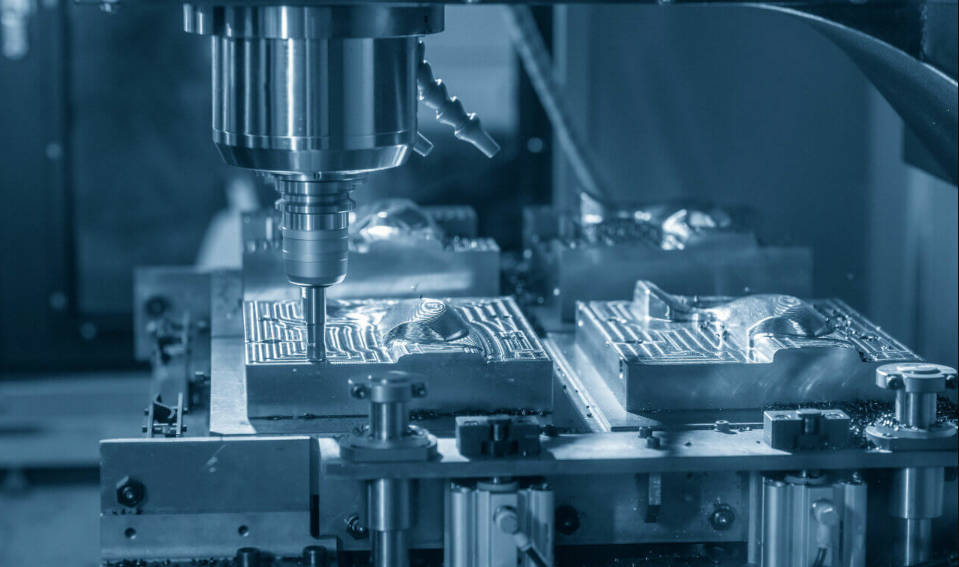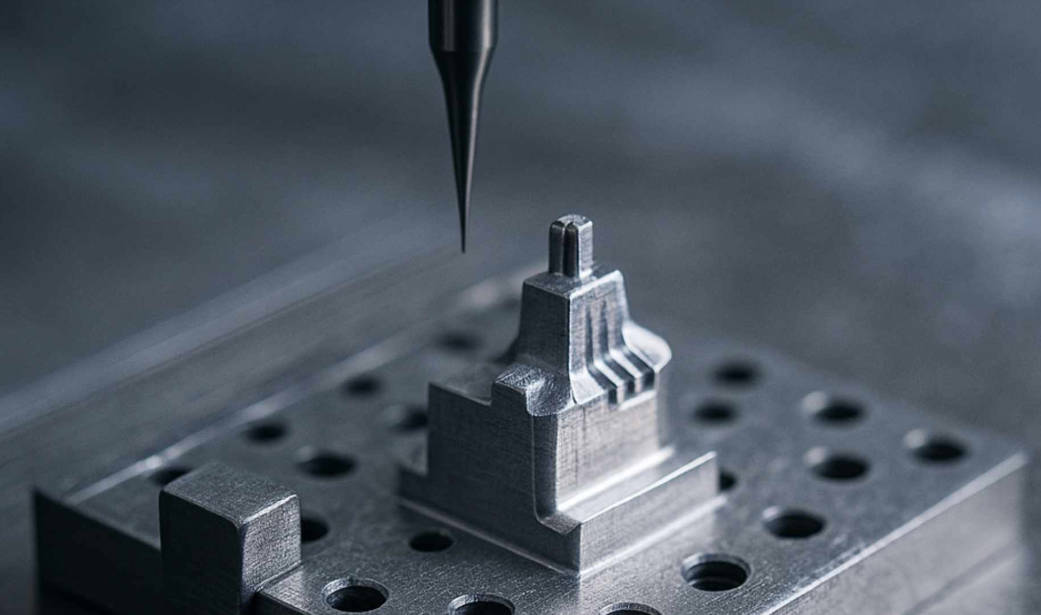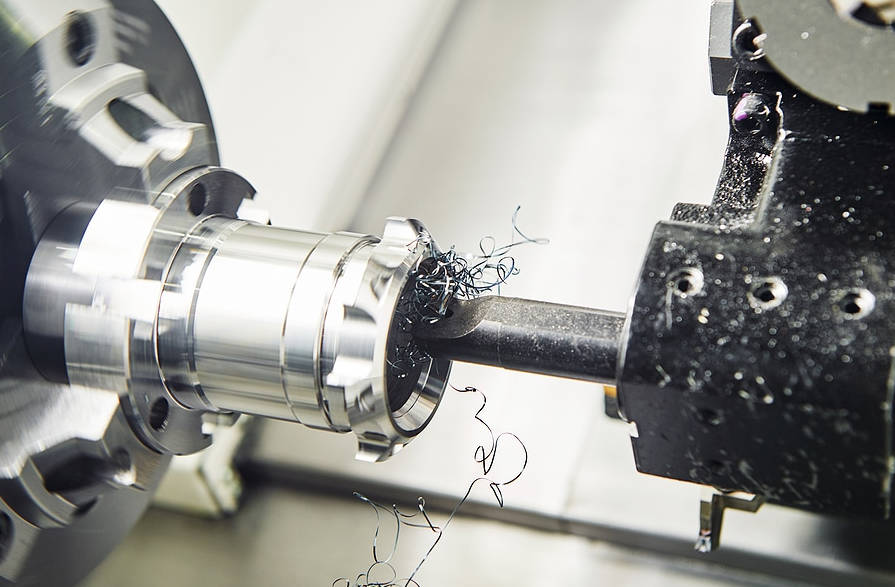
High precision CNC machining accuracy and repeatability are affected by the machine tool, fixture design, cutting tools, material behavior, thermal stability, programming strategy, operator experience, and inspection method. A part is not accurate simply because it is made by CNC machining. Precision is the result of a controlled manufacturing system, from drawing review and process planning to machining, inspection, and final delivery.
For B2B buyers, this distinction matters. If you are sourcing custom machined parts for automation equipment, medical devices, robotics, aerospace components, automotive assemblies, or industrial machinery, small dimensional errors can cause assembly failure, vibration, leakage, poor fit, or inconsistent performance. This is why high precision CNC machining should be evaluated as an engineering process, not only as a quotation item.
HKAA Industrial supports custom CNC machining, CNC prototype machining, and precision part manufacturing for buyers who need practical engineering support from prototype validation to small batch or repeat production. For early-stage projects, CNC prototype machining can help verify whether the design, tolerance plan, material, and surface requirements are suitable before moving into larger production.
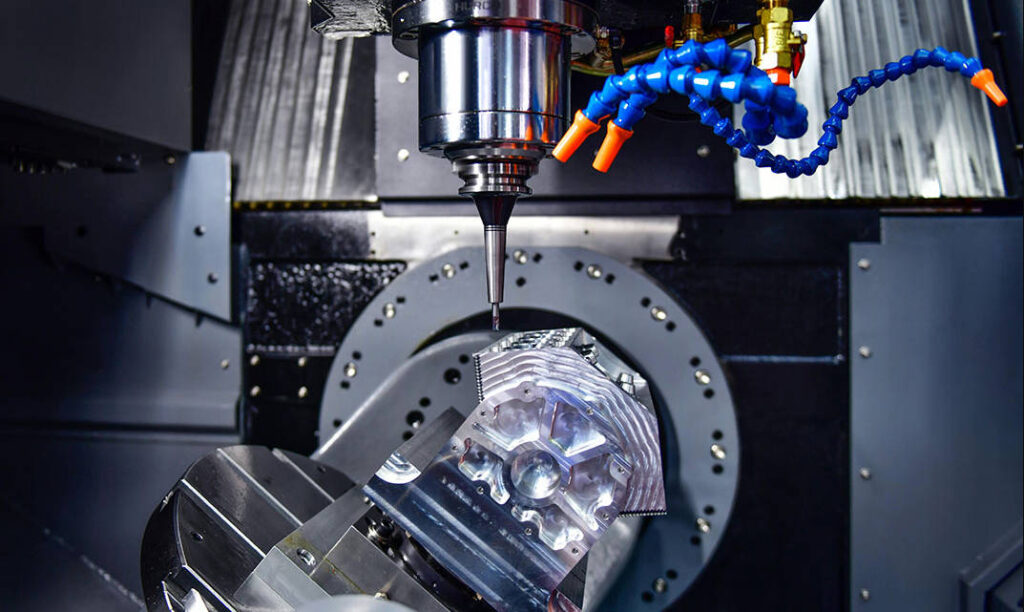
What Is High Precision CNC Machining?
High precision CNC machining refers to the controlled production of machined parts with demanding dimensional accuracy, stable repeatability, and consistent surface quality. It usually involves CNC milling, CNC turning, drilling, boring, tapping, grinding-related finishing in some cases, or combined machining methods depending on part geometry.
The word “precision” should not be understood as a fixed universal number. In real manufacturing, precision depends on the part size, material, feature type, tolerance zone, inspection method, and application. A small medical device component, a long shaft, an aluminum housing, and a stainless steel valve part may all have different precision requirements.
High precision CNC machining is not about making every dimension extremely tight; it is about controlling the dimensions that are critical to the part’s function.
This means a good precision machining project should identify:
- Which dimensions are functionally critical
- Which surfaces are used for mating or sealing
- Which holes control alignment
- Which features need concentricity, flatness, parallelism, or perpendicularity
- Which dimensions can follow general tolerances
- Which inspection method is suitable for acceptance
Precision is not only a machining issue. It is also a design, communication, and quality control issue.
Accuracy vs Repeatability: What Is the Difference?
Accuracy and repeatability are related, but they are not the same.
| Term | Meaning | Why It Matters |
| Accuracy | How close the machined part is to the target dimension or specification | Determines whether the part meets the drawing requirement |
| Repeatability | How consistently the same result can be produced across multiple parts or operations | Determines whether batch production remains stable |
| Precision | A broader concept that includes accuracy, repeatability, process control, and inspection consistency | Helps evaluate whether a supplier can produce reliable parts |
For example, a supplier may machine one sample part very close to the drawing requirement, but if the next 50 parts vary significantly, repeatability is weak. For low volume or batch production, repeatability is often just as important as the first sample result.
For custom CNC parts, accuracy proves that one part meets the drawing; repeatability proves that the process can keep meeting the drawing.
This is especially important for assemblies where multiple parts must fit together. If hole positions, shaft diameters, bearing seats, sealing faces, or threaded features vary from part to part, the final product may become unstable even if some parts pass inspection individually.
Why Accuracy and Repeatability Matter for Buyers
High precision CNC machining affects more than dimensional reports. It affects product performance, assembly efficiency, service life, and supplier reliability.
Common problems caused by poor accuracy or repeatability include:
- Parts cannot fit into the assembly
- Holes do not align with mating components
- Shafts are too loose or too tight
- Bearing seats fail to meet functional requirements
- Sealing surfaces leak
- Threads fail during assembly
- Thin-wall parts deform after machining
- Batch parts vary too much from sample approval
- Surface finish affects friction or appearance
- Rework delays the delivery schedule
For overseas buyers, these problems can be more expensive because replacement parts, shipping delays, and communication cycles add extra cost. This is why the supplier’s process control capability matters before an order is placed.
Key Factors That Affect CNC Machining Accuracy
1. Machine Tool Condition and Capability
The machine tool is the foundation of CNC machining accuracy. A stable CNC machine should have good spindle condition, axis positioning accuracy, rigidity, backlash control, vibration control, and thermal stability.
However, a machine alone does not guarantee a precise part. A high-end machine can still produce inaccurate parts if the fixture is unstable, the tool is worn, or the program is poorly planned.
Typical machine-related factors include:
| Machine Factor | Impact on Accuracy |
| Spindle runout | Can affect roundness, hole accuracy, and surface finish |
| Axis positioning | Influences dimensional accuracy and feature location |
| Machine rigidity | Affects vibration, chatter, and cutting stability |
| Thermal behavior | Can cause dimensional drift during long machining cycles |
| Maintenance condition | Impacts long-term repeatability and reliability |
| Machine structure | Determines whether the part can be processed efficiently and consistently |
For parts with complex geometry, CNC turning and milling services may help reduce repeated setups when a component has both turned and milled features. Fewer setups can support better feature relationship control in many applications.
2. Fixture Design and Workholding Stability
Fixture design is one of the most important factors in high precision CNC machining. Even if the CNC machine is accurate, the part can shift, vibrate, deform, or be clamped incorrectly.
A good fixture should hold the part securely without causing unnecessary deformation. This is especially important for:
- Thin-wall aluminum parts
- Long shafts
- Small precision components
- Plastic parts with lower stiffness
- Parts with multiple machining operations
- Components requiring tight positional tolerances
If the fixture is not stable, the machining process cannot be repeatable, even when the machine and program are correct.
Workholding should also match the inspection datum. If the machining datum and inspection datum are not aligned, the part may pass one measurement method but fail another.
3. Cutting Tool Selection and Tool Wear
Cutting tools directly affect dimensional accuracy, surface roughness, burr formation, and process stability. Tool diameter, tool geometry, coating, sharpness, runout, and wear condition all influence the final part.
Tool wear can cause gradual dimensional drift. A part may be accurate at the beginning of a batch but slowly move out of tolerance as the tool wears. This is a common repeatability issue in batch CNC machining.
Common tool-related issues include:
| Tool Issue | Possible Result |
| Worn cutting edge | Dimensional drift, poor surface finish, more burrs |
| Wrong tool geometry | Chatter, poor chip removal, material smearing |
| Excessive tool deflection | Inaccurate walls, tapered features, poor flatness |
| Poor tool runout | Oversized holes, uneven surfaces, vibration |
| Inappropriate cutting parameters | Heat, tool wear, unstable finish |
For tight tolerance CNC machining, tool life should be monitored, and critical finishing operations may require controlled tool replacement or inspection checkpoints.
4. Material Behavior and Internal Stress
Different materials behave differently during machining. Aluminum, stainless steel, brass, copper, titanium, POM, PEEK, and other materials all have different machinability, thermal expansion, hardness, stiffness, and stress behavior.
Material behavior can affect accuracy in several ways:
- Soft materials may deform during clamping.
- Hard materials may increase tool wear.
- Stainless steel may generate more heat during cutting.
- Copper may require careful tool selection due to its cutting behavior.
- Plastics may expand or deform due to heat.
- Thin-wall parts may release internal stress after material removal.
- Long parts may bend under cutting force or clamping pressure.
Material selection affects not only strength and corrosion resistance, but also machining stability, tolerance control, and repeatability.
For critical components, material grade, heat treatment condition, and certification requirements should be defined before production.
5. Thermal Expansion and Temperature Control
Temperature is often overlooked, but it can affect precision machining significantly. Heat can come from cutting, spindle operation, coolant condition, machine operation, ambient temperature, and material expansion.
For many applications, the effect may be manageable. But for high precision parts, long machining cycles, tight fits, or thin-wall components, thermal stability becomes more important.
Thermal influences may include:
- Machine axis expansion
- Workpiece expansion during cutting
- Tool expansion
- Measurement variation between workshop and inspection room
- Dimensional change after the part cools down
Good process control may include proper coolant use, stable machining sequence, roughing and finishing separation, and allowing parts to stabilize before final inspection when necessary.
6. CNC Programming and Machining Strategy
CNC programming is not only about generating toolpaths. It determines how material is removed, how cutting forces are controlled, and how the part remains stable throughout machining.
Important programming decisions include:
- Roughing and finishing sequence
- Toolpath direction
- Step-over and step-down
- Cutting speed and feed rate
- Stock allowance for finishing
- Tool engagement control
- Hole-making strategy
- Deburring approach
- Setup sequence
A poor machining strategy may create heat, vibration, tool deflection, or part deformation. A good strategy balances efficiency with accuracy and surface quality.
For high precision CNC machining, roughing and finishing are often separated. Roughing removes most material, while finishing removes a controlled amount of material to achieve the final dimension and surface condition.
7. Part Geometry and Design for Manufacturability
Some parts are naturally more difficult to machine accurately. Complex geometry may require multiple setups, longer tools, special fixtures, or careful inspection.
Design features that can reduce machining stability include:
- Very thin walls
- Deep pockets
- Long slender shafts
- Deep holes
- Sharp internal corners
- Very small radii
- Narrow slots
- Complex undercuts
- Poor datum definition
- Excessively tight tolerances on non-critical features
Design for manufacturability does not mean weakening the part. It means making the part easier to machine, inspect, and repeat while preserving its function.
Common Accuracy and Repeatability Problems
| Problem | Possible Cause | Practical Solution |
| Hole position variation | Datum issue, fixture movement, setup error | Define datums clearly and improve fixture strategy |
| Shaft diameter inconsistency | Tool wear, thermal drift, unstable cutting parameters | Monitor tools and control finishing process |
| Flatness problem | Clamping deformation, residual stress, poor machining sequence | Adjust workholding and rough/finish strategy |
| Poor concentricity | Multiple setups, datum mismatch, spindle or fixture issue | Reduce setup changes and align machining datum |
| Burrs on precision edges | Tool wear, material behavior, poor deburring plan | Use suitable tools and controlled deburring |
| Batch variation | Tool wear, inconsistent material, process instability | Add inspection checkpoints and process control |
| Surface roughness variation | Tool condition, feed rate, vibration | Optimize toolpath, speed, feed, and tool replacement |
High Precision CNC Machining vs Standard CNC Machining
Not every part needs high precision machining. Buyers should avoid over-specifying tolerances if the function does not require it.
| Comparison Point | Standard CNC Machining | High Precision CNC Machining |
| Main Goal | Produce functional parts according to general requirements | Control critical dimensions and feature relationships tightly |
| Tolerance Strategy | General tolerances for most dimensions | Critical features receive more detailed tolerance control |
| Process Planning | Standard setup and machining sequence | More careful fixture, toolpath, and inspection planning |
| Inspection | Basic dimensional checks | More detailed inspection for critical dimensions |
| Cost | Usually more economical | Higher cost due to process control and inspection |
| Best For | General brackets, housings, simple parts | Mating parts, precision assemblies, shafts, medical parts, aerospace-related parts, robotics components |
Buyers should choose high precision CNC machining when the part’s function depends on tight fits, controlled alignment, repeatable assembly, or stable performance.
What Should Buyers Prepare Before Requesting a Quote?
A clear quotation package helps the supplier evaluate accuracy requirements correctly. Without enough information, suppliers may either overestimate the cost or miss critical details.
| Information | Why It Matters |
| 3D CAD file | Helps review geometry and machining feasibility |
| 2D technical drawing | Defines tolerances, datums, threads, surface finish, and inspection requirements |
| Material grade | Affects machinability, thermal behavior, cost, and performance |
| Quantity | Influences setup planning and repeatability control |
| Critical dimensions | Helps the supplier focus precision control where it matters |
| Surface finish requirement | Impacts toolpath, finishing method, and post-processing |
| Application information | Helps identify functional features and risk areas |
| Inspection requirements | Clarifies whether reports or specific measuring methods are needed |
| Target delivery date | Supports production scheduling and logistics planning |
If the project is still in development, a prototype order can be a practical way to validate the design before batch production. HKAA Industrial’s CNC prototype manufacturing support can help buyers test form, fit, and function before moving forward.
How to Improve CNC Machining Repeatability
Improving repeatability requires process control, not just inspection after production. Inspection can identify problems, but it cannot fix an unstable process by itself.
Practical ways to improve repeatability include:
- Use clear drawings with defined datums.
- Separate critical and non-critical dimensions.
- Choose materials suitable for the tolerance requirement.
- Design stable fixtures for repeat clamping.
- Control roughing and finishing operations.
- Monitor tool wear during batch machining.
- Use suitable coolant and cutting parameters.
- Inspect critical features at planned checkpoints.
- Record process changes and revision history.
- Confirm surface treatment effects before final approval.
For repeat production, the supplier should also maintain communication about design changes, material substitutions, and inspection standards.
How to Choose a High Precision CNC Machining Supplier
A precision CNC machining supplier should be evaluated based on engineering capability, process control, communication, and quality management, not price alone.
Supplier Evaluation Checklist
| Evaluation Point | What to Check |
| Drawing review capability | Can the supplier identify tolerance, datum, and manufacturability issues? |
| Machining process capability | Can they handle milling, turning, prototype machining, and complex parts? |
| Fixture and setup planning | Can they control clamping, deformation, and feature relationships? |
| Material experience | Can they machine the required metal or plastic material reliably? |
| Inspection capability | Can they measure critical dimensions with suitable methods? |
| Batch repeatability control | Can they maintain consistency beyond the first sample? |
| Surface treatment coordination | Can they manage finishing without affecting critical dimensions? |
| Technical communication | Can they respond clearly to drawing revisions and engineering questions? |
For projects that involve custom precision components, buyers can start by reviewing HKAA Industrial’s CNC machining capabilities and then provide drawings, CAD files, quantity, material, and critical tolerance requirements for engineering review.
Common Mistakes to Avoid
Mistake 1: Treating All Tolerances as Equally Important
Not every dimension needs a tight tolerance. Over-tolerancing increases cost and may make the part unnecessarily difficult to produce. Critical features should be controlled, while general features can often use practical tolerances.
Mistake 2: Ignoring Datum References
A drawing without clear datums may create inspection disagreement. The supplier and buyer should understand which surfaces or holes define the measurement reference.
Mistake 3: Choosing Material Only by Strength
A strong material is not always the easiest or most stable material to machine. Material choice should consider machinability, dimensional stability, corrosion resistance, weight, and operating environment.
Mistake 4: Moving to Batch Production Too Quickly
A sample that passes once does not automatically prove batch repeatability. For precision parts, a pilot run or small batch can help confirm whether the machining process is stable.
Mistake 5: Ignoring Surface Treatment Effects
Anodizing, plating, passivation, polishing, and other treatments can affect appearance, corrosion resistance, and sometimes dimensions. Surface treatment should be included in early process planning.
FAQ
What affects high precision CNC machining accuracy?
High precision CNC machining accuracy is affected by machine condition, fixture stability, cutting tools, material behavior, thermal expansion, CNC programming, part geometry, and inspection method. Accuracy depends on the full process, not only the CNC machine.
What is repeatability in CNC machining?
CNC repeatability means the ability to produce the same dimension or result consistently across multiple parts or repeated operations. It is important for batch production and precision assemblies.
When do I need tight tolerance CNC machining?
You need tight tolerance CNC machining when the part has critical mating surfaces, bearing fits, sealing areas, precision holes, shaft diameters, alignment features, or functional dimensions that directly affect assembly and performance.
How can I improve CNC machining repeatability?
Repeatability can be improved by using stable fixtures, clear datums, controlled tool wear, suitable cutting parameters, consistent material, planned inspection checkpoints, and a well-designed roughing and finishing strategy.
Is high precision CNC machining more expensive?
High precision CNC machining is usually more expensive than general machining because it requires more careful process planning, stable workholding, controlled tooling, slower finishing operations in some cases, and more detailed inspection.
Can CNC prototype machining achieve high precision?
Yes, CNC prototype machining can achieve high precision when the drawing, material, tolerance, fixture, and inspection requirements are properly controlled. It is often used for functional testing before production.
What files are needed for a precision CNC machining quote?
A complete RFQ should include a 3D CAD file, 2D technical drawing, material grade, quantity, surface finish, tolerance requirements, critical dimensions, inspection requirements, and target delivery date.
Conclusion
High precision CNC machining depends on more than a CNC machine. Accuracy and repeatability are influenced by equipment, fixtures, tools, materials, thermal stability, programming, part geometry, inspection, and engineering communication. For buyers, the most important step is to define which features truly require precision and communicate those requirements clearly before production.
If your project involves tight tolerance CNC machining, functional prototypes, complex parts, or repeat production, start with a complete drawing package and a clear explanation of the part’s application. This helps the supplier review manufacturability, identify risk areas, and plan a more reliable machining process.
HKAA Industrial supports custom CNC machining, CNC prototype machining, and precision manufacturing for buyers who need practical support from design validation to production-oriented parts.