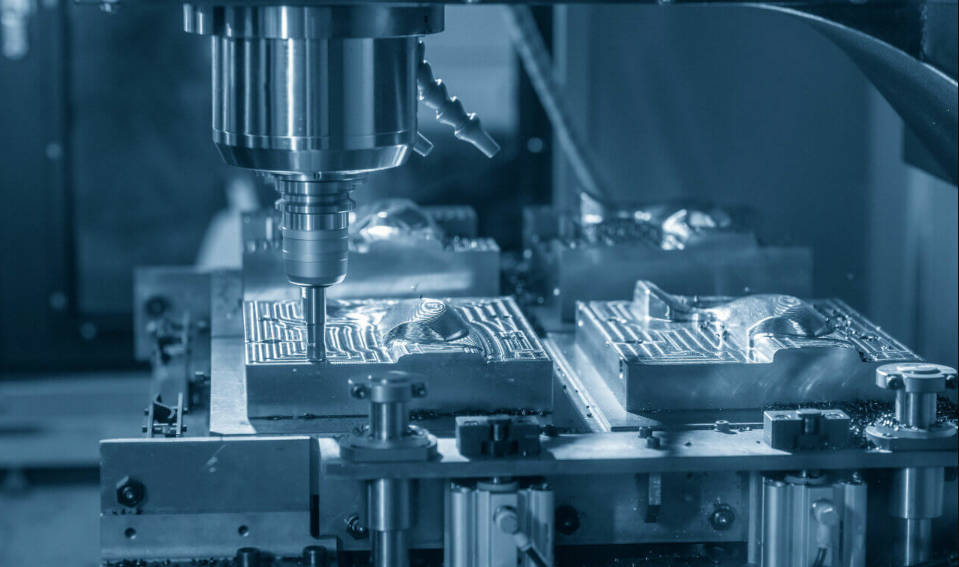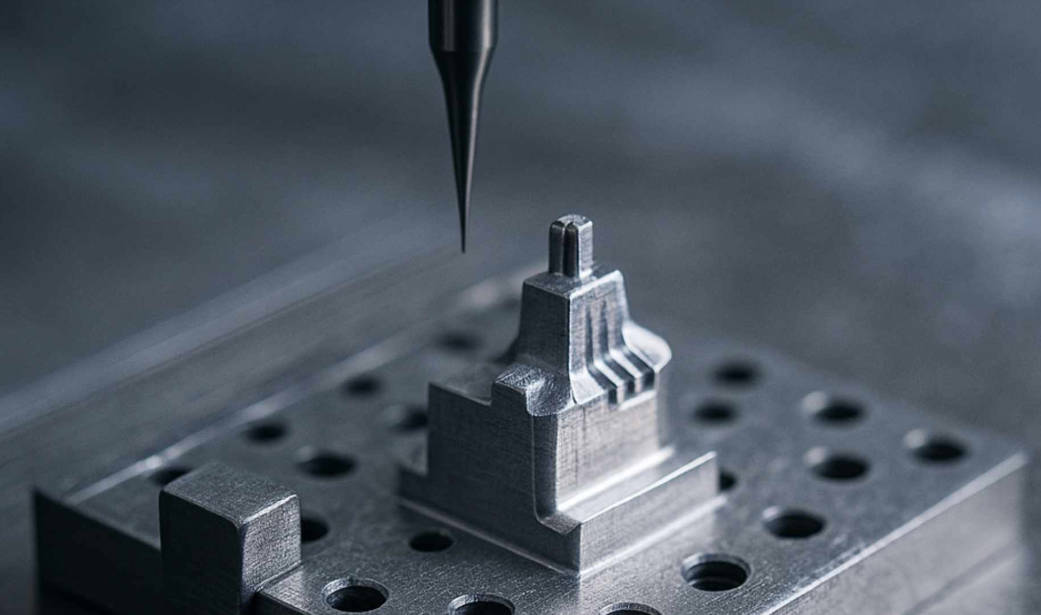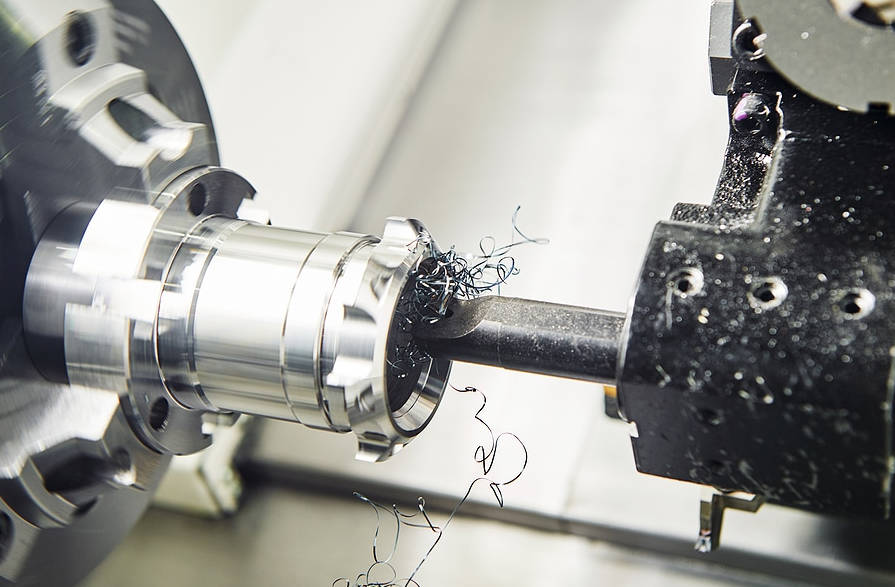
Low volume CNC machining in China is the right choice when you need functional prototypes, small batch production, bridge production, or custom CNC parts without investing in expensive tooling. It is especially useful when the design is still changing, annual demand is limited, or the part requires real production-grade materials such as aluminum, stainless steel, brass, copper, engineering plastics, or other machinable materials.
For overseas buyers, low volume CNC machining can help reduce tooling risk, shorten product development cycles, and keep production flexible. Instead of committing to a large production run too early, you can test the market, verify assembly performance, adjust the design, and then move gradually toward larger-volume manufacturing.
At HKAA Industrial, low volume machining projects are usually connected with CNC prototyping, small batch CNC machining, and custom CNC parts production. For buyers who need a practical route from early design validation to low-volume manufacturing, CNC prototype machining is often the first step before scaling into repeat production.
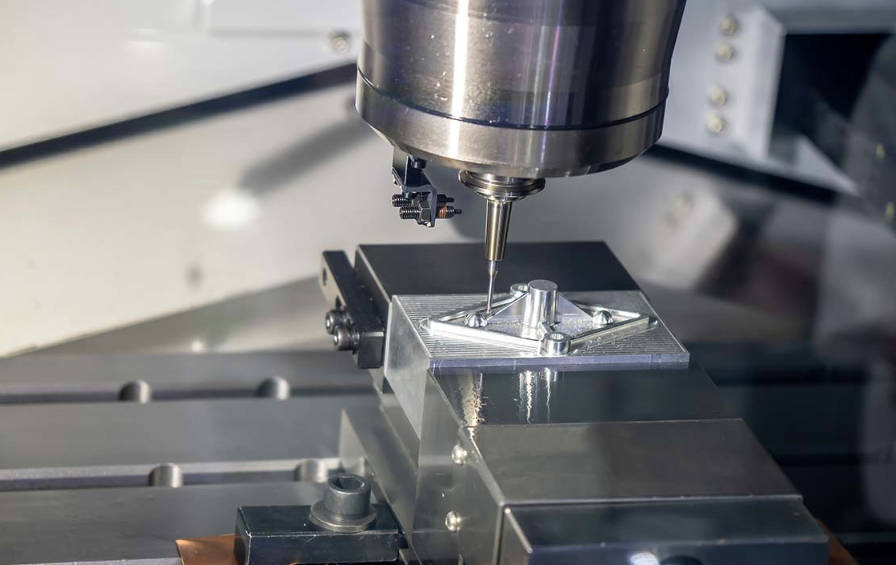
What Is Low Volume CNC Machining?
Low volume CNC machining refers to producing a relatively small quantity of parts using computer numerical control machining processes such as CNC milling, CNC turning, drilling, tapping, and turning-milling compound machining.
There is no single universal quantity that defines “low volume.” In many B2B manufacturing projects, it may refer to a few pieces, dozens of pieces, hundreds of pieces, or several thousand parts depending on the industry, material, part size, and application.
The key point is not only the quantity, but the production purpose: low volume machining is used when flexibility, accuracy, material performance, and lower tooling investment matter more than maximum unit-cost efficiency.
Typical low volume CNC machining projects include:
| Project Type | Typical Purpose | Common Buyer Concern |
| Functional prototype | Test fit, function, strength, and assembly | Is the design ready for production? |
| Engineering sample | Validate dimensions, tolerance, and material behavior | Can the part meet performance requirements? |
| Pilot run | Produce a small batch before mass production | Will quality remain stable across repeated parts? |
| Bridge production | Supply parts before mold tooling or mass production is ready | Can we reduce waiting time? |
| Spare or replacement parts | Produce discontinued or low-demand components | Can we manufacture from drawings or samples? |
| Custom industrial parts | Meet special equipment or assembly needs | Can the supplier handle non-standard designs? |
Why Buyers Choose Low Volume CNC Machining in China
China remains a major sourcing destination for custom CNC machined parts because it has a mature supply chain for machining, materials, surface treatment, inspection, and export logistics. For buyers in North America, Europe, Southeast Asia, and other regions, sourcing low volume CNC machining from China can be attractive when the project requires custom production but does not justify large-scale tooling investment.
For small batch CNC machining, the strongest value is production flexibility: you can order what you need, revise the design, and avoid locking into a costly mold too early.
This is important for companies developing new equipment, medical device components, robotics parts, automotive accessories, electronics housings, fixtures, jigs, or precision mechanical assemblies. In these projects, the design often changes several times before it becomes stable.
Low volume machining also allows buyers to work with real engineering materials. Compared with some rapid prototyping methods, CNC machining can produce parts from the same or similar materials intended for final use. This makes it valuable for testing strength, heat resistance, wear resistance, dimensional stability, and assembly behavior.
When Is Low Volume CNC Machining the Right Choice?
Low volume CNC machining is not suitable for every project. It is most valuable when your project has one or more of the following conditions.
1. You Need Functional Parts, Not Just Visual Models
If your part needs to be installed, loaded, tightened, assembled, tested, or exposed to real operating conditions, CNC machining is often more suitable than a purely visual prototype.
Examples include:
- Aluminum brackets for equipment testing
- Stainless steel shafts or sleeves
- Brass connectors or fittings
- Plastic mechanical components made from POM, Nylon, or PEEK
- Heat-resistant or wear-resistant parts
- Precision housings and enclosures
A visual model may help check appearance, but a CNC machined part can better represent mechanical behavior, material strength, and dimensional accuracy.
2. Your Design Is Still Changing
Injection molding, die casting, and other tooling-based processes can be cost-effective at high volume, but they require a stable design. If your geometry, wall thickness, hole positions, tolerances, or surface requirements are still being adjusted, CNC machining gives you more freedom.
Low volume CNC machining is often the safer choice before tooling because design changes can be made through CAD and CAM updates instead of modifying or remaking a mold.
This helps reduce the risk of expensive tooling mistakes.
3. You Need Small Batch Production Before Mass Production
Many companies need a pilot batch before full-scale manufacturing. A pilot batch allows engineering, purchasing, quality, and end users to evaluate the product under realistic conditions.
Common pilot batch uses include:
- Pre-production validation
- Customer approval samples
- Market launch testing
- Assembly line trial runs
- Certification or reliability testing
- Field testing before mass production
For these cases, low volume CNC machining can provide parts quickly while the buyer continues to refine production planning.
4. Your Annual Demand Is Limited
Some products simply do not require mass production. Industrial equipment parts, automation components, custom fixtures, aerospace-related components, medical device components, and specialized mechanical parts may only require dozens or hundreds of pieces per year.
In these situations, tooling may not be economical. CNC machining can support repeat small orders while keeping inventory risk under control.
5. The Part Is Complex or Requires Tight Dimensional Control
For parts with complex features, multiple machined surfaces, holes, threads, slots, pockets, or precision mating areas, CNC machining can provide strong dimensional control when the process is planned correctly.
When parts require both turning and milling features, CNC turning and milling compound machining may reduce secondary operations and help improve consistency for complex components.
Low Volume CNC Machining vs Other Manufacturing Methods
Choosing the right process depends on quantity, material, tolerance, budget, and product stage.
| Process | Best For | Advantages | Limitations |
| Low volume CNC machining | Functional prototypes, small batches, precision parts | No dedicated mold required, real materials, good accuracy, flexible design changes | Unit cost may be higher than mass production at very high quantities |
| 3D printing | Concept models, complex shapes, early design review | Fast for visual or geometric validation, can create complex internal shapes | Material properties and surface finish may not match final production needs |
| Injection molding | High-volume plastic parts | Low unit cost at scale, consistent plastic parts | Mold cost and lead time are higher; design changes can be expensive |
| Die casting | High-volume metal parts | Suitable for large quantities of certain metal parts | Tooling investment is high; not ideal for changing designs |
| Sheet metal fabrication | Brackets, panels, enclosures, folded parts | Efficient for flat or bent metal structures | Not suitable for many 3D solid machined geometries |
If your priority is flexibility, real material performance, and small batch accuracy, CNC machining is usually more practical than investing in tooling too early.
Key Factors That Affect Low Volume CNC Machining Cost
Low volume CNC machining cost is not determined by quantity alone. A small part can be expensive if it has complex features, tight tolerances, difficult material, or demanding surface finishing. A larger part may be more economical if the geometry is simple and tolerances are reasonable.
Main Cost Factors
| Factor | How It Affects Cost | Practical Buyer Advice |
| Material | Harder or more difficult materials increase machining time and tool wear | Choose material based on function, not only habit |
| Part geometry | Deep pockets, thin walls, undercuts, and sharp internal corners increase complexity | Simplify non-functional features where possible |
| Tolerance | Tight tolerances require more careful machining and inspection | Apply tight tolerances only to critical features |
| Surface finish | Anodizing, polishing, plating, bead blasting, or painting adds process steps | Define finish requirements clearly in the drawing |
| Quantity | Higher quantities can reduce setup cost per part | Ask for price breaks at different quantities |
| Inspection requirements | CMM reports, material certificates, and special inspection add work | Specify required documentation early |
| Delivery time | Urgent orders may require special scheduling | Communicate target delivery date during quotation |
Material Selection for Low Volume CNC Machined Parts
Material selection should be based on function, environment, appearance, and cost. For low volume CNC machining in China, overseas buyers commonly request metals and engineering plastics.
| Material | Common Use Cases | Notes |
| Aluminum 6061 | Housings, brackets, fixtures, prototypes | Good machinability and balanced strength |
| Aluminum 7075 | Aerospace, high-strength lightweight parts | Higher strength than 6061, often used where weight matters |
| Stainless Steel 304 | General corrosion-resistant parts | Common for industrial and equipment components |
| Stainless Steel 316 | Marine, medical, chemical environments | Better corrosion resistance in many applications |
| Brass | Fittings, connectors, electrical parts | Good machinability and appearance |
| Copper | Conductive or thermal parts | Requires careful process control due to material behavior |
| POM / Delrin | Gears, sliding parts, mechanical plastic components | Low friction and good dimensional stability |
| PEEK | High-performance plastic parts | Used where heat, chemical resistance, or strength is important |
| Nylon | Wear-resistant plastic components | Useful for bushings, guides, and structural plastic parts |
For early prototypes, material availability and machining behavior should be discussed before ordering. For production-intent parts, the material grade, certification requirements, and surface treatment must be clearly specified.
Tolerance Planning: Avoid Over-Specifying Every Feature
One of the most common mistakes in custom CNC parts sourcing is applying tight tolerances to every dimension. This may look safe on a drawing, but it often increases cost, inspection time, and production difficulty.
A better approach is to define tolerance based on function:
- Critical mating surfaces need tighter control.
- Clearance holes may allow looser tolerances.
- Cosmetic surfaces may need surface finish control instead of dimensional over-control.
- Non-critical external dimensions may follow general tolerance standards.
- Datum references should be clear for inspection.
Good tolerance planning helps suppliers machine parts efficiently while still protecting the functional requirements of the assembly.
Before sending a drawing, buyers should check whether each tight tolerance is necessary. If the supplier understands the functional intent of the part, they can often suggest a more practical machining and inspection strategy.
From CNC Prototype to Low Volume Production
Many projects start with one prototype and later move to a small batch. However, prototype machining and low volume production are not exactly the same.
A prototype may focus on speed and design validation. Low volume production requires repeatability, consistent inspection, stable material sourcing, and process control.
| Stage | Main Goal | Buyer Should Confirm |
| Prototype | Verify design, fit, and function | Material, key dimensions, surface finish |
| Engineering sample | Confirm performance and assembly | Critical tolerances, inspection method |
| Pilot batch | Test repeatability and production readiness | Quality standard, packaging, delivery plan |
| Low volume production | Supply repeatable usable parts | Process stability, documentation, communication |
For buyers who are still validating design details, HKAA Industrial’s CNC prototype service can be used as an entry point before moving toward repeat low volume machining.
What Files Should You Send for a Low Volume CNC Machining Quote?
A clear quotation package can reduce back-and-forth communication and improve quotation accuracy. For custom CNC parts China sourcing, buyers should prepare the following information where possible:
| File or Information | Why It Matters |
| 3D CAD file, such as STEP or IGES | Helps the supplier review geometry and plan machining |
| 2D technical drawing | Defines tolerances, threads, surface finish, and critical dimensions |
| Material grade | Affects cost, machinability, and performance |
| Quantity | Determines setup cost allocation and batch pricing |
| Surface treatment | Affects appearance, corrosion resistance, and delivery time |
| Application or function | Helps the supplier identify critical features |
| Inspection requirements | Clarifies whether reports, certificates, or special checks are needed |
| Target delivery date | Helps production planning and logistics discussion |
Even if the design is not fully finished, sharing the functional purpose of the part can help the supplier provide DFM suggestions before machining begins.
How to Choose a Low Volume CNC Machining Supplier in China
A good CNC machining supplier should not only quote a price. For low volume projects, the supplier should be able to review manufacturability, understand the part’s functional requirements, control quality, and communicate clearly.
Supplier Evaluation Checklist
| Evaluation Point | What to Check |
| Machining capability | Can they handle milling, turning, turning-milling, and complex custom parts? |
| Material capability | Can they process the required metal or plastic material? |
| Prototype support | Can they support early-stage development and functional testing? |
| Quality control | Do they inspect critical dimensions and understand tolerance requirements? |
| Engineering communication | Can they identify drawing issues before production? |
| Surface treatment support | Can they coordinate anodizing, plating, polishing, bead blasting, or painting? |
| Export experience | Can they support overseas communication, packaging, and shipping? |
| Scalability | Can they move from prototype to low volume production? |
For buyers comparing suppliers, it is useful to start with a small order or prototype batch. This allows you to evaluate communication, dimensional quality, packaging, delivery, and after-sales response before placing a larger order.
You can also review HKAA Industrial’s broader CNC machining capabilities through its main website: HKAA Industrial CNC machining manufacturer in China.
Common Mistakes to Avoid When Buying Low Volume CNC Machined Parts
Mistake 1: Choosing Only by the Lowest Unit Price
The lowest quote may not include the same material, tolerance control, inspection, surface treatment, or packaging standard. For precision parts, a slightly lower price can become expensive if the parts fail assembly or require rework.
Mistake 2: Sending Only a 3D Model Without a Drawing
A 3D model shows geometry, but it may not define tolerances, threads, surface roughness, material grade, or surface treatment. A 2D drawing is still important for serious production and inspection.
Mistake 3: Applying Tight Tolerances Everywhere
Overly tight tolerances increase cost and risk. Focus tight tolerance requirements on functional features such as bearing fits, mating surfaces, alignment holes, and sealing areas.
Mistake 4: Ignoring Surface Treatment Early
Surface treatment can affect dimensions, appearance, corrosion resistance, and delivery time. If anodizing, plating, polishing, or painting is required, it should be discussed before machining.
Mistake 5: Moving from Prototype to Batch Production Without Review
A prototype that works once does not automatically mean the part is ready for repeat production. Before ordering a larger batch, review tolerances, material, inspection method, packaging, and any design changes.
Practical Buying Advice for Overseas Customers
If you are sourcing low volume CNC machining in China, the buying process should be structured, not rushed.
A practical workflow is:
- Prepare 3D CAD files and 2D drawings.
- Define material, quantity, surface treatment, and tolerance requirements.
- Explain the part’s application and critical features.
- Ask for DFM feedback before confirming production.
- Start with a prototype or small batch if the design is new.
- Review inspection results and assembly performance.
- Confirm any design updates before repeat production.
- Build a stable supplier relationship for future batches.
This approach is especially useful for OEM buyers, product developers, and engineers who need custom CNC parts but want to reduce project risk.
FAQ
Is low volume CNC machining in China suitable for startups?
Yes. Low volume CNC machining in China is suitable for startups that need functional prototypes, investor samples, market testing parts, or early production batches without investing in mold tooling too early.
What quantity is considered small batch CNC machining?
Small batch CNC machining can mean different quantities depending on the project. It may range from a few pieces to hundreds or more. The definition depends on part size, material, complexity, and production purpose.
Is CNC machining better than injection molding for low volume plastic parts?
For low volume plastic parts, CNC machining is often more flexible because it does not require mold tooling. Injection molding becomes more attractive when the design is stable and the production quantity is high enough to justify tooling cost.
What information do I need for a custom CNC parts China quote?
You should provide a 3D CAD file, 2D drawing, material grade, quantity, tolerance requirements, surface finish, and target delivery date. Application details can also help the supplier review manufacturability.
Can CNC prototype machining be used for real functional testing?
Yes. CNC prototype machining can produce parts from real engineering metals and plastics, making it useful for fit, function, strength, assembly, and performance testing.
How can I reduce low volume CNC machining cost?
You can reduce cost by simplifying part geometry, avoiding unnecessary tight tolerances, choosing suitable materials, defining surface treatment clearly, and ordering practical batch quantities.
When should I choose CNC turning and milling for low volume parts?
CNC turning and milling is suitable when a part has both rotational features and milled features, such as shafts with flats, grooves, holes, slots, or complex multi-surface details.
Conclusion
Low volume CNC machining in China is a practical solution when you need custom parts, functional prototypes, small batch production, or bridge production without committing to expensive tooling too early. It is especially valuable when your design is still changing, your quantity is limited, or your parts require real material performance and dimensional control.
For overseas buyers, the key is to choose a supplier that understands both engineering requirements and production reality. A reliable CNC machining partner should help you review drawings, choose materials, control tolerances, manage surface treatment, and move from prototype to low volume production with fewer risks.
HKAA Industrial supports custom CNC machining, CNC prototype machining, and turning-milling compound machining for buyers who need practical, production-oriented solutions for custom metal and plastic parts.