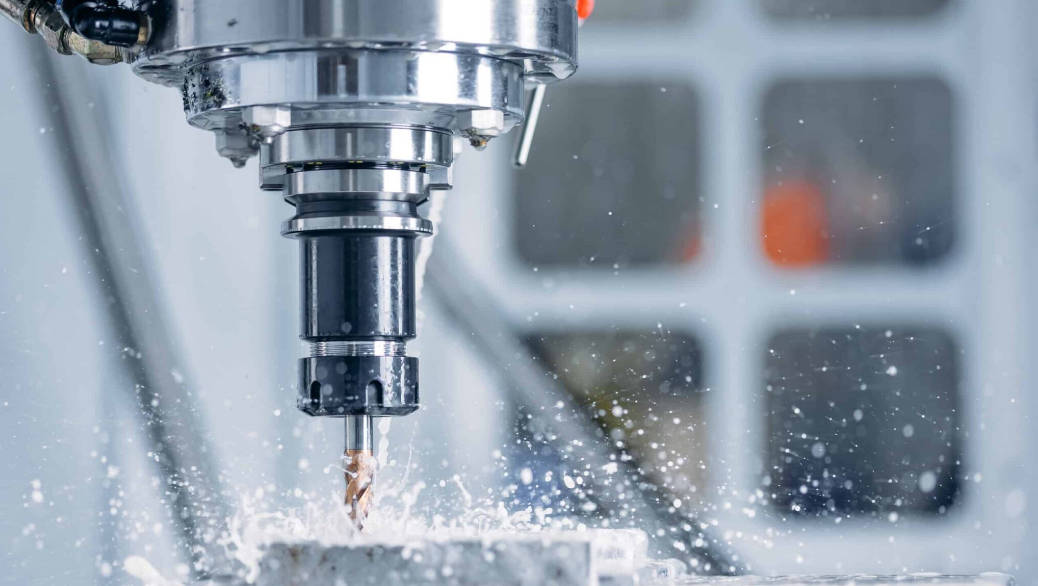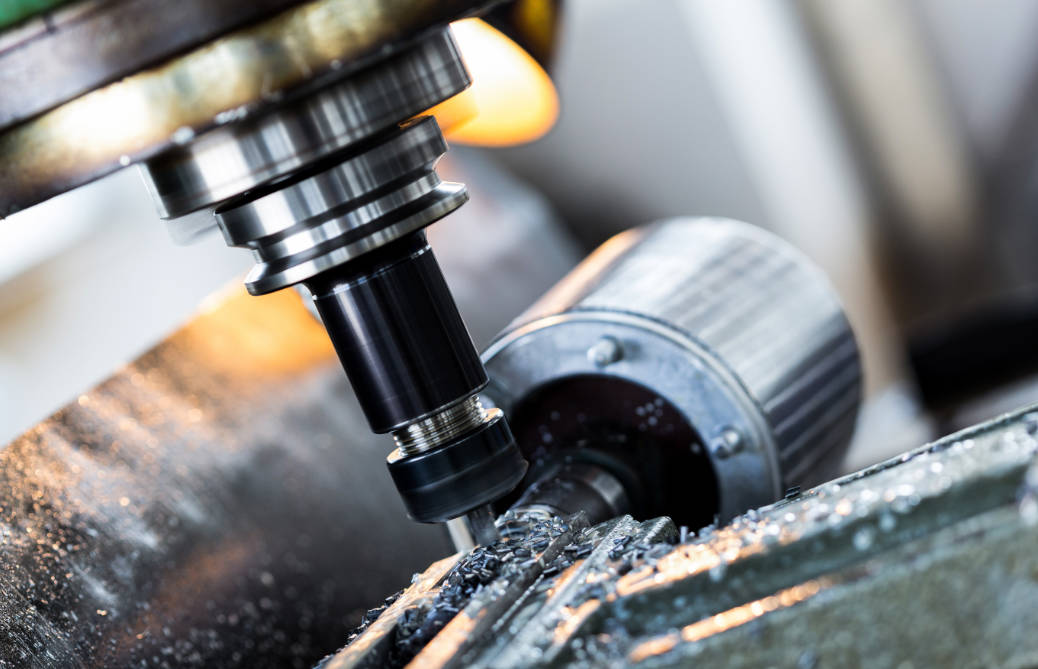
Titanium, a marvel of modern metallurgy, is celebrated for its unparalleled performance across critical sectors. Yet, its inherent characteristics – low thermal conductivity, high chemical reactivity, and significant strength even at elevated temperatures – transform CNC machining into a complex art rather than a simple process. This comprehensive guide delves into the intricate challenges posed by titanium and explores the innovative solutions and best practices that empower manufacturers to achieve precision, efficiency, and cost-effectiveness.
The Allure and Intricacies of Titanium
Titanium and its alloys are engineering marvels, renowned for their exceptional combination of properties that make them indispensable across a spectrum of high-performance applications. From the lightweight strength required in aerospace frames and engine components to the biocompatibility essential for medical implants and surgical instruments, titanium consistently outperforms many traditional metals. Its impressive corrosion resistance makes it a preferred material for marine and chemical processing equipment, while its ability to withstand extreme temperatures expands its utility into demanding industrial environments. However, these very attributes that make titanium so desirable for end-use products also conspire to make its CNC machining a formidable task, often pushing the boundaries of conventional manufacturing techniques.
The global demand for titanium components continues to surge, driven by advancements in various sectors. This upward trend necessitates continuous innovation in machining processes to improve efficiency, reduce costs, and maintain the stringent quality standards required for critical parts. Understanding the fundamental challenges inherent in machining this unique material is the first step toward developing robust, reliable, and repeatable solutions that transform difficulty into capability. This article aims to provide an exhaustive exploration of these challenges and present a comprehensive suite of practical and advanced solutions.
Understanding Titanium: Properties That Dictate Machining Difficulties
To effectively address the hurdles of titanium CNC machining, one must first grasp the underlying material properties that contribute to these difficulties. Titanium is not just another metal; its atomic structure and metallurgical characteristics interact in ways that create a distinct set of machining behaviors.
Low Thermal Conductivity
One of titanium’s most significant machining challenges stems from its exceptionally low thermal conductivity. Unlike many metals that efficiently dissipate heat away from the cutting zone, titanium traps heat at the tool-chip interface. This localized heat buildup can cause cutting temperatures to soar, often exceeding 1000°C (1800°F) at the tool tip. Such extreme temperatures severely degrade the hardness and wear resistance of cutting tools, leading to rapid crater wear, flank wear, and premature tool failure. The concentrated heat also contributes to plastic deformation of the tool material and can alter the metallurgical structure of the workpiece surface, compromising its integrity.
High Strength-to-Weight Ratio and Elevated Temperature Strength
Titanium alloys possess an impressive strength-to-weight ratio, meaning they offer high strength without excessive bulk. While advantageous for finished products, this property translates into higher shear strength at cutting temperatures. The material resists deformation during chip formation, requiring significantly higher cutting forces compared to steels. Furthermore, titanium maintains a substantial portion of its strength at elevated temperatures, preventing it from softening sufficiently to ease cutting. This sustained strength contributes to increased cutting forces, greater power consumption, and higher stresses on both the cutting tool and the machine tool itself, potentially leading to increased vibration and deflection.
Chemical Reactivity and Adhesion
Titanium is a highly reactive metal, particularly at elevated temperatures. When machining titanium, the fresh, unoxidized surfaces of the chip and workpiece come into close contact with the cutting tool at high temperatures and pressures. This environment promotes a strong chemical affinity between titanium and common tool materials, especially those with cobalt binders found in carbide tools. This chemical reactivity leads to the formation of a built-up edge (BUE) on the cutting tool, where titanium material welds itself to the tool rake face. BUE formation is detrimental as it alters the effective tool geometry, increases friction, leads to poor surface finish, and can cause catastrophic chipping or breakage of the cutting edge when the BUE detaches.
Low Modulus of Elasticity (The “Springiness” Effect)
Titanium exhibits a relatively low modulus of elasticity, approximately half that of steel. This characteristic means titanium is “springier” or less stiff than steel; it deforms more under the same applied load. During machining, the cutting forces cause the workpiece to deflect away from the cutting tool, especially when machining thin walls, deep pockets, or slender features. This deflection can lead to undersized cuts, difficulty holding tight tolerances, increased chatter, and reduced surface quality. The material’s elastic recovery also means that the cut material tends to “spring back” against the flank of the cutting tool, increasing friction and accelerating flank wear.
Cost Implications of Titanium Material
Beyond the technical difficulties, the high cost of titanium raw material significantly amplifies the stakes in CNC machining. Titanium alloys are considerably more expensive per pound than steel or aluminum. This high material cost means that any error, scrap, or rework directly translates into substantial financial losses. The economic pressure to achieve a “first-time-right” outcome adds another layer of complexity, demanding meticulous process planning, robust execution, and stringent quality control throughout the machining cycle.
What are the Primary Challenges in Titanium CNC Machining?
Translating the unique material properties of titanium into practical machining scenarios reveals several recurring and often severe challenges. These issues can impede productivity, compromise part quality, and drive up manufacturing costs if not adequately addressed.
Rapid Tool Wear and Catastrophic Failure
As previously mentioned, the combination of low thermal conductivity and high chemical reactivity leads to extreme heat concentration and adhesion at the cutting edge. This environment is highly aggressive towards cutting tools. Tools often experience accelerated flank wear, crater wear on the rake face, and the formation of a built-up edge (BUE). This rapid degradation necessitates frequent tool changes, leading to increased downtime, higher tooling costs, and inconsistent part quality as tool geometry changes. In severe cases, the cutting edge can chip or break catastrophically, potentially damaging the workpiece or even the machine spindle.
Poor Chip Control and Evacuation Issues
Titanium tends to produce segmented, stringy, or ribbon-like chips that are difficult to break and manage. These chips can wrap around the tool or workpiece, leading to re-cutting, surface marring, and heat buildup. Efficient chip evacuation is crucial to prevent chip congestion in the cutting zone, which can cause premature tool wear, obstruct coolant flow, and lead to poor surface finishes or even catastrophic tool failure. Unlike more brittle materials that form easily broken chips, titanium’s ductility at operating temperatures makes chip control a persistent challenge.
Workpiece Deflection and Dimensional Inaccuracy
The low modulus of elasticity makes titanium prone to elastic deformation under cutting forces. This “spring back” effect is particularly problematic when machining thin-walled sections, deep cavities, or features requiring tight positional and dimensional tolerances. The workpiece can deflect away from the cutting tool, resulting in undersized features, tapers, or wavy surfaces. Achieving consistent dimensions and precise geometric accuracy becomes a significant hurdle, often requiring multiple passes with lighter cuts, sophisticated workholding, or even iterative measurement and adjustment during the machining process.
Surface Integrity Degradation (Alpha Case and Residual Stress)
Maintaining the surface integrity of titanium components is paramount, especially in critical applications like aerospace and medical devices. Machining processes can introduce detrimental surface alterations. One common issue is the formation of “alpha case,” a hard, brittle, oxygen-enriched layer on the surface caused by the high temperatures at the cutting zone reacting with atmospheric oxygen. Alpha case significantly reduces fatigue life and ductility. Additionally, the high cutting forces and thermal cycles can induce undesirable tensile residual stresses on the machined surface, which can lead to premature cracking or stress corrosion cracking in service.
High Cutting Forces and Chatter Vibration
The high strength of titanium, coupled with its resistance to plastic deformation, demands substantial cutting forces. These forces put significant stress on the machine tool, tooling, and workholding. Exacerbating this is the tendency for chatter vibration, which occurs when the machining system (tool, workpiece, fixture, machine) lacks sufficient dynamic stiffness. Chatter not only produces an unacceptable surface finish and reduces dimensional accuracy but also dramatically accelerates tool wear and can lead to structural damage to the machine tool spindle or components.
Process Optimization Difficulties
Finding the optimal balance of cutting parameters (speed, feed, depth of cut), tool selection, and coolant strategy for titanium is a complex, multi-variable problem. Small deviations from optimal conditions can quickly lead to tool failure, poor part quality, or excessively long cycle times. The narrow “process window” for successful titanium machining means that process engineers must possess deep expertise and often engage in extensive trial-and-error to fine-tune operations for specific parts and machines. This difficulty makes it challenging to achieve consistent results and scale production efficiently.
How to Overcome Titanium Machining Difficulties: Effective Solutions and Best Practices
Addressing the formidable challenges of titanium machining requires a multi-faceted approach, combining intelligent tooling choices, optimized cutting parameters, advanced cooling techniques, robust machinery, and sophisticated machining strategies. A holistic perspective is essential for achieving reliable and efficient titanium CNC machining.
Optimizing Tooling Selection and Design
The cutting tool is the first point of contact and often the most vulnerable component in titanium machining. Therefore, careful selection and design are paramount.
- Carbide Grades and Coatings: Use specialized carbide grades with high toughness and wear resistance, typically fine-grain or ultra-fine-grain substrates. Physical Vapor Deposition (PVD) coatings like TiAlN (Titanium Aluminum Nitride) or AlTiN are highly effective. These coatings provide a hard, lubricious barrier that reduces friction, prevents chip adhesion, and significantly extends tool life by acting as a thermal barrier, limiting heat transfer to the carbide substrate.
- Tool Geometry and Design: Tool geometry plays a critical role.
- Positive Rake Angles: Promote a shearing action over a compressive one, reducing cutting forces and heat generation.
- Sharp Cutting Edges: Minimize friction and BUE formation.
- Large Relief Angles: Reduce rubbing and spring-back effects, preventing flank wear.
- Strong Edge Preparations: A controlled edge hone can provide strength while maintaining sharpness, balancing resistance to chipping with effective cutting.
- Flute Count and Helix Angle: Lower flute counts (e.g., 4-6 flutes for end mills) allow for better chip evacuation. A variable helix angle can help mitigate chatter.
- Tool Material Considerations: While carbide is dominant, for specific applications, other materials might be considered. For example, Polycrystalline Diamond (PCD) can be highly effective for high-volume finishing operations on unalloyed titanium, offering superior wear resistance, but is generally not suitable for roughing or interrupted cuts due to its brittleness.
Strategic Cutting Parameters
The interplay of cutting speed, feed rate, and depth of cut is crucial for successful titanium machining. The “sweet spot” is often a delicate balance.
- Low Cutting Speeds, High Feed Rates: This is often counter-intuitive but critical for titanium. Lower cutting speeds (typically 60-120 surface feet per minute / 20-40 m/min) reduce heat generation at the tool-chip interface. Conversely, a relatively high feed rate (chip load) ensures that the tool is always cutting fresh material, minimizing rubbing and preventing the material from “springing back” against the tool flank. A thicker chip also helps carry heat away from the cutting zone.
- Appropriate Depth of Cut (Radial and Axial): For milling, maintaining a consistent radial depth of cut can stabilize cutting forces and reduce chatter. Avoid excessively light radial depths of cut which promote rubbing and heat generation. For turning, sufficient depth of cut ensures effective chip formation and reduces tool rubbing.
- Consistent Engagement: Tools should be engaged in the material as consistently as possible. Interrupted cuts and inconsistent engagement can lead to thermal shock and rapid tool wear.
Advanced Coolant and Lubrication Strategies
Managing heat is paramount in titanium machining, and cutting fluids play a vital role.
- High-Pressure Coolant (HPC): Delivering coolant at pressures often exceeding 1000 psi (70 bar) directly to the cutting zone offers multiple benefits. It effectively breaks and evacuates chips, preventing re-cutting and chip re-welding. More importantly, it creates a hydraulic wedge that can lift the chip, reducing friction, and dramatically improving heat transfer away from the tool-chip interface, thereby extending tool life.
- Minimum Quantity Lubrication (MQL): MQL involves delivering a very fine mist of lubricant (typically oil) mixed with compressed air. While not as effective at cooling as flood coolant or HPC, MQL excels at lubrication, reducing friction and preventing BUE formation. It is also an environmentally friendly option, minimizing coolant disposal issues.
- Cryogenic Machining: This advanced technique involves directing liquid nitrogen (-196°C/-321°F) directly to the cutting zone. Cryogenic cooling significantly lowers cutting temperatures, leading to drastically reduced tool wear and improved surface integrity by preserving the tool’s hardness and minimizing thermal degradation of the workpiece. It also makes titanium chips more brittle, improving chip breakability.
- Traditional Flood Coolant: While less targeted than HPC, ample flood coolant is still crucial for basic heat dissipation and chip flushing. Using high-quality, high-lubricity cutting fluids specifically formulated for titanium is recommended.
| Strategy | Primary Benefit | Secondary Benefit | Considerations |
|---|---|---|---|
| High-Pressure Coolant (HPC) | Excellent Heat Dissipation, Chip Breaking | Reduced BUE, Extended Tool Life | Requires specialized pumps and through-tooling. |
| Minimum Quantity Lubrication (MQL) | Superior Lubrication, Reduced Friction | Prevents BUE, Environmentally Friendly | Limited cooling capability; not ideal for heavy roughing. |
| Cryogenic Machining | Drastic Temperature Reduction, Tool Life | Improved Chip Breakability, Surface Integrity | High setup cost, specialized equipment, safety protocols. |
| Traditional Flood Coolant | Basic Heat Removal, Chip Flushing | Cost-effective for initial setup. | Less effective for deep cuts/pockets, can lead to thermal shock. |
Machine Rigidity and Robust Workholding
A stable machining environment is fundamental to counter the high cutting forces and “springiness” of titanium.
- High-Powered, Robust CNC Machines: Machine tools used for titanium must possess exceptional rigidity, high spindle power, and excellent damping characteristics. Heavy, well-built machines minimize vibrations and deflection, providing a stable platform for aggressive cutting. High torque at low RPMs is essential given the recommended low cutting speeds.
- Rigid Fixturing and Clamping Techniques: Workholding must be exceptionally robust to prevent workpiece movement and deflection under heavy cutting loads. Custom fixtures, hydraulic clamps, and vacuum fixtures can be employed to secure the part firmly, distributing clamping forces and minimizing free length. Any vibration or movement in the workpiece will amplify chatter and compromise accuracy.
- Vibration Damping Solutions: Beyond machine mass, dynamic damping solutions like tuned mass dampers, specific tool holders (e.g., hydraulic chucks, shrink-fit holders), and anti-vibration bars can significantly reduce chatter, improve surface finish, and extend tool life.
Optimized Machining Strategies and Tool Paths
Beyond selecting the right tools and parameters, how the tool engages the material is equally critical.
- Climb Milling vs. Conventional Milling: For titanium, climb milling (tool rotation direction same as feed direction) is generally preferred. It allows the cutting edge to enter the material with maximum chip thickness and exit with minimum, reducing friction, heat, and the tendency for BUE. Conventional milling tends to rub at the beginning of the cut, increasing wear.
- Tool Path Optimization (Trochoidal Milling, Helical Interpolation):
- Trochoidal Milling: For slotting and pocketing, trochoidal tool paths involve small radial depths of cut combined with high feed rates in a circular motion. This strategy keeps the tool constantly engaged, distributes heat, and reduces radial cutting forces, significantly extending tool life and improving chip evacuation in deep features.
- Helical Interpolation: For drilling or creating holes, helical interpolation with an end mill can be more stable and produce better chip evacuation than traditional drilling, especially for larger holes.
- Multi-Axis Machining Advantages: Utilizing 5-axis or multi-axis CNC machines offers significant advantages. They allow for optimized tool orientation, enabling shorter tools, better access to complex features, and continuous, smooth tool paths that minimize retraction and re-engagement, thereby reducing thermal shock and improving surface integrity.
Process Monitoring and Control
Real-time monitoring provides valuable data for process optimization and fault detection.
- On-Machine Inspection: Integrated probes and laser measurement systems can perform in-process or post-process measurements to verify dimensions and reduce the need for manual inspection, minimizing costly reworks.
- Tool Wear Detection Systems: Acoustic emission sensors, force sensors, or vision systems can detect tool wear or breakage early, allowing for automated tool changes or process adjustments before catastrophic failure occurs, thus preventing scrap parts.
- Adaptive Control: Advanced CNC controls can monitor cutting forces and adjust feed rates or spindle speeds in real-time to maintain constant chip load, optimize material removal rates, and extend tool life, especially when dealing with varying material conditions or complex geometries.
Exploring Innovative and Advanced Techniques in Titanium CNC Machining
Beyond conventional CNC milling and turning, several advanced manufacturing processes offer unique advantages for machining titanium, particularly for complex geometries, challenging features, or applications where traditional methods struggle.
Laser-Assisted Machining (LAM)
Laser-Assisted Machining (LAM) involves locally heating the workpiece material ahead of the cutting tool with a high-power laser. This localized heating significantly reduces the material’s yield strength and hardness in the cutting zone, making it easier to cut. LAM can dramatically reduce cutting forces, improve surface finish, and extend tool life, especially for very hard titanium alloys or when machining intricate features. The controlled heat input minimizes the typical thermal damage associated with conventional machining of titanium.
Ultrasonic-Assisted Machining (UAM)
Ultrasonic-Assisted Machining (UAM) superimposes high-frequency (typically 20-40 kHz) vibratory motion onto the cutting tool. This ultrasonic vibration creates intermittent tool-workpiece contact, reducing friction and cutting forces. In titanium machining, UAM can lead to lower cutting temperatures, improved surface quality, better chip evacuation, and significant reductions in tool wear. It’s particularly beneficial for machining hard-to-cut materials and can enhance drilling and milling operations by reducing BUE formation.
Electrical Discharge Machining (EDM)
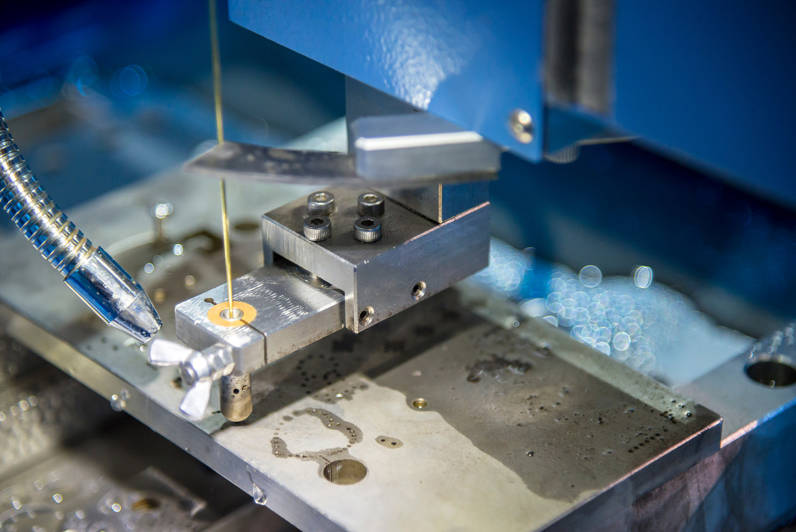
Electrical Discharge Machining (EDM) is a non-contact thermal process that uses electrical discharges (sparks) to erode material. It’s an excellent choice for titanium, especially for creating complex shapes, small holes, or features with high aspect ratios that are difficult or impossible to achieve with conventional cutting tools. Since it’s a non-contact process, it eliminates cutting forces, chatter, and mechanical stress on the workpiece. However, EDM can leave a “recast layer” and altered surface metallurgy, which may require post-processing depending on the application.
Waterjet Cutting
Waterjet cutting, especially abrasive waterjet cutting, utilizes a high-pressure stream of water mixed with abrasive particles to cut through materials. It’s a cold cutting process, meaning it generates minimal heat, which is a significant advantage for titanium. Waterjet cutting eliminates the issues of thermal distortion, alpha case formation, and high cutting forces. It’s suitable for cutting large profiles, complex two-dimensional shapes, and roughing out blanks for subsequent CNC operations, significantly reducing material waste and preparation time.
Ensuring Quality and Surface Integrity in Finished Titanium Components
For critical applications, merely producing a titanium part is insufficient; ensuring its structural and superficial integrity is paramount. Compromised surface quality can lead to premature part failure, making post-machining considerations as important as the machining process itself.
Preventing Alpha Case Formation
Alpha case, a brittle, oxygen-rich layer, must be meticulously avoided. This often means running conservative cutting parameters to keep temperatures low, utilizing aggressive cooling strategies (like HPC or cryogenic machining), and ensuring proper chip evacuation. If alpha case is suspected or unavoidable in certain operations, subsequent chemical milling or mechanical removal (grinding, abrasive blasting) may be necessary to restore surface ductility and fatigue resistance. Careful monitoring of cutting temperatures is a key preventive measure.
Managing Residual Stress
Tensile residual stresses on machined surfaces can significantly reduce a component’s fatigue life and make it susceptible to stress corrosion cracking. Strategies to mitigate these stresses include using sharp tools with optimal geometry, maintaining stable cutting conditions, and ensuring adequate coolant flow to control thermal gradients. Shot peening is a common post-machining process where small spherical media impact the surface, inducing beneficial compressive residual stresses that counteract the deleterious tensile stresses, thereby improving fatigue performance.
Achieving Desired Surface Finish (Ra Values)
Meeting stringent surface finish requirements (often expressed as Ra values) for titanium components, especially in medical and aerospace sectors, demands precision. This is achieved through a combination of optimized finishing passes, sharp tools with minimal edge hone, controlled runout, and the right coolant strategy. Extremely fine finishes may require secondary operations such as vibratory finishing, polishing, or electropolishing to reach the desired smoothness and remove any microscopic irregularities left by machining.
Post-Machining Treatments
Depending on the application, titanium components may undergo various post-machining treatments:
- Cleaning: Thorough cleaning to remove all machining fluids, chips, and contaminants.
- Deburring: Removing any burrs left by the cutting process.
- Heat Treatment: Stress relieving or annealing to alter microstructure and mechanical properties or remove residual stresses introduced during machining.
- Surface Hardening: While alpha case is undesirable, other controlled surface treatments like nitriding can enhance wear resistance without compromising fatigue properties.
- Inspection: Non-destructive testing (NDT) methods such as dye penetrant inspection, eddy current testing, or ultrasonic testing are frequently used to detect surface or subsurface defects that might impact performance.
Cost Implications and Return on Investment (ROI) in Titanium Machining
While the technical challenges of titanium CNC machining are substantial, the economic factors are equally critical. The high intrinsic cost of titanium materials, coupled with the specialized requirements for successful machining, necessitates a keen focus on efficiency, waste reduction, and overall cost-effectiveness to ensure a positive return on investment.
High Material Cost
Titanium alloys are significantly more expensive than other common engineering metals. This means that scrap or rework due to machining errors carries a much higher financial penalty. Maximizing material utilization through efficient nesting, near-net-shape manufacturing (e.g., forging, casting, or additive manufacturing for initial forms), and careful chip management for recycling are crucial strategies to mitigate this high initial cost. Each gram of material saved directly translates into cost savings.
Tooling Expenditure
The specialized carbide grades, advanced coatings, and specific geometries required for titanium machining make cutting tools inherently more expensive than those used for steel or aluminum. Furthermore, the rapid tool wear associated with titanium means that tool consumption rates can be high. Investing in premium tools is often justified by the extended tool life they provide, leading to fewer tool changes, less downtime, and more consistent part quality. Balancing tool cost with tool life and performance is a critical optimization task.
Optimizing Cycle Time for Efficiency
Achieving fast cycle times without compromising quality is a constant goal. While titanium generally requires slower cutting speeds, intelligent tool path strategies (like trochoidal milling), optimized depth and width of cut, and highly rigid machines can improve material removal rates. Reducing idle time, automating tool changes, and integrating in-process measurement also contribute to overall efficiency. A highly optimized process can offset the inherent slowness of titanium machining by minimizing non-cutting time.
Waste Reduction and Scrap Management
Minimizing scrap is paramount given the high material cost. This involves rigorous process control, preventative maintenance on machines, and comprehensive operator training. Beyond preventing scrap parts, effective chip management for recycling is also a significant financial consideration. Titanium chips have value and can be recycled, but proper segregation and cleaning are essential. Any contamination reduces their value, so systems for separating titanium chips from other materials and coolants are vital.
Conclusion: The Future of Precision Titanium Machining
Titanium CNC machining remains a challenging yet highly rewarding endeavor. Its unique properties, while presenting significant hurdles, are precisely why titanium is indispensable for critical applications demanding the highest performance. The key to successful titanium machining lies in a deep understanding of these material characteristics, coupled with the strategic implementation of advanced tooling, optimized parameters, sophisticated cooling techniques, and robust machinery.
As industries like aerospace, medical, and defense continue to push the boundaries of design and performance, the demand for ever more complex and precise titanium components will only grow. The continuous evolution of cutting tool technology, the development of smarter machining strategies, and the integration of innovative processes like cryogenic machining and adaptive control systems are paving the way for more efficient, reliable, and cost-effective titanium manufacturing. Mastering these challenges today ensures a competitive edge and shapes the future of high-performance manufacturing. The journey from raw material to a flawless titanium component is a testament to precision engineering, where every challenge overcome contributes to a stronger, lighter, and more resilient world.