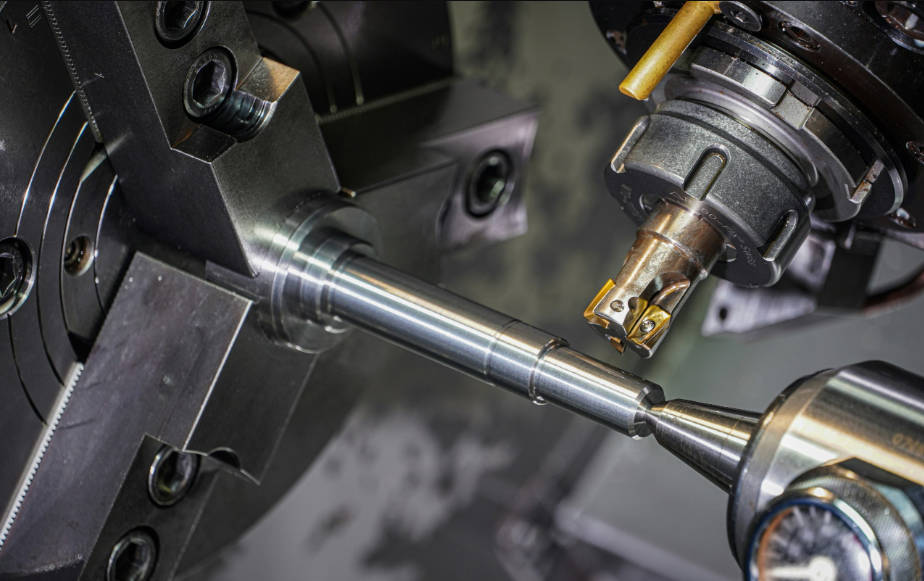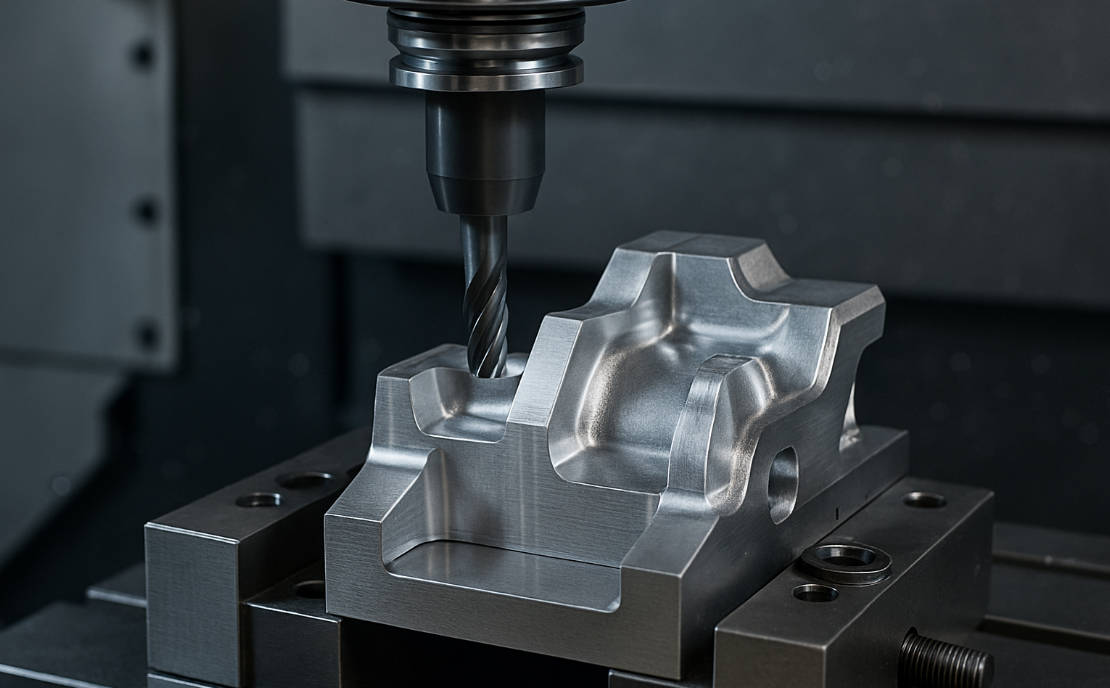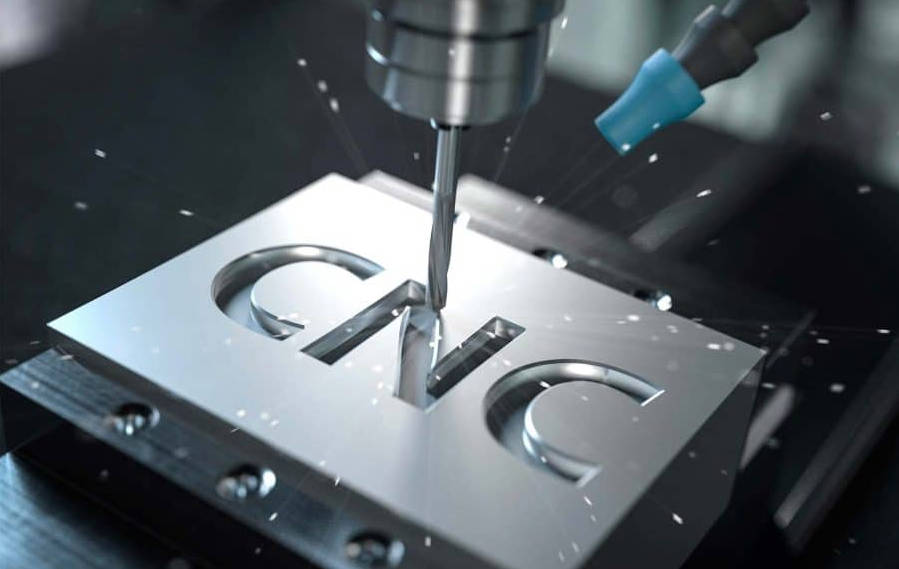
CNC machining is ideal for low-volume production primarily because it eliminates the high upfront costs and long lead times associated with traditional tooling, like injection molds. This direct-from-digital manufacturing process offers unparalleled flexibility for design changes, rapid turnaround for market testing, and access to production-grade materials, making it a highly strategic and cost-effective solution for producing parts in quantities from one to several thousand.

In the world of modern manufacturing, the path from concept to market is fraught with decisions that can make or break a product. One of the most critical junctures is choosing the right production method, especially for initial runs. While mass production methods have their place, Computer Numerical Control (CNC) machining has emerged as the undisputed champion for low-volume production. It’s not just an alternative; it’s a strategic advantage that offers a powerful combination of speed, economic sense, and superior quality for startups, innovators, and established companies alike.
Table of Contents
- What Exactly is Low-Volume Production?
- The Core Advantages: Why Choose CNC for Your Next Small-Batch Run?
- CNC Machining vs. Other Methods: A Low-Volume Showdown
- When is CNC the Undeniable Best Choice for Low-Volume Runs?
- Conclusion: De-Risking Your Product Launch with CNC Machining
What Exactly is Low-Volume Production?
Before diving into the “why,” it’s crucial to understand the “what.” Low-volume production, often called small-batch manufacturing or short-run production, is the process of creating a limited quantity of parts or products. This method bridges the gap between one-off prototyping and full-scale mass production.
Defining the “Sweet Spot”: How Many Units is Considered Low-Volume?
While there’s no universally fixed number, low-volume production typically refers to quantities ranging from 10 to 10,000 units. The ideal quantity depends heavily on the part’s complexity, material, and the manufacturing process being considered. For CNC machining, this range is the sweet spot where its benefits shine brightest, offering a better cost-per-part than 3D printing without requiring the massive investment of injection molding.
Who Benefits Most from Small Batch Manufacturing?
Small-batch manufacturing is not a niche need; it’s a critical strategy for a wide range of industries. Startups and hardware innovators rely on it to test market viability and produce initial batches for early adopters. Aerospace, medical, and automotive industries use it for creating highly specialized, custom components that aren’t needed in massive quantities. Even large corporations use low-volume runs to test new product variations or manage inventory more effectively (just-in-time manufacturing).
The Core Advantages: Why Choose CNC for Your Next Small-Batch Run?
The reasons for CNC machining’s dominance in the low-volume space are clear and compelling. It directly addresses the primary challenges of small-batch manufacturing: cost, speed, and flexibility.
1. Eliminating High Tooling Costs: The Economic Edge
The single most significant advantage of CNC machining for short runs is the absence of tooling costs. Processes like injection molding require the creation of a custom, hardened steel mold (the “tool”). Designing and manufacturing this mold is a complex, time-consuming process that can cost tens of thousands of dollars. This massive upfront investment is only justifiable when spread across hundreds of thousands of parts.
CNC machining, however, is a direct manufacturing process. It works straight from a 3D CAD (Computer-Aided Design) file. The primary setup involves programming the machine and creating fixtures to hold the workpiece, a cost that is minimal compared to creating a mold. This means you can start producing parts almost immediately without a prohibitive financial barrier, making it economically viable to produce just a handful of units.
2. Unmatched Speed and Rapid Turnaround
In today’s fast-paced market, speed is currency. The time saved by skipping the tooling phase is immense. While creating an injection mold can take 6 to 12 weeks, a CNC machine can often produce the first part within hours of receiving a finalized design. This rapid turnaround is transformative for product development cycles. It allows engineers and designers to get physical parts in their hands in a matter of days, not months. This accelerates testing, validation, and ultimately, the time-to-market for a new product.
3. Design Freedom and Effortless Iteration
What happens when you discover a design flaw after your first batch? With injection molding, modifying a steel mold is incredibly difficult and expensive, sometimes requiring a completely new tool. With CNC machining, making a change is as simple as updating the CAD file. This agility is a game-changer during product development. You can produce a small batch, gather user feedback, tweak the design, and machine a new, improved version—all within a week. This iterative process allows for continuous improvement and de-risks the final product design before committing to mass production.
4. Superior Precision, Consistency, and Quality
CNC machines are renowned for their incredible precision and ability to hold tight tolerances, often within ±0.005 inches (0.127 mm) or better. This level of accuracy is achieved through computer-controlled movements and rigid machine construction. Because the process is automated, the first part is virtually identical to the last, ensuring high repeatability and consistency across a small batch. This is critical for functional prototypes and end-use parts where precise fits and reliable performance are non-negotiable.
5. A Universe of Material Options
Unlike some other rapid manufacturing processes that are limited to specific polymers, CNC machining is compatible with a vast array of materials. You can machine parts from the exact production-grade material you intend to use for the final product. This includes various metals like Aluminum, Stainless Steel, Titanium, and Brass, as well as a wide range of engineering plastics such as ABS, Polycarbonate, Nylon, and PEEK. This allows for true functional testing of a part’s mechanical properties, chemical resistance, and thermal stability.
CNC Machining vs. Other Methods: A Low-Volume Showdown
To fully appreciate CNC’s role, it’s helpful to compare it directly with other common manufacturing methods in a low-volume context.
CNC Machining vs. Injection Molding
Injection molding is the king of high-volume production, capable of churning out parts for pennies apiece once the mold is made. However, for low volumes, the economics are completely reversed. The high upfront tooling cost makes it prohibitively expensive for short runs. CNC machining is the clear winner for any quantity where the tooling cost cannot be amortized effectively.
CNC Machining vs. 3D Printing (Additive Manufacturing)
3D printing is excellent for one-off conceptual prototypes due to its speed for complex geometries and zero setup cost. However, as quantities increase even slightly (e.g., to 50 or 100 units), CNC machining often becomes more cost-effective and faster. Furthermore, CNC-machined parts are created from solid blocks of material (subtractive manufacturing), resulting in superior strength, surface finish, and mechanical properties compared to the layer-by-layer process of 3D printing.
| Attribute | CNC Machining | Injection Molding | 3D Printing |
|---|---|---|---|
| Upfront Cost | Low (programming & setup) | Very High (mold tooling) | Very Low (none) |
| Per-Unit Cost (Low Volume) | Moderate | Extremely High | Moderate to High |
| Lead Time | Fast (1-2 weeks) | Very Slow (6-12+ weeks) | Fast (days) |
| Design Flexibility | Excellent | Poor (costly to change) | Excellent |
| Material Properties | Excellent (production-grade) | Excellent (production-grade) | Good to Moderate (anisotropic) |
When is CNC the Undeniable Best Choice for Low-Volume Runs?
Understanding the specific applications where CNC excels can help you make a confident manufacturing decision.
For Rapid Prototyping and Functional Testing
When you need a prototype that not only looks like the final product but also performs like it, CNC is the answer. Machining the prototype from the intended end-use material allows for rigorous functional testing of its strength, fit, and durability, providing invaluable data that a 3D-printed model cannot.
As a “Bridge Production” Method
CNC machining serves as the perfect “bridge” between prototyping and mass production. You can use CNC to manufacture the first few hundred or thousand units to enter the market and generate revenue while your high-volume injection molds are being made. This strategy minimizes delays, gets your product into customers’ hands faster, and can help fund the cost of high-volume tooling.
For Custom Parts and Niche Markets
For products that require a high degree of customization or serve a niche market (e.g., custom medical implants, specialized aerospace brackets, bespoke robotics components), the total lifetime volume may never justify the cost of a mold. CNC machining is the permanent, cost-effective solution for producing these high-value, low-quantity parts on-demand.
Conclusion: De-Risking Your Product Launch with CNC Machining
In conclusion, CNC machining is not just a viable option for low-volume production; it is the ideal strategic choice. By eliminating the crippling barrier of tooling costs, it democratizes manufacturing, allowing innovators to bring ideas to life without massive capital investment. Its inherent speed accelerates development cycles, while its design flexibility fosters iteration and product perfection. When combined with its high precision and material versatility, CNC machining provides a low-risk, high-reward pathway for validating a design, bridging to mass production, and confidently launching a successful product.
CNC machining, low-volume production, small batch manufacturing, rapid prototyping, CNC vs injection molding, benefits of CNC machining, cost-effective manufacturing, short-run production, bridge production, custom part manufacturing