CNC (Computer Numerical Control) machining revolutionizes supply chain efficiency by enabling on-demand production, which drastically cuts lead times, reduces inventory costs, and enhances overall flexibility. This high-precision, automated manufacturing process allows businesses to create custom parts locally, mitigating risks from global disruptions and building a more resilient, agile, and cost-effective supply chain. By shifting from a model of mass production and storage to one of nimble, as-needed creation, CNC machining directly addresses the core vulnerabilities of modern supply chains, transforming them from a potential liability into a strategic advantage.

Table of Contents
- What is CNC Machining and Why Does It Matter for Your Supply Chain?
- 7 Key Ways CNC Machining Boosts Supply Chain Efficiency
- 1. Drastically Reducing Lead Times with On-Demand Production
- 2. Enhancing Cost-Effectiveness and Slashing Hidden Expenses
- 3. Guaranteeing Unmatched Quality and Consistency
- 4. Boosting Agility for Customization and Design Iterations
- 5. Mitigating Supply Chain Risk Through Reshoring and Nearshoring
- 6. Optimizing Inventory with Just-In-Time (JIT) Manufacturing
- 7. Simplifying the Product Lifecycle with Digital Integration
- CNC Machining vs. Traditional Manufacturing: A Supply Chain Perspective
- How to Integrate CNC Machining into Your Supply Chain Strategy
- Conclusion: Building a More Resilient and Efficient Future
What is CNC Machining and Why Does It Matter for Your Supply Chain?
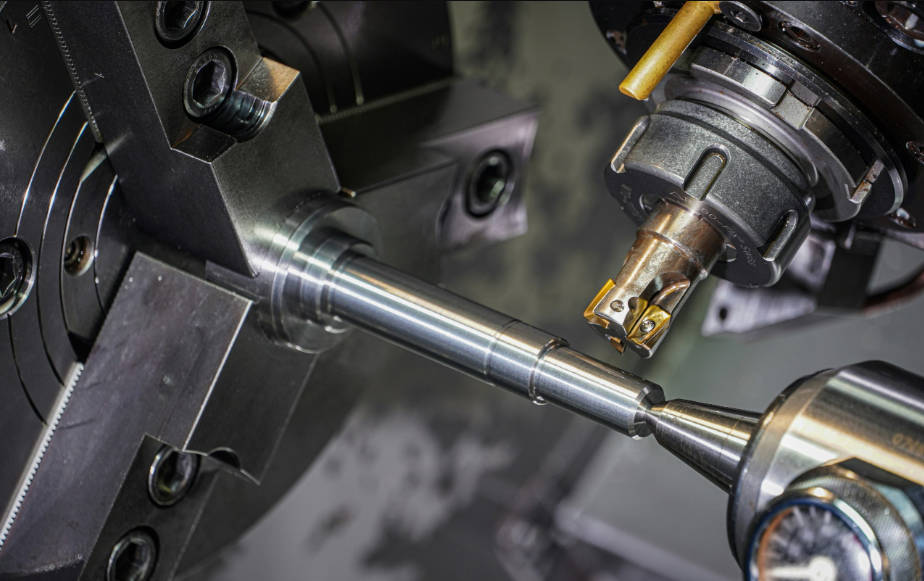
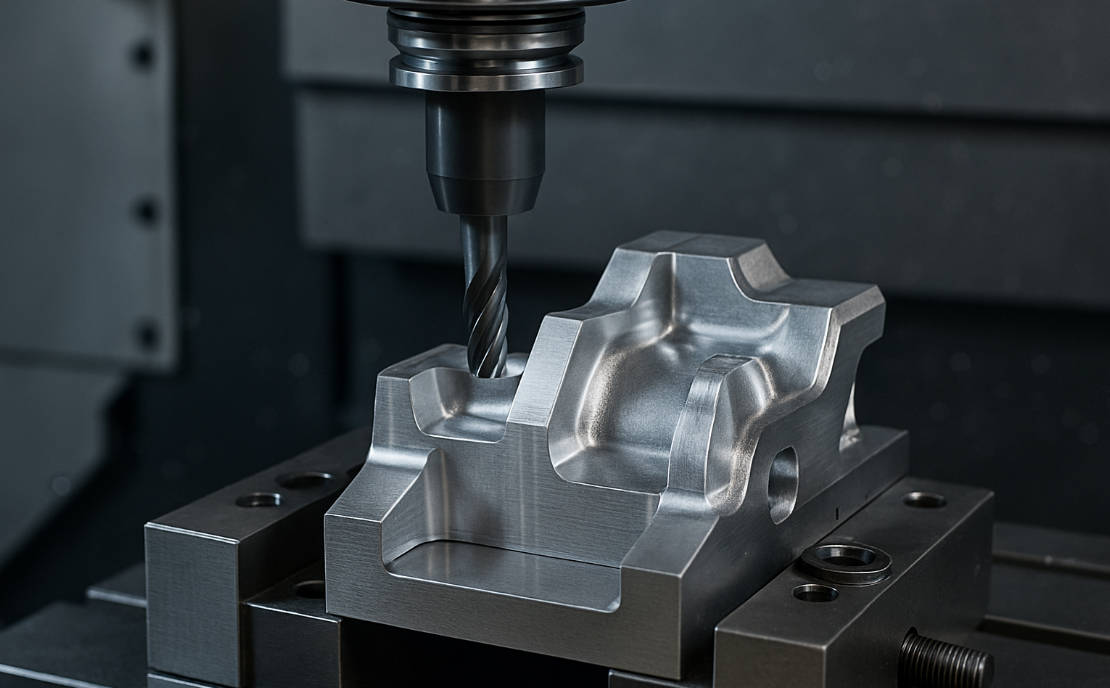
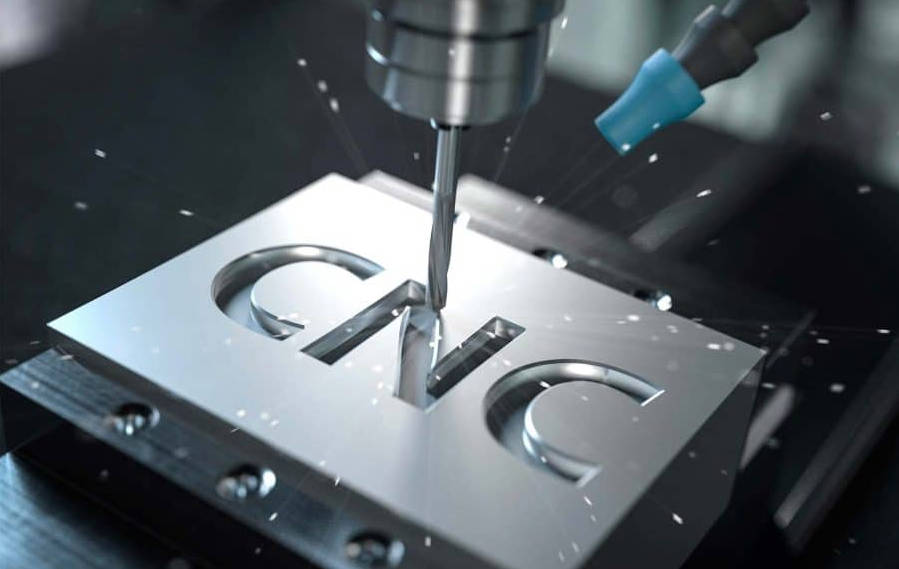
Before diving into the benefits, it’s crucial to understand what CNC machining is. At its core, CNC machining is a subtractive manufacturing process that uses computer-controlled machines to remove material from a solid block (a blank or workpiece) to create a highly precise part. A digital design file, typically a CAD (Computer-Aided Design) model, is translated into commands for the machine, which then cuts, drills, or grinds the material with incredible accuracy. This process works with a wide range of materials, including metals like aluminum and steel, plastics, and even wood.
Why is this so important for supply chain management? Traditional supply chains often rely on long-distance shipping, high-volume orders from overseas, and extensive warehousing to be cost-effective. This model is notoriously fragile, susceptible to geopolitical tensions, shipping delays, and quality control issues. CNC machining challenges this old paradigm by enabling a decentralized, responsive, and digitally-driven approach. It allows companies to produce parts exactly when and where they are needed, fundamentally changing the logistics of sourcing, production, and inventory.
7 Key Ways CNC Machining Boosts Supply Chain Efficiency
Integrating CNC machining isn’t just a minor process improvement; it’s a strategic overhaul that injects speed, resilience, and precision into every link of your supply chain. Here’s how it achieves this transformation.
1. Drastically Reducing Lead Times with On-Demand Production
One of the most significant bottlenecks in any supply chain is lead time—the period between placing an order and receiving the finished parts. Traditional methods like injection molding or casting require expensive, time-consuming tooling (molds and dies), leading to lead times that can stretch from weeks to months. This forces companies to forecast demand far in advance, often inaccurately.
CNC machining eliminates the need for hard tooling. Production can begin almost immediately after a digital design file is finalized. This capability for on-demand manufacturing and rapid prototyping means that functional prototypes and end-use parts can be produced in a matter of days, not months. This speed accelerates the entire product development cycle, allowing for faster market entry and a more responsive reaction to customer needs. When a critical part is needed for a production line, it can be machined locally instead of waiting for a shipment from across the globe.
2. Enhancing Cost-Effectiveness and Slashing Hidden Expenses
While the per-part cost of CNC machining for high volumes might be higher than mass-production methods, its overall impact on supply chain costs is overwhelmingly positive. The real savings come from reducing *hidden expenses*. By producing parts on-demand, you can slash costs associated with warehousing, inventory management, and obsolete stock. There’s no need to pay for storing thousands of parts that might never be used.
Furthermore, CNC machining is highly material-efficient. Advanced CAM (Computer-Aided Manufacturing) software optimizes toolpaths to minimize waste. The automation inherent in the process also reduces labor costs and the potential for costly human error. For low-to-medium volume production runs or for creating custom parts, CNC is often the most economically viable option when considering the total cost of ownership, not just the per-unit price.
3. Guaranteeing Unmatched Quality and Consistency
Supply chain efficiency is not just about speed; it’s about reliability. A shipment of low-quality parts can halt an entire assembly line, leading to costly delays and rework. CNC machines operate with exceptionally tight tolerances, often measured in micrometers. Since the process is computer-controlled, it delivers unmatched repeatability. The first part produced will be virtually identical to the thousandth.
This high level of quality control is built directly into the manufacturing process. It drastically reduces the rate of defects and ensures that every component meets precise specifications. For industries like aerospace, medical devices, and automotive, where precision is non-negotiable, this reliability is a cornerstone of an efficient and trustworthy supply chain.
4. Boosting Agility for Customization and Design Iterations
Modern markets demand customization and continuous improvement. Traditional manufacturing struggles with this, as any design change requires expensive and time-consuming modifications to tooling. CNC machining offers unparalleled design flexibility. To alter a part, a designer simply needs to update the CAD file. A new version of a component can be produced the same day, allowing for rapid iteration and testing.
This agility is crucial for a dynamic supply chain. It allows businesses to quickly adapt to changing customer requirements, offer customized products without a massive cost overhead, and continuously improve their products based on real-world feedback. This responsiveness turns the supply chain from a rigid, slow-moving system into a dynamic asset that can pivot as quickly as the market does.
5. Mitigating Supply Chain Risk Through Reshoring and Nearshoring
Recent global events have exposed the extreme vulnerability of long, complex supply chains. Dependence on a single overseas supplier creates a single point of failure. CNC machining is a powerful enabler of reshoring (bringing manufacturing back to the home country) and nearshoring (moving it to a nearby country). Because CNC technology is highly automated and digitally driven, it can be deployed anywhere with a skilled workforce and reliable power.
By establishing local or regional production capabilities with CNC partners, companies can build supply chain resilience. This reduces dependence on international shipping, insulates the business from tariffs and geopolitical instability, and provides greater control and visibility over the production process. A shorter, more transparent supply chain is inherently a more robust one.
6. Optimizing Inventory with Just-In-Time (JIT) Manufacturing
The Just-In-Time (JIT) manufacturing philosophy aims to reduce inventory levels and associated carrying costs by producing goods only as they are needed. CNC machining is perfectly suited for this model. Its ability to produce high-quality parts on-demand and in precise quantities means companies no longer need to maintain a “just-in-case” stockpile of components.
By integrating CNC machining into a JIT system, you can reduce warehousing needs, free up capital that was tied up in inventory, and minimize the risk of parts becoming obsolete. This lean approach makes the entire supply chain more financially efficient and environmentally sustainable by reducing waste.
7. Simplifying the Product Lifecycle with Digital Integration
CNC machining is a cornerstone of the digital manufacturing ecosystem (Industry 4.0). The entire process, from a CAD design on an engineer’s computer to the final instructions sent to the machine, is part of a seamless digital thread. This integration simplifies communication, reduces the chance of errors in transferring design specifications, and creates a transparent workflow.
This digital backbone allows for better collaboration between design, engineering, and production teams, regardless of their physical location. It streamlines the entire product lifecycle, from initial concept and prototyping to end-of-life replacement parts, making the supply chain smarter, more connected, and ultimately more efficient.
CNC Machining vs. Traditional Manufacturing: A Supply Chain Perspective
To fully appreciate the impact of CNC, it’s helpful to compare it directly with traditional manufacturing methods from a supply chain point of view.
| Supply Chain Factor | CNC Machining | Traditional Manufacturing (e.g., Injection Molding, Casting) |
|---|---|---|
| Lead Time | Days to a few weeks. Ideal for rapid prototyping and on-demand needs. | Weeks to several months due to complex tooling requirements. |
| Upfront Cost | Low. No hard tooling required, making small batches economical. | High. Significant investment in molds or dies is necessary. |
| Flexibility | Extremely high. Design changes are made by editing a digital file. | Very low. Design changes require expensive and time-consuming tool modifications. |
| Inventory Model | Supports Just-In-Time (JIT) and on-demand production, minimizing inventory. | Requires high-volume runs to be cost-effective, leading to large inventories. |
| Supply Chain Resilience | Enhances resilience by enabling local, decentralized production (reshoring). | Often leads to reliance on a few large, centralized, and often overseas facilities. |
| Best For | Prototypes, custom parts, low-to-medium volume production, complex geometries. | Mass production of millions of identical, simple-to-moderately complex parts. |
How to Integrate CNC Machining into Your Supply Chain Strategy
Adopting CNC machining is more than just finding a new vendor; it’s a strategic shift. Here are actionable steps to begin the integration:
- Identify Key Components: Analyze your bill of materials (BOM) to identify parts that are good candidates for CNC machining. Look for components with long lead times, high customization needs, or those critical to your production that pose a supply chain risk.
- Partner with a Digital Manufacturing Network: Instead of investing in your own machines, partner with a network of qualified CNC machine shops. Platforms like these offer access to a wide range of capabilities and materials, allowing you to source parts locally and on-demand without capital expenditure.
- Start with Prototyping and Low-Volume Runs: Begin by using CNC for rapid prototyping to validate designs. This is a low-risk way to experience the speed and quality benefits firsthand. Gradually move to using it for low-volume production or for creating bridge tooling while high-volume tools are being made.
- Embrace a Digital-First Mindset: Ensure your engineering and procurement teams are proficient with CAD software and understand the principles of Design for Manufacturability (DfM). A clean, well-designed digital model is the foundation of efficient CNC production.
- Rethink Your Inventory Strategy: Re-evaluate your inventory policies. For parts you transition to on-demand CNC production, you can significantly reduce safety stock levels, freeing up capital and warehouse space for more productive uses.
Conclusion: Building a More Resilient and Efficient Future
In today’s volatile global market, a slow, rigid, and opaque supply chain is a critical business risk. CNC machining offers a powerful, proven solution to build a more efficient, agile, and resilient supply chain. By leveraging its strengths in on-demand production, rapid lead times, unparalleled precision, and digital integration, businesses can move beyond the constraints of traditional manufacturing.
The ultimate benefit is a fundamental competitive advantage. By integrating CNC machining, you are not just optimizing a process; you are future-proofing your operations, enabling faster innovation, and creating a supply chain that can adapt and thrive in the face of uncertainty. The question is no longer *if* you should consider CNC machining for your supply chain, but *how quickly* you can implement it to start reaping the rewards.
CNC machining, supply chain efficiency, supply chain management, lead times, on-demand manufacturing, rapid prototyping, cost reduction, quality control, supply chain resilience, JIT manufacturing, reshoring, digital manufacturing, how cnc machining improves supply chain, benefits of cnc for logistics, cnc machining for inventory reduction, using cnc to shorten lead times, role of precision engineering in supply chain