The core difference between CNC turning and manual turning lies in control and automation; CNC (Computer Numerical Control) turning uses pre-programmed computer code to automate the cutting process, delivering exceptional precision and repeatability for high-volume production, while manual turning relies on the direct, hands-on skill of a machinist to control the lathe, making it ideal for prototypes, one-off parts, and simple repairs. Understanding which method to choose is critical for optimizing a project’s cost, speed, and final quality. This article breaks down the key differences, benefits, and ideal applications of each to help you make an informed decision for your manufacturing needs.
Table of Contents
- What is Turning? A Foundational Overview
- Unpacking Manual Turning: The Art of a Skilled Machinist
- Exploring CNC Turning: Precision Driven by Code
- Head-to-Head Comparison: CNC Turning vs. Manual Turning
- Making the Right Choice: Which Process Fits Your Application?
- The Future is Hybrid: Bridging the Gap
- Conclusion: A Tale of Two Turning Methods
What is Turning? A Foundational Overview
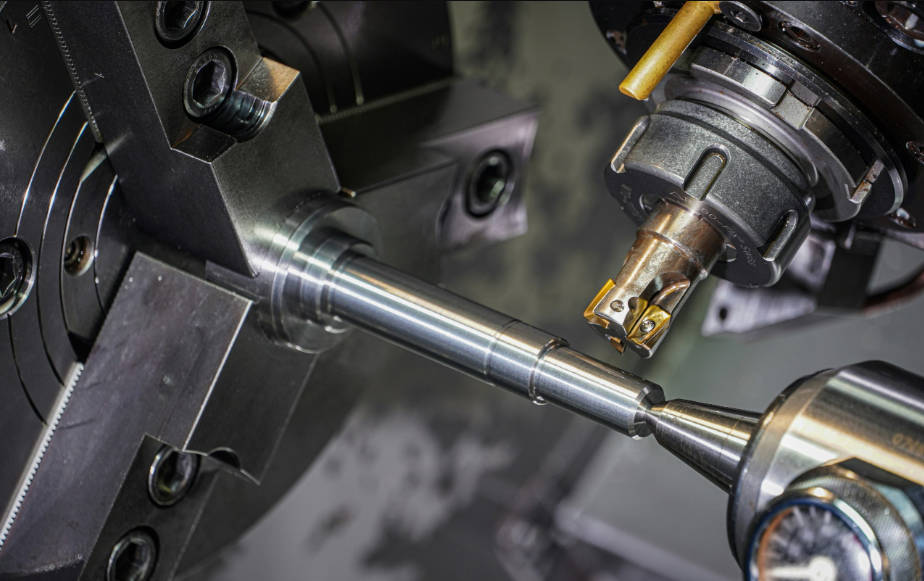
Before comparing CNC and manual methods, it’s essential to understand the fundamental process of turning itself. Turning is a subtractive manufacturing process performed on a machine called a lathe. The core principle involves rotating a workpiece (typically a cylindrical piece of metal, plastic, or wood) at high speed while a stationary cutting tool is advanced against it. The tool meticulously shaves away material to shape the workpiece into a desired profile. This process is used to create rotational parts, such as shafts, pins, bolts, and rings, and can produce features like grooves, tapers, and threads.
Both manual and CNC turning operate on this same basic principle. The workpiece spins, and a tool cuts it. The critical difference—and the subject of this article—is how that cutting tool is controlled and guided. One relies on the seasoned hand of a craftsman, while the other executes instructions from a computer with flawless precision. This distinction in control fundamentally changes the capabilities, applications, and economics of the process.
Unpacking Manual Turning: The Art of a Skilled Machinist
Manual turning, also known as conventional turning, represents the traditional form of lathe work. It is a tactile and skill-intensive process where the quality of the finished part is a direct reflection of the operator’s experience and expertise. Here, the machine is a tool in the truest sense, entirely guided by human hands.
How Does a Manual Lathe Work?
On a manual lathe, the machinist directly manipulates the machine’s controls to guide the cutting tool. This involves turning various handwheels and levers that control the movement of the carriage (which holds the tool) along the X-axis (cross-feed) and Z-axis (longitudinal feed). The operator uses measuring tools like calipers and micrometers to check dimensions in real-time, making constant, minute adjustments to achieve the desired size and shape. There is no programming involved; the entire process relies on the operator’s ability to read blueprints, understand material properties, and “feel” the cut.
Advantages of Manual Turning
Despite the rise of automation, manual turning retains a vital role in modern manufacturing for several key reasons:
- Lower Initial Investment: Manual lathes are significantly less expensive to purchase and maintain than their CNC counterparts, making them accessible for smaller shops, hobbyists, and repair departments.
- Fast Setup for Simple Jobs: For a one-off part or a quick repair, a skilled machinist can often set up and complete the job on a manual lathe faster than it would take to program a CNC machine.
- Ideal for Prototyping and R&D: When developing a new part, manual turning allows for immediate, on-the-fly adjustments without the need to edit and re-post code. This flexibility is invaluable during research and development.
- No Programming Required: The process is direct and does not require knowledge of G-code or CAM software, relying instead on mechanical skills and blueprint interpretation.
Limitations of Manual Turning
The strengths of manual turning are also intrinsically linked to its weaknesses:
- Operator-Dependent: The final accuracy and quality are entirely dependent on the machinist’s skill and concentration. This introduces a higher potential for human error.
- Poor Repeatability: Producing two or more perfectly identical parts is extremely challenging. Minor variations are inevitable from one piece to the next.
- Slow for Production Runs: The process is inherently manual and therefore much slower than automated CNC turning, making it unsuitable for mass production.
- Difficulty with Complex Geometries: Creating complex curves, intricate profiles, or non-uniform tapers is exceptionally difficult and time-consuming, if not impossible, by hand.
Exploring CNC Turning: Precision Driven by Code
CNC turning represents the evolution of the lathe, integrating computer control to achieve a level of precision, speed, and complexity that is impossible to replicate manually. In this process, the machinist’s role shifts from a hands-on operator to a programmer and process supervisor.
How Does a CNC Turning Center Operate?
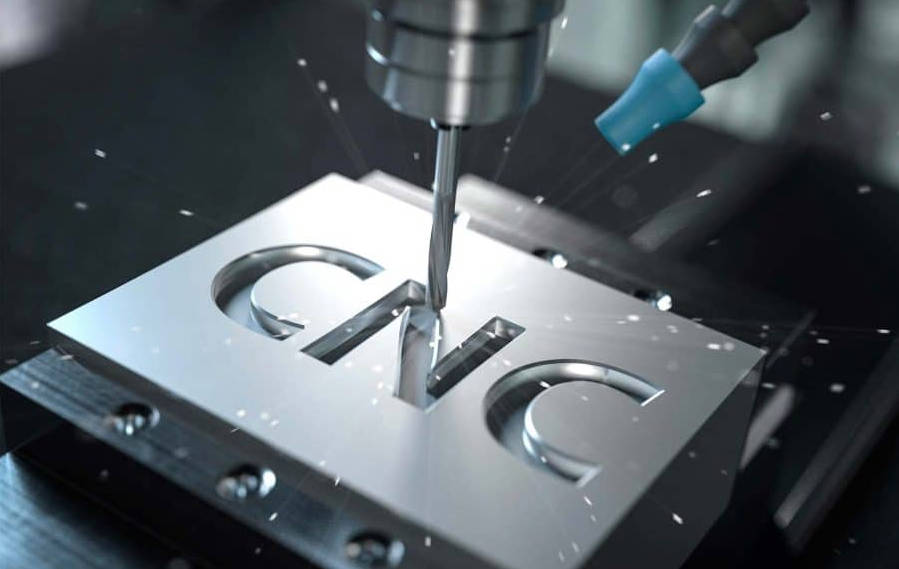
The CNC turning process begins with a digital design, typically a 2D drawing or a 3D CAD (Computer-Aided Design) model. This design is then imported into CAM (Computer-Aided Manufacturing) software, where a programmer defines the toolpaths, cutting speeds, and feed rates. The CAM software translates these instructions into a machine-readable program called G-code. This G-code is loaded into the CNC controller, which then directs high-precision servo motors to move the cutting tool and other machine components. The entire operation is executed automatically with minimal human intervention once the program is started.
The Power of CNC Turning: Key Benefits
CNC turning centers offer a wealth of advantages, making them the cornerstone of modern production manufacturing:
- Exceptional Precision and Repeatability: By removing human error from the machining process, CNC machines can produce thousands of identical parts with extremely tight tolerances, often within microns.
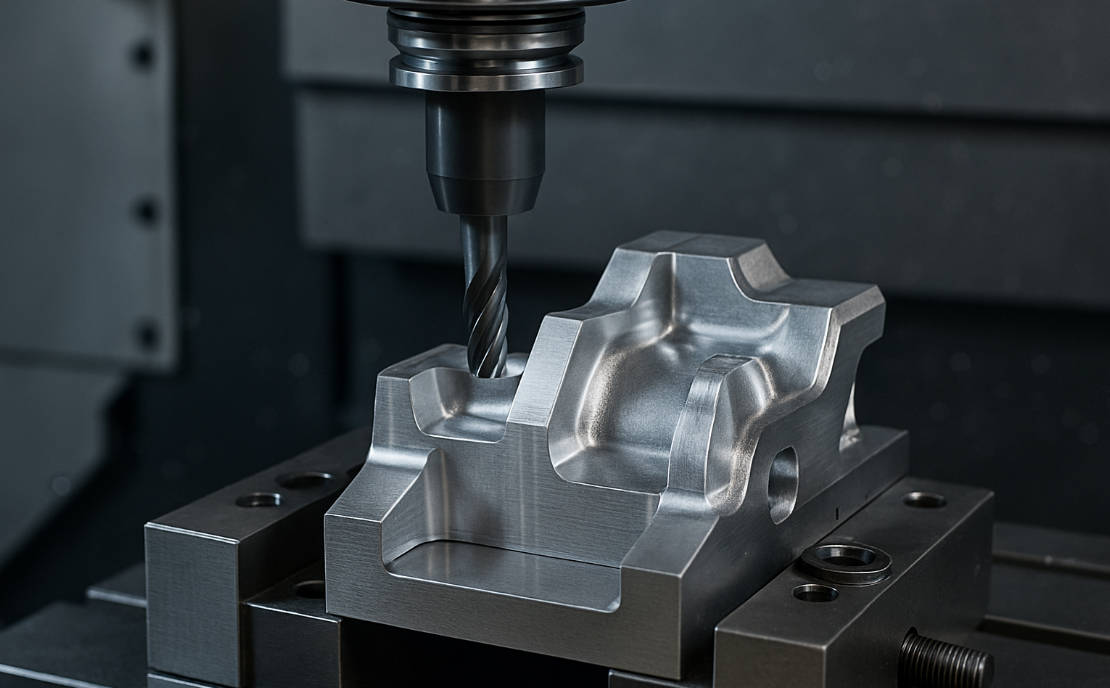
- Capability for Complex Shapes: Synchronized, multi-axis control allows for the creation of highly complex geometries, contours, and profiles that would be impractical for a manual lathe.
- High Speed and Efficiency: CNC turning centers operate at optimized speeds and can run continuously, drastically reducing cycle times and making them perfect for high-volume production.
- Reduced Labor and Automation: A single operator can often oversee multiple CNC machines. Advanced features even allow for “lights-out” manufacturing, where machines run unattended overnight.
Considerations for CNC Turning
The advanced capabilities of CNC technology come with their own set of considerations:
- Higher Upfront Cost: CNC turning centers, along with the necessary software and tooling, represent a significant capital investment.
- Programming Requirement: The process requires skilled programmers who can create efficient and error-free G-code, which is a different skill set than traditional machining.
- Longer Initial Setup: The time required to program, set up the tools, and prove out the first part is longer than on a manual lathe, making it less efficient for single-piece jobs.
Head-to-Head Comparison: CNC Turning vs. Manual Turning
To truly understand the differences, it’s helpful to compare these two methods across several key performance indicators. The right choice for a project becomes clear when you analyze your specific needs against these criteria.
| Factor | Manual Turning | CNC Turning |
|---|---|---|
| Precision & Repeatability | Low to Medium; Highly operator-dependent. | Very High; Consistent and computer-controlled. |
| Part Complexity | Best for simple geometries (cylinders, tapers, threads). | Excellent for complex curves, contours, and intricate profiles. |
| Production Volume | Ideal for 1-10 pieces (prototypes, repairs). | Ideal for dozens to thousands of parts (mass production). |
| Cost | Low initial investment; high cost-per-part on large runs. | High initial investment; low cost-per-part on large runs. |
| Operator Skill | Requires deep mechanical skill, feel, and experience. | Requires programming (CAM/G-code), setup, and process monitoring skills. |
| Setup Time | Very fast for a single, simple part. | Longer due to programming and tooling setup. |
Precision and Repeatability: The Automation Advantage
This is perhaps the most significant differentiator. A CNC machine executes its programmed path flawlessly every single time. It doesn’t get tired, distracted, or misread a measurement. This results in incredibly high repeatability, where the ten-thousandth part in a production run is virtually identical to the first. A manual machinist, no matter how skilled, cannot replicate this level of consistency. While they can achieve high precision on a single part, maintaining that exact precision across a large batch is a monumental challenge.
Geometric Complexity: From Simple Cylinders to Intricate Profiles
Manual turning excels at creating fundamental shapes. A machinist can expertly turn a straight shaft, cut a simple taper, or face a part to a specific length. However, when a design calls for a complex radius that blends into a non-uniform curve, CNC is the only practical solution. CNC turning centers can synchronize multiple axes of movement simultaneously, allowing them to carve out intricate profiles that would be impossible to create by manually operating two separate handwheels.
Speed and Production Volume: Scaling Your Output
For a single part, a manual lathe can sometimes be faster due to the absence of programming time. However, this advantage disappears the moment a second part is needed. A CNC machine, once programmed and set up, can produce parts at a much faster cycle time than a manual operator. This efficiency scales dramatically with volume. For any job beyond a small handful of pieces, CNC turning is exponentially faster and more cost-effective.
The Cost Equation: Initial Investment vs. Long-Term ROI
The financial comparison is a classic case of capital expenditure versus operational expenditure. A manual lathe has a low barrier to entry, with a significantly smaller upfront cost. However, the labor cost per part is relatively high and remains constant regardless of volume. A CNC machine demands a substantial initial investment in the machine, software, and training. But once it’s running, the per-part cost plummets due to speed, automation, and reduced labor, leading to a much higher return on investment (ROI) for production work.
The Human Element: Operator Skill and Labor
The skills required for each process are distinct. A master manual machinist is a craftsman with an intuitive understanding of mechanics, materials, and tool pressures. Their value is in their hands-on expertise. A proficient CNC machinist is a technologist. Their skills lie in digital design interpretation, CAM programming, process optimization, and problem-solving within an automated system. Both roles are highly skilled, but they represent different paradigms of manufacturing.
Making the Right Choice: Which Process Fits Your Application?
The decision between CNC and manual turning is not about which is “better,” but which is the appropriate tool for the job at hand. Your project’s specific requirements will point you to the correct choice.
When Should You Choose Manual Turning?
Opt for manual turning under the following circumstances:
- Prototypes and One-Offs: When you need a single custom part made quickly.
- Simple Repairs: For modifying an existing part or creating a simple replacement component like a bushing or pin.
- Toolroom Work: Creating jigs, fixtures, or other internal tooling where only one or two are needed.
- Educational Settings: It is an excellent way to teach the fundamentals of machining.
- Extremely Tight Budgets: When the upfront cost of programming and CNC setup is prohibitive for a very small job.
When is CNC Turning the Superior Option?
CNC turning is the clear winner in these scenarios:
- High-Volume Production: For any run from a few dozen to many thousands of parts.
- High-Precision Requirements: When parts must adhere to very tight tolerances and specifications.
- Identical Part Consistency: When every part in a batch must be an exact duplicate of the others.
- Complex Geometries: For any design involving complex curves, profiles, or contours.
- Cost-Per-Part Optimization: When the primary goal is to minimize the unit cost in a production environment.
The Future is Hybrid: Bridging the Gap
It’s important to note that the line between manual and CNC is blurring. Many modern machine shops employ “Teach-in” lathes or machines with “Conversational CNC” controls. These hybrid machines allow an operator to manually turn a part while the machine’s computer records their movements. The machine can then replicate those movements automatically for subsequent parts. This approach combines the quick setup of manual machining with the repeatability of CNC, offering a flexible solution for small-to-medium batch sizes.
Conclusion: A Tale of Two Turning Methods
In the dynamic world of manufacturing, both CNC turning and manual turning hold their own indispensable places. They are not competing technologies but rather complementary tools suited for different tasks. Manual turning remains the domain of the artisan, perfect for the immediacy of prototyping, the simplicity of repairs, and the creation of one-of-a-kind pieces. CNC turning is the workhorse of modern industry, delivering the unparalleled precision, speed, and scalability required for mass production.
Ultimately, the choice hinges on four key factors: the complexity of your part, the volume you need, the precision required, and your project’s budget. By carefully evaluating these variables, you can confidently select the turning method that will transform your raw material into a finished product with maximum efficiency and quality.
CNC Turning vs Manual Turning, CNC lathe, manual lathe, what is the difference between CNC and manual turning, when to use CNC turning, advantages of manual lathe, conventional turning, precision machining, subtractive manufacturing