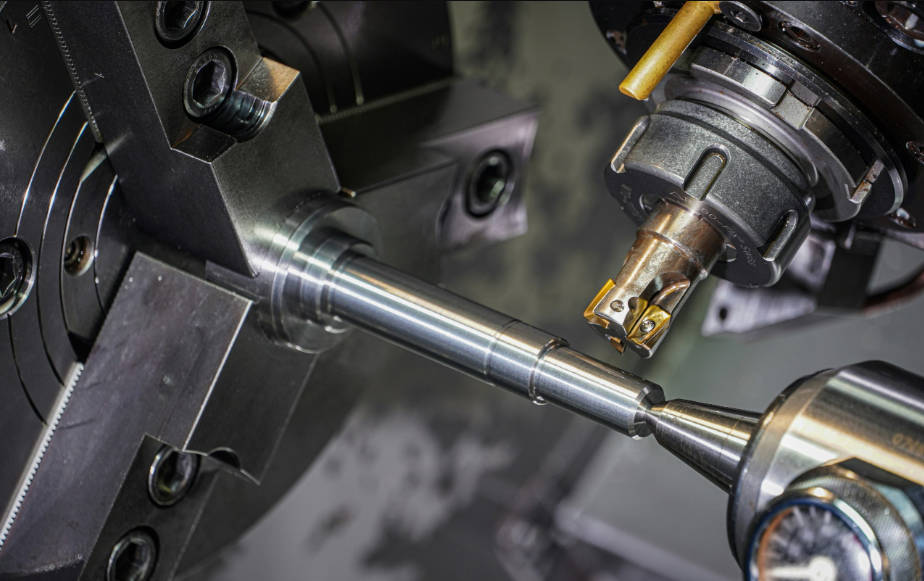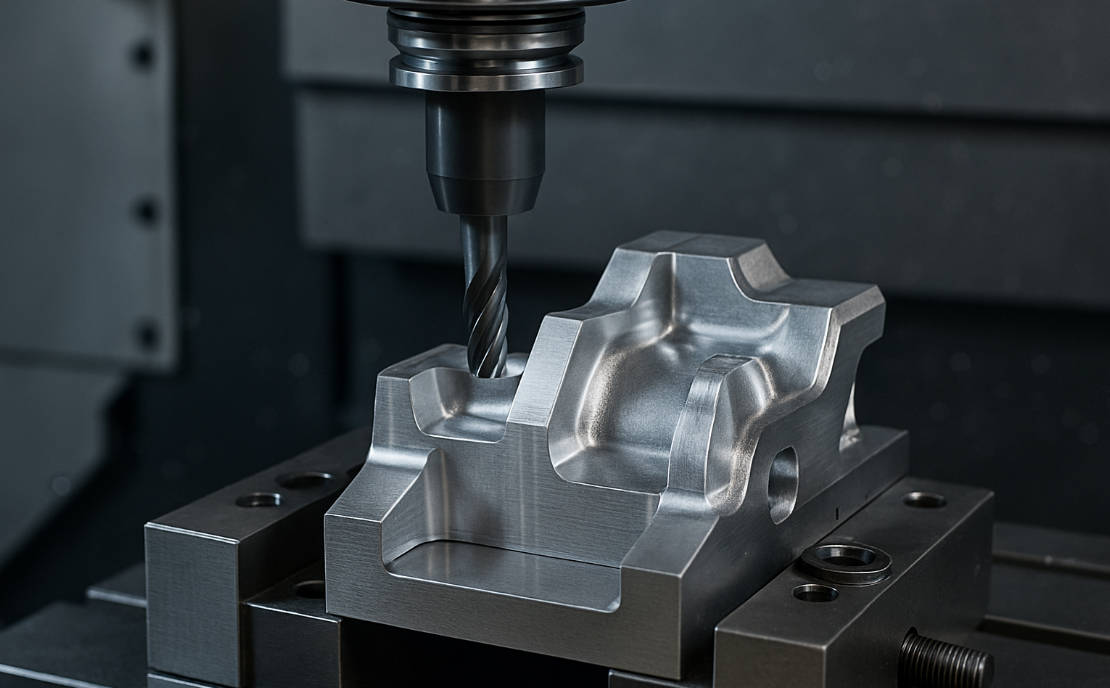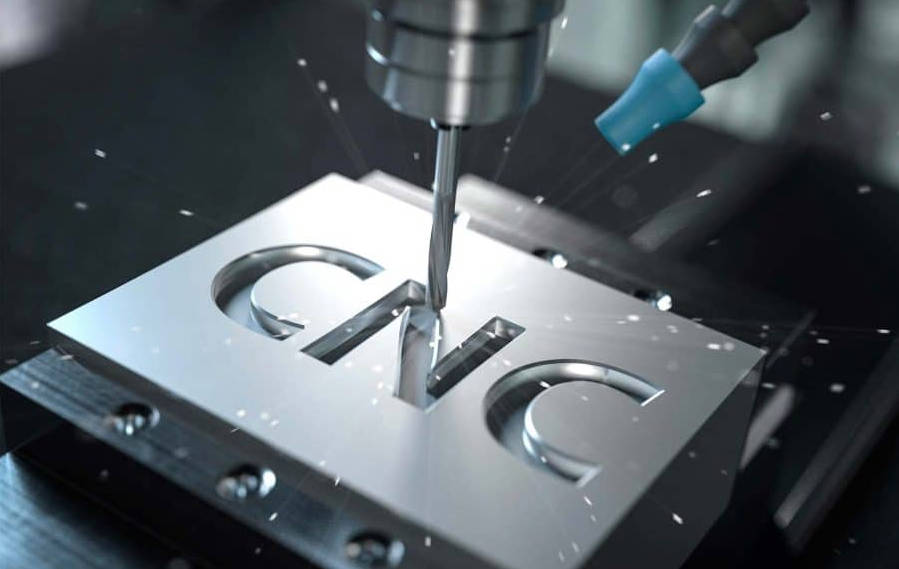
A CNC Turning Machine, commonly known as a CNC lathe or turning center, is an advanced manufacturing tool that uses computer numerical control (CNC) to shape materials into precise cylindrical parts. The core process involves rotating a workpiece at high speed while a stationary cutting tool removes material. This subtractive manufacturing method is fundamental for creating components with complex rotational features, such as shafts, rings, and custom fittings, with exceptional accuracy and repeatability.
Table of Contents
- What is a CNC Turning Machine? (The Fundamentals Explained)
- How Does a CNC Turning Machine Work? (The Core Process)
- Unveiling the Core Components of a CNC Turning Machine
- Exploring the Different Types of CNC Turning Machines
- What are the Primary Functions of a CNC Turning Machine?
- Applications Across Industries: Where are CNC Turning Machines Used?
- Key Advantages of Using CNC Turning Technology
- Conclusion: The Enduring Power of Precision Turning
What is a CNC Turning Machine? (The Fundamentals Explained)
Imagine a potter’s wheel, but instead of clay being shaped by hands, a metal bar is rotated at thousands of RPM and precisely carved by a computer-guided cutting tool. This is the essence of a CNC turning machine. It is a highly automated machine tool that shapes material by rotating it against a cutting tool. The term “CNC” stands for Computer Numerical Control, which signifies that all movements and operations are dictated by a pre-programmed computer code. This automation allows for the production of identical parts with incredibly tight tolerances, making it a cornerstone of modern manufacturing.
The process is inherently “subtractive,” meaning it starts with a solid block or bar of material (known as a blank or workpiece) and removes excess material to reveal the final desired shape. Unlike manual lathes that require constant operator intervention, a CNC lathe executes a program of instructions to control the rotational speed (spindle speed), tool movement, and other critical parameters, ensuring unparalleled precision and efficiency.
CNC Turning vs. CNC Milling: What’s the Key Difference?
While both are CNC-driven subtractive processes, the fundamental difference lies in which part moves. In CNC turning, the workpiece rotates rapidly while the cutting tool moves along its length and radius to remove material. This is ideal for creating cylindrical or conical shapes. In contrast, with CNC milling, the cutting tool rotates at high speed while the workpiece remains stationary on a table that moves in multiple directions. This process is better suited for creating flat surfaces, complex contours, and geometric shapes on block-like parts.
How Does a CNC Turning Machine Work? (The Core Process)
The journey from a digital design to a physical part on a CNC turning machine follows a systematic workflow. It begins with a 2D or 3D computer-aided design (CAD) model of the component. This digital blueprint is then converted into a set of machine-readable instructions using computer-aided manufacturing (CAM) software. This code, primarily G-code and M-code, dictates every action the machine will take.
Once the program is loaded into the CNC controller, the operator secures the raw material (e.g., a metal bar) in the machine’s chuck. The protective doors are closed, and the cycle is initiated. The machine’s spindle begins to rotate the workpiece at a programmed speed. The tool turret, holding various cutting tools, moves into position. Guided by the code, the selected tool engages with the rotating workpiece, precisely cutting away material to achieve the desired diameter, length, and features. The entire process is automated, often with coolant being pumped to manage heat and clear away chips.
The Role of G-code and M-code
The language of CNC machines is G-code and M-code. G-code (Geometric Code) directs the machine’s movement, telling the tool where to go, how fast to move, and what path to follow (e.g., move in a straight line, cut an arc). M-code (Miscellaneous Code) controls the auxiliary functions of the machine, such as starting or stopping the spindle, turning on the coolant, or changing tools. Together, these codes form a complete program that orchestrates the entire machining operation from start to finish without manual input.
Unveiling the Core Components of a CNC Turning Machine
A CNC turning machine is a complex assembly of several critical components, each playing a vital role in its precision and functionality. Understanding these parts is key to appreciating how the machine operates.
Headstock: The Powerhouse
The headstock is the primary housing on the left side of the machine. It contains the main motor, gears, and the spindle assembly. Its function is to transfer power from the motor to the spindle, providing the rotational force needed to turn the workpiece. The quality and rigidity of the headstock are crucial for handling high cutting forces and preventing vibrations that could compromise surface finish and accuracy.
Spindle and Chuck/Collet: The Gripping Force
The spindle is the shaft that rotates. It is the heart of the machine’s rotational system. Attached to the end of the spindle is the chuck or collet, which is the work-holding device. A chuck uses adjustable jaws (typically three or four) to clamp onto the workpiece, holding it securely as it spins. A collet is a more precise work-holding device used for smaller diameter stock, providing a tighter, more concentric grip. The accuracy of the spindle and chuck directly impacts the concentricity and overall precision of the finished part.
Bed: The Foundation of Stability
The machine bed is the heavy, rigid base upon which all other components are mounted. Typically made of cast iron for its excellent vibration-damping properties, the bed provides a stable foundation and ensures the precise alignment of components like the headstock and tailstock. The guide ways, which are precision-ground rails on the bed, allow the carriage and tailstock to move smoothly and accurately along the Z-axis (parallel to the workpiece).
Carriage and Tool Turret: The Precision Movers
The carriage is a component that moves along the guide ways of the bed. It supports the tool turret, which is an indexable holder for multiple cutting tools. The CNC controller directs the carriage’s movement along the Z-axis (longitudinal) and X-axis (radial), allowing the tool to cut along the length and across the face of the workpiece. Modern tool turrets can hold a dozen or more tools and can quickly rotate to bring the correct tool into the cutting position, enabling complex operations without manual tool changes.
Tailstock: The Support System
Positioned opposite the headstock, the tailstock provides support for the free end of a long workpiece. By using a live or dead center that fits into a pre-drilled hole in the end of the part, the tailstock counteracts the cutting forces and prevents the workpiece from deflecting or vibrating. This is essential for maintaining accuracy when turning long, slender shafts.
CNC Control Panel: The Brain of the Operation
This is the human-machine interface (HMI) where the operator interacts with the machine. The CNC control panel consists of a screen, keyboard, and various buttons and dials. Here, the operator can load and edit programs, manually move the machine’s axes (jogging), set tool and work offsets, and monitor the entire machining process in real-time. It is the central nervous system that translates the digital program into physical motion.
Exploring the Different Types of CNC Turning Machines
CNC turning machines come in various configurations, each designed to meet specific production needs, part sizes, and complexity levels.
Horizontal CNC Lathes: The Industry Workhorse
This is the most common type of CNC lathe. As the name suggests, the spindle is oriented horizontally. These machines are versatile and used for a wide range of shaft, chucking, and bar work. Their design allows chips to fall away from the workpiece into a chip pan or conveyor, making them efficient for high-volume production.
Vertical CNC Lathes (VTL): For Large, Heavy Parts
In a Vertical Turning Lathe (VTL), the spindle is oriented vertically, and the workpiece sits on a rotating, table-like chuck. This configuration uses gravity to its advantage, making it easier to load and secure large, heavy, and short workpieces like flanges, rings, or gear blanks. It provides excellent rigidity for heavy-duty cutting operations.
Multi-Axis Turning Centers: The Height of Complexity
Modern turning centers go beyond simple 2-axis (X and Z) turning. They often incorporate additional axes, such as a Y-axis (allowing off-center drilling and milling), a C-axis (for spindle positioning), and sub-spindles (a second spindle opposite the main one). These machines can perform both turning and milling operations in a single setup, a capability known as “mill-turn.” This integration dramatically reduces production time and improves the accuracy of complex parts by eliminating the need for multiple machine setups.
Swiss-Type Lathes: For Small, Intricate Parts
Originally developed for the Swiss watchmaking industry, these machines are designed for producing very small, long, and intricate parts with extreme precision. In a Swiss-type lathe, the workpiece is fed through a guide bushing. Only the portion of the part being machined is exposed, with the cutting tools working very close to the bushing. This provides maximum support and eliminates deflection, making it ideal for manufacturing medical implants, electronic connectors, and other micro-components.
What are the Primary Functions of a CNC Turning Machine?
CNC turning machines can perform a multitude of cutting operations to create diverse geometric features. The combination of these functions allows for the creation of highly complex components from a single piece of stock.
| Function | Description |
|---|---|
| Turning | The tool moves parallel to the axis of rotation, reducing the diameter of the workpiece. |
| Facing | The tool moves across the end of the workpiece, creating a flat surface and setting the part’s length. |
| Grooving | The tool plunges into the workpiece to create a groove or channel of a specific width and depth. |
| Parting | A specific type of grooving operation that cuts the finished part off from the main bar stock. |
| Drilling | A drill bit, held in the turret or tailstock, advances along the workpiece’s center axis to create a hole. |
| Boring | An internal turning operation that enlarges an existing hole to a precise diameter. |
| Threading | A pointed tool moves along the workpiece’s surface at a specific feed rate to cut external or internal threads. |
Applications Across Industries: Where are CNC Turning Machines Used?
The versatility and precision of CNC turning make it indispensable across numerous sectors. In the aerospace industry, it is used to produce high-strength engine components, landing gear parts, and connectors. The automotive sector relies on it for manufacturing everything from engine shafts and pistons to suspension components and transmission parts. In the medical field, CNC turning is critical for creating custom surgical instruments and orthopedic implants with biocompatible materials. Other industries, including electronics, oil and gas, and general manufacturing, all depend on turned components for their products.
Key Advantages of Using CNC Turning Technology
The widespread adoption of CNC turning is driven by several compelling benefits over traditional manual methods:
- Precision and Repeatability: Computer control ensures that every part produced is virtually identical, with tolerances as tight as a few microns.
- Increased Productivity: Automated processes run much faster than manual operations, enabling high-volume production and shorter lead times.
- Complexity: Multi-axis machines can create intricate geometries in a single setup that would be difficult or impossible to achieve manually.
- Reduced Labor Costs: Once a program is set up, a single operator can oversee multiple machines, reducing the need for highly skilled manual machinists for every part.
- Enhanced Safety: The entire cutting process occurs within an enclosed machine, protecting the operator from moving parts, chips, and coolant.
Conclusion: The Enduring Power of Precision Turning
The CNC turning machine is more than just a modern lathe; it is a sophisticated, automated solution that has revolutionized the manufacturing of cylindrical components. From its foundational components like the headstock and bed to its advanced multi-axis capabilities, every element is engineered for precision, stability, and efficiency. By understanding its core functions, diverse types, and the crucial role it plays across industries, it becomes clear why CNC turning is a fundamental and indispensable technology in the world of precision engineering and manufacturing.
CNC Turning Machine, CNC Lathe, CNC turning process, CNC lathe components, types of CNC lathes, What is a CNC turning machine, How does a CNC lathe work, Horizontal CNC Lathe, Vertical Turning Lathe, Multi-Axis Turning Center, Swiss-Type Lathe