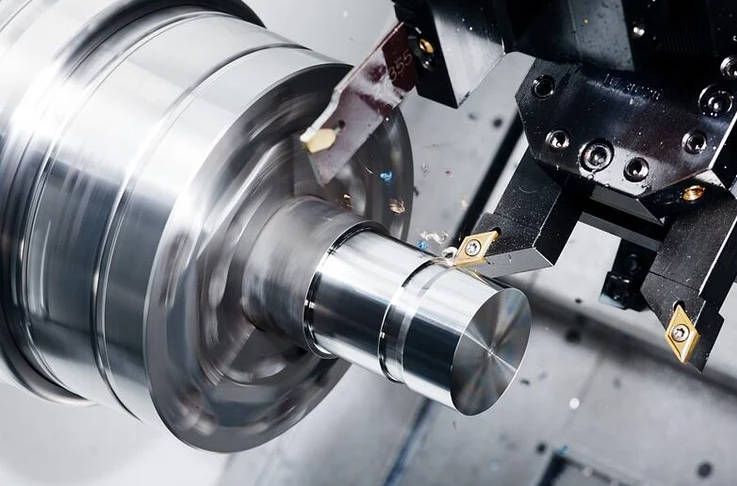
When selecting a manufacturing process for your next project, the choice between CNC Machining and 3D Printing is critical, as each excels in different applications and offers distinct advantages in terms of cost, material capabilities, lead time, and design complexity. CNC Machining, a subtractive process, is generally superior for high-strength, high-precision parts in medium to high-volume production, while 3D Printing, an additive process, shines in rapid prototyping, intricate geometries, and custom, low-volume production with a wide range of specialized materials. Understanding these core differences will help you determine which technology best aligns with your project’s specific requirements, budget, and desired outcomes.
Table of Contents
- Introduction: CNC vs. 3D Printing – Understanding the Core Differences
- How They Work: Additive vs. Subtractive Manufacturing
- Material Flexibility and Strength: Which Process Offers More?
- Design Freedom and Geometric Complexity: Pushing the Boundaries
- Accuracy, Surface Finish, and Tolerances: Achieving Desired Quality
- Cost Analysis and Production Volume: Optimizing Your Budget
- Speed and Lead Time: From Concept to Completion
- Post-Processing Requirements: Finishing Touches
- Environmental Impact and Sustainability: A Greener Choice?
- When to Choose CNC Machining: Ideal Project Scenarios
- When to Choose 3D Printing: Ideal Project Scenarios
- Hybrid Approaches: Combining the Best of Both Worlds
- Conclusion: Making the Right Choice for Your Manufacturing Needs
Introduction: CNC vs. 3D Printing – Understanding the Core Differences
The manufacturing landscape has been revolutionized by two powerful technologies: Computer Numerical Control (CNC) Machining and 3D Printing (Additive Manufacturing). While both are digital fabrication methods that translate CAD models into physical objects, their fundamental approaches to material manipulation couldn’t be more different. CNC machining is a *subtractive* process, meticulously removing material from a solid block to achieve the desired shape. In contrast, 3D printing is an *additive* process, building an object layer by layer from raw material. This inherent difference dictates their suitability for various applications, from one-off prototypes to large-scale production runs.
Deciding which method is “better” isn’t about one being universally superior, but rather about identifying which technology is optimal for your project’s specific needs. Factors such as the required material properties, geometric complexity, desired surface finish, production volume, budget constraints, and lead time all play significant roles in this crucial decision. This article will delve deep into these considerations, providing a comprehensive guide to help engineers, designers, and manufacturers make informed choices.
How They Work: Additive vs. Subtractive Manufacturing
To truly understand the pros and cons of each method, it’s essential to grasp the core mechanics behind them. Their manufacturing philosophy directly impacts their capabilities and limitations.
What is CNC Machining?
CNC Machining is a computer-controlled manufacturing process that employs various cutting tools to precisely remove material from a raw workpiece (known as a blank or stock material). The “CNC” acronym stands for Computer Numerical Control, meaning that a computer program dictates the movements of the tools. This process starts with a CAD (Computer-Aided Design) model, which is then converted into CAM (Computer-Aided Manufacturing) instructions, typically G-code. This G-code guides the machine to perform operations like milling, drilling, turning, and grinding with extreme accuracy. The material removal is gradual and controlled, resulting in parts with excellent mechanical properties and tight tolerances.
Common CNC machines include milling machines (which use rotating cutting tools to remove material from a stationary workpiece), lathes (which rotate the workpiece against a stationary cutting tool), and routers (often used for softer materials like wood or plastic). The key characteristic is the transformation of a solid block into the desired shape by cutting away excess material. This subtractive nature means that material waste, in the form of chips or shavings, is an inherent part of the process, though efforts are continuously made to recycle and optimize material usage.
What is 3D Printing?
Conversely, 3D Printing, or additive manufacturing, builds three-dimensional objects layer by layer from a digital design. Instead of removing material, it adds it. The process begins with a 3D CAD model, which is then sliced into hundreds or thousands of thin cross-sections. The 3D printer then deposits, fuses, or cures material according to these slices, gradually constructing the object from the bottom up. This layer-by-layer approach allows for the creation of incredibly complex geometries, internal structures, and organic shapes that would be impossible or prohibitively expensive to produce with subtractive methods.
There are numerous types of 3D printing technologies, each suited for different materials and applications. Common methods include Fused Deposition Modeling (FDM) for thermoplastics, Stereolithography (SLA) for photopolymer resins, Selective Laser Sintering (SLS) for powdered plastics, and Direct Metal Laser Sintering (DMLS) or Electron Beam Melting (EBM) for metal parts. Each method has its unique characteristics regarding surface finish, strength, and material compatibility, offering a vast array of possibilities for designers and engineers.
Material Flexibility and Strength: Which Process Offers More?
The choice of manufacturing process is often heavily influenced by the desired material properties of the final part. Both CNC machining and 3D printing support a diverse range of materials, but their capabilities and the resulting part characteristics differ significantly.
CNC Machining: Robustness and Precision
CNC machining excels when working with a vast array of traditional engineering materials, including metals, plastics, wood, and composites. Because it works with bulk stock material, the mechanical properties of the finished part are generally superior and highly predictable, closely matching the properties of the raw material. This means parts machined from high-grade aluminum, steel, titanium, or engineering plastics like ABS, nylon, and polycarbonate will exhibit excellent strength, durability, fatigue resistance, and isotropic properties (uniform strength in all directions).
Furthermore, CNC machining is capable of processing incredibly hard materials that would be challenging or impossible for many 3D printing methods. The ability to use off-the-shelf, certified materials also makes it easier to meet industry standards and certifications for demanding applications in aerospace, medical, and automotive sectors where material integrity is paramount. The internal grain structure of a solid block remains intact, contributing to the part’s overall strength and reliability.
3D Printing: Versatility and Specialization
3D printing offers an ever-expanding palette of materials, including various plastics (PLA, ABS, PETG, nylon, PEEK), resins, composites (carbon fiber reinforced polymers), ceramics, and a growing number of metals. While traditionally 3D printed parts, especially plastics, might not match the strength and isotropic properties of CNC machined counterparts due to their layered structure, significant advancements are closing this gap. High-performance polymers and metal 3D printing technologies (like DMLS and SLM) can produce parts with mechanical properties comparable to, and in some cases even exceeding, those of cast or machined parts.
The true strength of 3D printing in materials lies in its *versatility* for specialized applications. It can create parts with varying densities, internal lattice structures for weight reduction, or even multi-material components within a single print. This allows for functional prototyping with specific material properties, rapid iteration with different material options, and the creation of highly customized parts that benefit from unique material characteristics not easily achievable through subtractive means. For example, flexible polymers, transparent resins, or dissolvable support materials are readily available for 3D printing, opening up new design possibilities.
Material Comparison Table
To summarize the material capabilities:
| Feature | CNC Machining | 3D Printing |
|---|---|---|
| Common Materials | Metals (Aluminum, Steel, Titanium), Engineering Plastics (ABS, Nylon, Polycarbonate, PEEK), Wood, Composites | Plastics (PLA, ABS, PETG, Nylon, Resin), Composites (Carbon Fiber, Glass Fiber), Metals (Stainless Steel, Titanium, Aluminum), Ceramics |
| Material Properties | Excellent mechanical strength, high durability, isotropic properties (uniform strength), retains bulk material properties. | Can be anisotropic (strength varies by direction due to layers), properties depend heavily on technology and material. Advanced techniques yield strong parts. |
| Hardness/Rigidity | Processes very hard, rigid materials with ease (e.g., hardened steel). | Limited by melting/sintering temperatures; some hard metals require specialized, expensive printers. |
| Specialty Materials | Less common for unique material blends or varying properties within one part. | Excels in specialized materials (flexible, transparent, dissolvable, bio-compatible) and multi-material printing. |
Design Freedom and Geometric Complexity: Pushing the Boundaries
The fundamental difference between additive and subtractive processes has a profound impact on the types of geometries and design complexities each technology can effectively produce.
Designing for CNC Machining
CNC machining, by its nature, is best suited for designs that can be created by removing material. This typically means parts with more traditional, block-like geometries, straight walls, and features that can be accessed by a cutting tool. While multi-axis CNC machines (4-axis, 5-axis) have significantly expanded design capabilities, allowing for more complex curves, undercuts, and contoured surfaces, there are still inherent limitations. Internal channels, enclosed cavities, or highly organic, intricate lattice structures remain challenging or impossible to produce efficiently with CNC.
Design for Manufacturability (DFM) principles are crucial for CNC. Designers must consider tool access, tool size, corner radii (internal corners will always have a radius due to the circular cutting tool), and potential fixturing requirements. Undercuts and features that require the workpiece to be re-fixtured multiple times can increase costs and lead times. While highly precise, CNC is fundamentally limited by the physical access of a tool to the material, restricting true “design freedom” compared to additive methods.
Designing for 3D Printing
3D printing truly shines in its ability to create almost any conceivable geometry. Since material is added layer by layer, it faces far fewer geometric constraints than subtractive methods. This enables the creation of highly complex internal structures, intricate lattice designs for lightweighting, organic shapes, and components with internal channels or enclosed voids that would be impossible to machine. Engineers and designers can leverage topology optimization to create parts that are stronger and lighter, precisely where material is needed, and removed where it’s not.
This unparalleled design freedom makes 3D printing ideal for highly customized parts, patient-specific medical implants, complex aerospace components, and artistic designs. While some support structures may be required during the printing process for overhanging features, these are typically removed in post-processing. The ability to consolidate multiple components into a single, complex part (part consolidation) is another significant advantage, reducing assembly time and potential failure points.
Accuracy, Surface Finish, and Tolerances: Achieving Desired Quality
The precision and aesthetic quality of a manufactured part are often paramount, and here, CNC machining and 3D printing offer different strengths.
Precision in CNC Machining
CNC machining is renowned for its exceptional accuracy and tight tolerances. Modern CNC machines can achieve tolerances as low as ±0.005mm (±0.0002 inches) or even finer, depending on the machine, material, and specific process. This makes it the go-to choice for critical components that require precise fits, intricate mating surfaces, or exact dimensional accuracy, such as aerospace parts, medical devices, and high-precision mechanical components.
Furthermore, CNC machining typically produces a superior surface finish directly off the machine. The cutting action results in smooth, consistent surfaces. While different tools and cutting parameters can influence the finish, parts often require minimal or no post-processing to achieve the desired aesthetic and functional quality. This high inherent quality contributes to the mechanical performance and longevity of the machined part, reducing friction and wear in assembled systems.
Surface Quality in 3D Printing
The surface finish of 3D printed parts varies significantly depending on the technology used. FDM parts, for instance, often exhibit visible layer lines, requiring extensive sanding or chemical smoothing to achieve a smooth finish. SLA and DLP technologies produce much smoother surfaces due to the smaller layer heights and liquid resin process, often approaching injection-molded quality, but still may show some evidence of layers.
Metal 3D printing technologies like DMLS/SLM can achieve good surface finishes, but intricate parts often require significant post-processing, such as sandblasting, tumbling, or even machining, to meet demanding surface finish requirements. While 3D printing has improved considerably, achieving the *inherent* precision and surface finish of CNC machining without significant post-processing is still a challenge for most additive methods. Tolerances for 3D printing are generally wider than CNC, typically ranging from ±0.1mm to ±0.25mm (±0.004 to ±0.010 inches) or more, though high-end machines can achieve tighter tolerances on smaller features.
Cost Analysis and Production Volume: Optimizing Your Budget
Cost is often a primary driver in manufacturing decisions. The economic viability of CNC machining versus 3D printing largely depends on the production volume, part complexity, and material choice.
Prototyping Costs: Which is More Economical?
For rapid prototyping, especially for complex designs or multiple design iterations, 3D printing is often the more cost-effective solution. The initial setup cost for a 3D print is relatively low: typically just the cost of materials and machine time. There’s no need for expensive tooling, fixtures, or complex G-code programming that characterises CNC setup. Design changes can be implemented quickly and printed without significant additional cost. This makes 3D printing ideal for iterative design processes, where multiple versions of a prototype are created and tested.
In contrast, CNC prototyping can be more expensive. While simple parts might be affordable, complex CNC prototypes often require significant programming time, specialized tooling, and operator setup, driving up the initial cost. For a single, highly accurate prototype, CNC might be necessary, but for multiple functional or aesthetic prototypes, 3D printing usually offers a better return on investment.
Production Run Costs: Scaling Up Manufacturing
When it comes to medium to high-volume production, the cost dynamics shift significantly, making CNC machining generally more economical. Once the initial setup (programming, tooling, fixturing) is complete, CNC machines can operate continuously with high efficiency, producing parts at a lower cost per unit. The material cost for bulk stock is often lower than for 3D printing filaments or resins in large quantities, and the faster cycle times for many parts contribute to cost efficiency.
For 3D printing, the cost per part often remains relatively constant regardless of volume, or decreases marginally. This is because each part, whether one or a thousand, requires the same amount of material and machine time (per part). While advancements are being made in batch 3D printing, the economies of scale that benefit CNC machining in high volumes are typically not as pronounced in additive manufacturing. However, for highly customized, low-volume production (e.g., medical implants, specialized tools), 3D printing can still be the most cost-effective option due to its ability to produce complex parts without expensive tooling.
Key Cost Factors Comparison
| Cost Factor | CNC Machining | 3D Printing |
|---|---|---|
| Initial Setup/Tooling | High (programming, fixtures, custom tools) | Low (file preparation, material loading) |
| Material Cost | Generally lower per unit volume for common materials | Can be higher per unit volume, especially for specialized resins/powders |
| Machine Time | Faster for simpler geometries and higher volumes | Time depends on layer height, infill, and part complexity; can be slow for large parts |
| Labor Cost | Skilled operators for setup and monitoring; automation reduces ongoing labor | Less labor-intensive for operation; significant labor for post-processing complex parts |
| Waste Material | High (chips, shavings); can be recycled | Low (supports, failed prints); some can be recycled or reused |
| Cost per Part | Decreases significantly with volume (economies of scale) | Relatively consistent or slight decrease with volume |
Speed and Lead Time: From Concept to Completion
The time it takes to get a part from a digital design to a physical object is often a critical factor, especially in fast-paced product development cycles.
Rapid Prototyping Speed
For rapid prototyping and design iteration, 3D printing often offers a faster turnaround time, especially for complex geometries. Once a CAD model is ready, it can be sent to a 3D printer almost immediately, and a physical part can be produced within hours or days, depending on size and complexity. This speed allows designers to quickly test concepts, identify flaws, and iterate on designs without significant delays or costs associated with tooling changes.
While CNC machining can also produce prototypes quickly, the lead time is often longer due to the need for G-code programming, fixturing setup, and tool path optimization. Each design iteration might require re-programming and setup, adding time and cost. For simple, block-like prototypes, CNC can be fast, but for intricate designs, 3D printing generally has the edge in speed to first prototype.
Production Lead Times
When moving to production volumes, the speed advantage often shifts to CNC machining for suitable parts. Once the setup is complete and optimized, CNC machines can continuously churn out identical parts at high speeds. Multiple machines can operate simultaneously, drastically shortening lead times for large batches. The consistency and reliability of CNC operations mean fewer unexpected delays once production is underway.
For 3D printing in production, the layer-by-layer nature means that print time scales directly with part height and complexity. While multiple parts can be nested within a single build volume, the overall print time per batch can still be significant. Post-processing (support removal, curing, finishing) also adds to the overall lead time for 3D printed production parts. For very large parts or extremely high volumes of simpler parts, CNC machining usually offers a faster path to completion.
Post-Processing Requirements: Finishing Touches
Neither manufacturing process typically produces a finished product directly from the machine. Both require some level of post-processing, though the nature and extent of these steps vary significantly.
Post-Processing for CNC Machined Parts
CNC machined parts generally require less intensive post-processing compared to 3D printed parts. Common post-processing steps include:
- Deburring: Removing sharp edges or burrs left by cutting tools.
- Cleaning: Washing off cutting fluids or metal chips.
- Surface Finishing: While CNC offers a good initial finish, additional steps like polishing, grinding, sandblasting, or vibratory tumbling may be used for specific aesthetic or functional requirements.
- Heat Treatment: For certain metals, heat treatment processes (e.g., annealing, hardening) might be applied to alter mechanical properties.
- Coatings & Plating: Anodizing, painting, powder coating, or electroplating can be applied for corrosion resistance, aesthetics, or wear resistance.
Often, a well-tuned CNC process can yield parts that need minimal deburring and cleaning before assembly or further treatment, contributing to shorter overall lead times for finished parts.
Post-Processing for 3D Printed Parts
3D printed parts, particularly those with complex geometries or requiring high surface quality, often demand significant post-processing. The steps vary widely by printing technology:
- Support Removal: Almost all 3D prints require the removal of support structures, which can be a manual, tedious, and sometimes damaging process, especially for intricate designs.
- Curing: Resin-based prints (SLA, DLP) require post-curing under UV light to fully solidify and achieve optimal mechanical properties.
- Cleaning: Excess resin or powder must be washed or blasted off parts.
- Surface Finishing: Layer lines are common, requiring extensive sanding, tumbling, vapor smoothing (for plastics), or polishing to achieve a smooth finish. This can be very labor-intensive.
- Infiltration: For some powder-based prints (e.g., binder jetting), an infiltrant (like epoxy or metal) might be added to improve strength and density.
- Heat Treatment: Metal 3D prints often require stress relief and other heat treatments similar to traditionally manufactured metal parts.
The complexity and time involved in post-processing can add substantially to the cost and lead time of 3D printed parts, potentially offsetting some of the initial advantages of rapid printing.
Environmental Impact and Sustainability: A Greener Choice?
As sustainability becomes an increasingly important consideration, comparing the environmental footprint of CNC machining and 3D printing is crucial.
Sustainability of CNC Machining
CNC machining is traditionally seen as a process with significant material waste due to the subtractive nature, generating chips and shavings. However, much of this waste (especially metal) is highly recyclable. The energy consumption of CNC machines can be substantial, particularly for large, powerful machines used for heavy cuts. Cooling lubricants and cutting fluids also pose environmental challenges if not properly managed and disposed of. However, ongoing efforts in tool path optimization aim to minimize material removal and energy consumption, and closed-loop recycling systems for materials and coolants are becoming more prevalent.
Sustainability of 3D Printing
3D printing is often touted as a more sustainable manufacturing method due to its additive nature, theoretically leading to less material waste. Parts can be designed with optimal material usage, including lightweight internal structures, reducing overall material consumption. Failed prints and support structures are the primary sources of waste, and many initiatives are exploring recycling 3D printing materials (e.g., plastic filaments). However, 3D printing can be energy-intensive, particularly for processes that require high temperatures (e.g., metal 3D printing, SLS) or prolonged curing. The production of specialized printing materials can also have its own environmental footprint. The long-term sustainability depends heavily on factors like material recyclability, energy source, and efficiency of the printing process.
In conclusion, neither method is inherently “greener.” Both have their environmental challenges and ongoing improvements. The most sustainable choice often depends on the specific project, material, and manufacturing facility practices.
When to Choose CNC Machining: Ideal Project Scenarios
CNC Machining is the preferred choice for projects that demand:
- High Strength and Durability: Parts requiring superior mechanical properties, especially for critical structural components, aerospace, and automotive applications.
- Tight Tolerances and High Precision: When exact dimensions and extremely tight fits are essential, like medical devices, intricate mechanisms, or mating components.
- Superior Surface Finish: Projects where a smooth, high-quality surface is required directly off the machine, with minimal post-processing.
- Traditional Engineering Materials: Utilizing standard, proven metals (aluminum, steel, titanium) or high-performance engineering plastics for their inherent material properties.
- Medium to High Production Volumes: For producing hundreds to thousands of identical parts where economies of scale reduce unit cost.
- Large Part Sizes: When manufacturing larger components where 3D printing might be prohibitively slow or expensive.
- Cost-Effectiveness at Scale: When the upfront tooling and programming costs are amortized over a large production run.
Think of CNC for components like engine blocks, precise gears, aircraft structural parts, or durable consumer electronics casings.
When to Choose 3D Printing: Ideal Project Scenarios
3D Printing is the optimal choice for projects characterized by:
- Complex Geometries and Intricate Designs: Parts with internal channels, lattice structures, organic shapes, or consolidated assemblies that are impossible or too costly to machine.
- Rapid Prototyping and Iteration: Quickly producing functional or aesthetic prototypes for design validation, form and fit testing, and multiple design cycles.
- Low-Volume or Custom Production: Manufacturing unique, patient-specific, or highly customized parts, jigs, fixtures, and tooling, where tooling costs for traditional methods would be prohibitive.
- Material Experimentation: Exploring specialized materials like flexible plastics, transparent resins, or advanced composites not readily available in bulk stock form.
- Lightweighting: Designing parts with optimized internal structures to achieve significant weight reduction without sacrificing strength.
- Speed to First Part: When the priority is to get a physical model or functional prototype in hand as quickly as possible.
Consider 3D printing for custom medical implants, lightweight drone components, intricate artistic models, or rapid jigs and fixtures for an assembly line.
Hybrid Approaches: Combining the Best of Both Worlds
In many advanced manufacturing scenarios, the optimal solution isn’t to choose one over the other, but to strategically combine both CNC machining and 3D printing. This hybrid approach leverages the strengths of each technology to overcome individual limitations and create superior products.
- Post-Processing 3D Prints with CNC: Many metal 3D printed parts, or even high-precision plastic prints, benefit immensely from CNC machining for critical features. For instance, a complex metal part might be 3D printed to achieve its intricate internal geometry, then CNC machined on its mating surfaces to achieve tight tolerances and a smooth finish. This is common in aerospace and medical industries.
- 3D Printed Jigs and Fixtures for CNC: 3D printing can rapidly produce custom jigs, fixtures, and workholding solutions that are then used in CNC machining operations. This reduces the cost and lead time of setting up complex CNC jobs, making CNC more efficient for small to medium batches.
- Combining Manufactured Components: A product might consist of a high-strength, CNC-machined structural frame, combined with 3D-printed custom enclosures or aesthetic covers. This allows designers to optimize each component for its specific function and manufacturing process.
- Additive-Subtractive Hybrid Machines: Some innovative machines integrate both additive and subtractive capabilities within a single system. These machines can print a layer, then mill it to final dimensions before printing the next layer, achieving unparalleled accuracy and complex geometries simultaneously.
Embracing hybrid manufacturing strategies can unlock new levels of design complexity, material performance, and production efficiency, truly representing the future of advanced manufacturing.
Conclusion: Making the Right Choice for Your Manufacturing Needs
The decision between CNC machining and 3D printing is rarely straightforward, as both are powerful and continually evolving technologies. The “better” choice is entirely dependent on your project’s unique set of requirements. By thoroughly evaluating factors such as material strength, geometric complexity, desired accuracy and surface finish, production volume, budget, and time constraints, you can make an informed decision.
For projects demanding *uncompromising strength, precision, and smooth finishes in medium to high volumes with traditional materials*, CNC machining remains the gold standard. Conversely, for *rapid prototyping, intricate designs, low-volume custom parts, and specialized materials where design freedom is paramount*, 3D printing offers unparalleled advantages. Often, the most innovative and efficient solutions arise from understanding both technologies intimately and even exploring hybrid approaches that harness the strengths of each. The manufacturing landscape is dynamic, and a thoughtful consideration of these tools will empower you to bring your designs to life effectively and efficiently.
CNC Machining vs 3D Printing, CNC machining, 3D printing, additive manufacturing, subtractive manufacturing, rapid prototyping, production volume, material properties, geometric complexity, cost comparison, accuracy, surface finish, lead time, design freedom, manufacturing processes, metal 3D printing, CNC aluminum, plastic 3D printing, industrial 3D printing, custom parts, jigs and fixtures, hybrid manufacturing, which is better, when to use CNC, when to use 3D printing, prototyping costs, production costs, material strength, design for manufacturability, DFM, DfAM, post-processing, sustainability manufacturing, engineering materials, tight tolerances, rapid manufacturing, digital fabrication