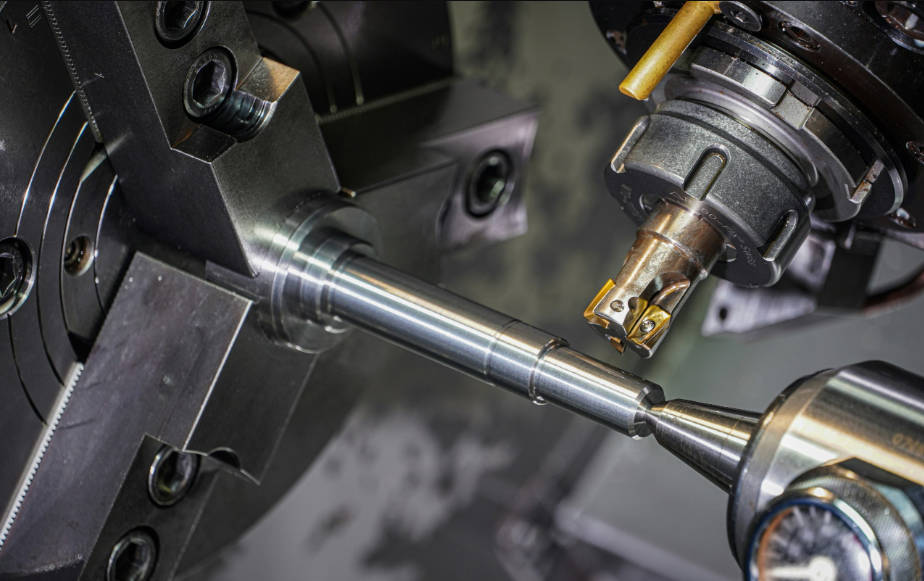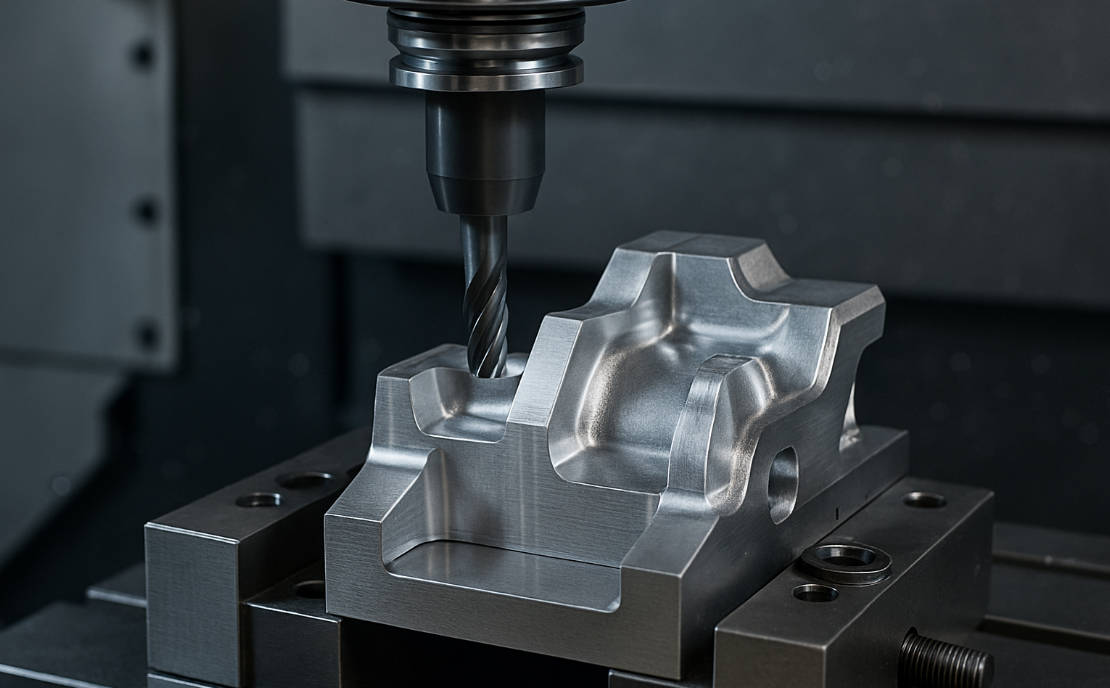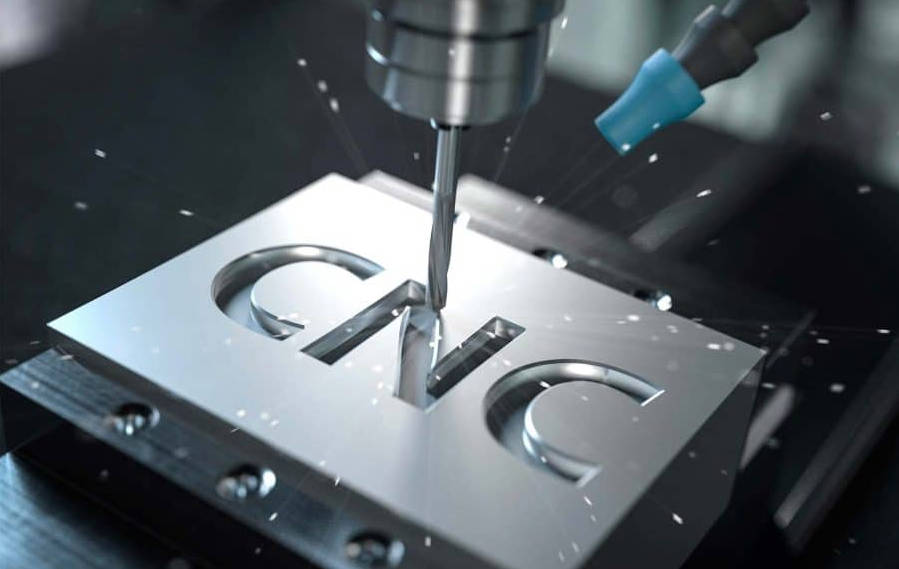
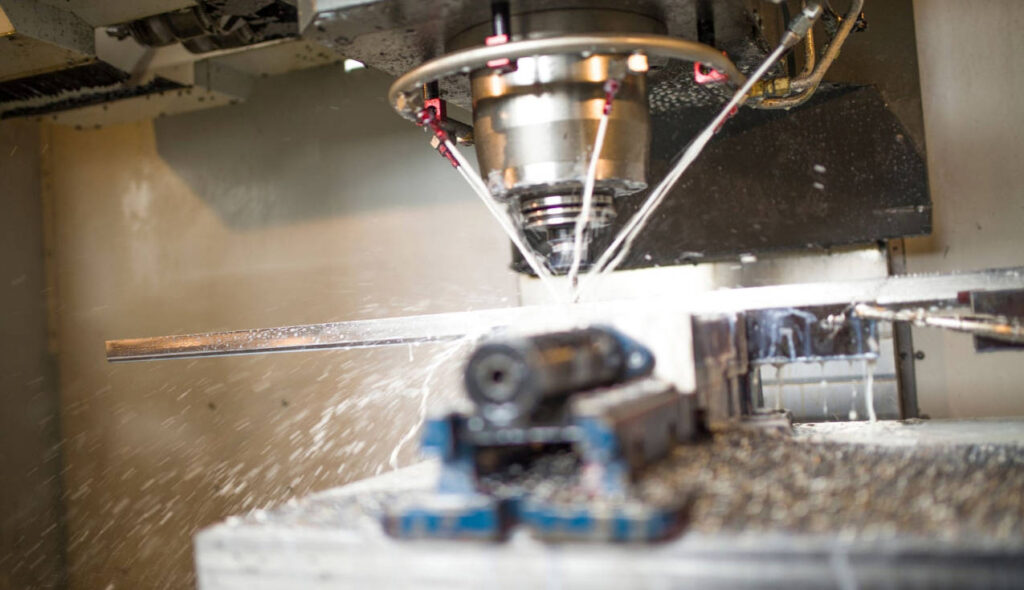
Aluminum CNC milling services utilize computer-controlled machines to precisely cut and shape aluminum blocks into custom parts and components. This process is favored across numerous industries for its ability to produce parts that are lightweight, strong, corrosion-resistant, and highly machinable, making it an ideal solution for everything from rapid prototyping to large-scale production runs. By leveraging the unique properties of various aluminum alloys, CNC milling delivers high-precision components for aerospace, automotive, medical, and consumer electronics applications with exceptional speed and cost-effectiveness.

Table of Contents
- What is Aluminum CNC Milling?
- Unpacking the Properties: Why Choose Aluminum for Your CNC Parts?
- Which Aluminum Alloy is Right for Your Project? A Detailed Comparison
- Key Applications: Where are CNC Milled Aluminum Parts Used?
- Understanding the Cost of Aluminum CNC Milling Services
- Enhancing Your Parts: Common Surface Finishes for Milled Aluminum
- How to Choose the Right Aluminum CNC Milling Service Provider?
- Conclusion: Partnering for Success in Aluminum Machining
- Frequently Asked Questions (FAQ)
What is Aluminum CNC Milling?
Understanding aluminum CNC milling begins with breaking down the two core concepts: the process (CNC milling) and the material (aluminum). This combination represents one of the most versatile and widely used manufacturing methods in modern engineering.
The Fundamentals of CNC Milling
CNC (Computer Numerical Control) milling is a subtractive manufacturing process. It starts with a solid block of material, known as a workpiece or blank, which is secured to a machine bed. A computer program, typically generated from a CAD (Computer-Aided Design) model, directs a high-speed rotating cutting tool to remove material from the workpiece. The machine can move the tool and the workpiece along multiple axes (typically 3, 4, or 5 axes) to create complex geometries, slots, holes, and contours with incredible precision. This automated process ensures repeatability and accuracy that is impossible to achieve with manual methods.
Why is Aluminum an Ideal Material for Machining?
Aluminum is a preferred material for CNC milling due to its outstanding machinability. It allows for high cutting speeds and feeds, which significantly reduces machining time and, consequently, cost. The material produces predictable and manageable chips that are easily cleared from the cutting area, preventing tool wear and ensuring a smooth surface finish. Its softness relative to steels means less force is required to cut it, leading to longer tool life and lower energy consumption. This unique blend of properties makes CNC milling aluminum both efficient and economical.
Unpacking the Properties: Why Choose Aluminum for Your CNC Parts?
The widespread adoption of aluminum in CNC machining is no accident. It offers a powerful combination of physical and mechanical properties that make it suitable for an extensive range of applications, from simple brackets to mission-critical aerospace components.
Exceptional Strength-to-Weight Ratio
One of aluminum’s most celebrated attributes is its high strength-to-weight ratio. It has a density of approximately 2.7 g/cm³, about one-third that of steel. This makes it an invaluable material in industries like aerospace and automotive, where reducing weight is critical for improving fuel efficiency and performance. Certain alloys, like 7075, can achieve tensile strengths comparable to that of mild steel, providing robust structural integrity without the associated mass.
Superior Machinability and Speed
As mentioned, aluminum is exceptionally easy to machine. This high machinability allows for a faster material removal rate compared to harder metals like stainless steel or titanium. The result is shorter cycle times, which directly translates into lower production costs and faster lead times for finished parts. This makes aluminum an excellent choice for both rapid prototyping and high-volume production.
Natural Corrosion Resistance
Aluminum naturally forms a thin, dense, and passive oxide layer (aluminum oxide) upon exposure to air. This layer is highly resistant to corrosion and protects the underlying metal from further oxidation. This inherent property makes aluminum parts durable in many environments without needing additional protective coatings. For enhanced protection, especially in harsh or marine environments, the corrosion resistance can be further improved through processes like anodizing.
High Thermal and Electrical Conductivity
Aluminum is an excellent conductor of both heat and electricity. Its thermal conductivity is about half that of copper, making it a popular choice for components designed to dissipate heat, such as heat sinks, engine parts, and LED lighting fixtures. Its high electrical conductivity also makes it suitable for electrical enclosures, busbars, and other electronic components where efficient current flow is necessary.
Recyclability and Sustainability
Aluminum is 100% recyclable without any loss of its natural properties. The process of recycling aluminum requires only about 5% of the energy needed to produce primary aluminum from bauxite ore. This makes it an environmentally friendly and sustainable material choice, helping companies reduce their carbon footprint and meet sustainability goals.
Which Aluminum Alloy is Right for Your Project? A Detailed Comparison
Not all aluminum is created equal. The term “aluminum” typically refers to an aluminum alloy, which is a mixture of aluminum and other elements like copper, magnesium, silicon, and zinc. These alloying elements are added to enhance specific properties. Choosing the correct alloy is a critical step in the design process.
Aluminum 6061: The All-Rounder
Aluminum 6061-T6 is the most widely used aluminum grade for CNC milling. It offers an excellent combination of strength, machinability, weldability, and corrosion resistance. It is often considered the workhorse of aluminum alloys due to its versatility and good mechanical properties. It’s an ideal choice for a wide variety of applications, including structural components, electronic enclosures, prototypes, and consumer products.
Aluminum 7075: The High-Strength Champion
Known for its exceptional strength, Aluminum 7075-T6 is one of the strongest aluminum alloys available. Its strength is comparable to many types of steel, but at a fraction of the weight. This makes it the go-to material for high-stress applications, particularly in the aerospace, defense, and high-performance sporting goods industries. However, its high strength comes at the cost of lower corrosion resistance and weldability compared to 6061, and it is also more expensive.
Aluminum 5052: The Sheet Metal Specialist
While often used in sheet metal fabrication, Aluminum 5052 is also an excellent choice for milled parts that require superior corrosion resistance, especially in saltwater environments. It offers good workability and weldability but has a lower strength compared to the 6xxx and 7xxx series. It is commonly used for marine components, chemical tanks, and chassis.
Other Notable Alloys (2024, MIC-6)
Aluminum 2024 is a high-strength alloy used in aerospace applications due to its good fatigue resistance, but it has poor corrosion resistance and typically requires a protective coating. MIC-6 is a cast aluminum plate known for its exceptional dimensional stability and flatness, making it perfect for tooling, jigs, and fixtures where precision is paramount.
| Alloy | Key Properties | Common Applications | Cost |
|---|---|---|---|
| Aluminum 6061 | Good strength, highly versatile, excellent machinability, weldable, good corrosion resistance. | Structural parts, prototypes, electronic enclosures, bicycle frames. | $$ |
| Aluminum 7075 | Very high strength-to-weight ratio, good machinability, poor weldability. | Aerospace components, high-performance molds, military equipment. | $$$$ |
| Aluminum 5052 | Excellent corrosion resistance (especially saltwater), good formability. | Marine parts, pressure vessels, chassis, enclosures. | $$$ |
| Aluminum 2024 | High strength, excellent fatigue resistance, poor corrosion resistance. | Aircraft structures, wings, fuselage components. | $$$$ |
Key Applications: Where are CNC Milled Aluminum Parts Used?
The versatility of aluminum makes it a cornerstone material in nearly every major industry. CNC machining unlocks its potential to create precise and functional parts for a multitude of uses.
Aerospace and Defense
In aerospace, every gram matters. The high strength-to-weight ratio of aluminum alloys like 7075 and 2024 makes them indispensable for manufacturing aircraft components such as fuselage frames, wing skins, and structural fittings. The precision of CNC milling ensures these parts meet the stringent safety and performance standards required by the industry.
Automotive Industry
From high-performance racing to everyday passenger vehicles, aluminum is used to reduce weight and improve fuel efficiency. CNC milled aluminum parts are found in engine blocks, transmission housings, suspension components, and chassis frames. It is also widely used for creating custom and prototype parts during the vehicle development process.
Consumer Electronics
The sleek, premium feel of many modern laptops, smartphones, and audio devices is achieved through CNC milled aluminum enclosures. Brands like Apple have popularized the use of machined aluminum for its durability, light weight, and excellent heat dissipation, which is crucial for cooling high-performance processors.
Medical Devices
Aluminum’s non-toxic nature, ease of sterilization, and strength make it suitable for various medical applications. It is used to manufacture surgical instruments, diagnostic equipment housings, orthopedic implants, and custom fixtures for medical machinery, where precision and reliability are non-negotiable.
Robotics and Automation
In robotics, components must be both lightweight to allow for rapid movement and strong enough to withstand operational stresses. CNC milled aluminum is a perfect fit for creating robotic arms, end-effectors, structural frames, and custom mounting brackets for sensors and motors.
Understanding the Cost of Aluminum CNC Milling Services
While aluminum is generally a cost-effective material to machine, several key factors influence the final price of a milled part. Understanding these variables can help you optimize your design for affordability without compromising quality.
Factor 1: Material Cost and Alloy Selection
The base cost of the aluminum alloy itself is a primary driver. Common grades like 6061 are relatively inexpensive due to high demand and production volume. In contrast, high-performance alloys like 7075 or specialized materials like MIC-6 are more expensive due to their complex alloying elements and manufacturing processes. The larger the part, the more material is required, increasing the cost.
Factor 2: Part Complexity and Design (DFM)
The more complex the geometry of a part, the longer it will take to machine. Features like deep pockets, thin walls, complex curves, and numerous small details all increase machine time. Adhering to Design for Manufacturability (DFM) principles—such as using standard fillet radii, avoiding unnecessarily deep pockets, and designing features that are accessible by standard tools—can significantly reduce machining time and cost.
Factor 3: Production Volume and Setup Time
CNC milling involves an initial setup cost, which includes programming the machine, preparing the tooling, and creating any necessary fixtures. This setup cost is amortized across the entire production run. For a single prototype, the setup cost constitutes a large portion of the total price. For large production volumes (hundreds or thousands of parts), the per-unit cost drops dramatically as the setup cost is spread across more units.
Factor 4: Required Tolerances
Tolerances define the acceptable deviation for a specific dimension. The tighter the tolerance, the more care, time, and potentially specialized equipment is required to achieve it. Standard tolerances are relatively easy and cheap to achieve, while very tight tolerances (e.g., ±0.001 inches or ±0.025 mm) require slower machining speeds, more frequent inspections, and can increase the part rejection rate, all of which drive up the cost. Always specify the tightest tolerances only where they are functionally necessary.
Factor 5: Finishing and Post-Processing
The “as-milled” finish is the most basic and cost-effective option. Any additional post-processing steps, such as deburring, bead blasting, anodizing, or powder coating, will add to the final cost. These steps require additional labor, materials, and equipment, but are often necessary to achieve the desired aesthetic, corrosion resistance, or surface hardness.
Enhancing Your Parts: Common Surface Finishes for Milled Aluminum
A surface finish is often applied to a machined aluminum part to improve its appearance, wear resistance, corrosion resistance, or to prepare it for painting.
As-Milled Finish
This is the natural finish of the part right after the milling process is complete. It will have visible but subtle tool marks. It’s the fastest and most economical finish, suitable for prototypes or parts where aesthetics are not a primary concern.
Anodizing (Type II and Type III Hardcoat)
Anodizing is an electrochemical process that grows a durable, corrosion-resistant oxide layer on the surface of the aluminum. Type II anodizing offers good corrosion resistance and allows the part to be dyed in various colors. Type III anodizing, or “hardcoat,” creates a much thicker, harder, and more wear-resistant layer, making it ideal for functional surfaces subject to abrasion.
Bead Blasting
This process involves propelling fine glass beads at the surface of the part to create a uniform, matte, or satin texture. It is excellent for removing tool marks and giving the part a clean, non-reflective finish. It is often done as a pre-treatment before anodizing.
Powder Coating
Powder coating involves applying a dry powder electrostatically and then curing it under heat. It creates a thick, durable, and protective layer that is more robust than conventional paint. It is available in a wide range of colors and finishes and offers excellent corrosion and chemical resistance.
Chromate Conversion Coating (Alodine)
This chemical treatment creates a thin protective film that enhances corrosion resistance and provides an excellent primer for paint. It also preserves electrical conductivity, which is a key advantage over anodizing for certain electronic applications.
How to Choose the Right Aluminum CNC Milling Service Provider?
Selecting the right manufacturing partner is just as important as the design itself. A good provider will act as an extension of your team, ensuring quality and reliability.
Technical Capabilities and Equipment
Ensure the provider has the right equipment for your project. Do they have 3-axis, 4-axis, or 5-axis milling machines? 5-axis capabilities are essential for producing highly complex parts in a single setup, which improves accuracy and reduces cost. Inquire about their machine capabilities, work envelope size, and the types of tooling they use.
Quality Control and Certifications (e.g., ISO 9001)
A reputable service provider will have a robust quality management system. Look for certifications like ISO 9001, which demonstrates a commitment to quality and continuous improvement. Ask about their inspection processes, the equipment they use for quality control (like CMMs – Coordinate Measuring Machines), and if they can provide inspection reports with your parts.
Communication and Project Management
Clear and prompt communication is crucial. Your chosen partner should be responsive, easy to work with, and provide regular updates on the status of your project. The ability to provide DFM feedback on your designs is a significant plus, as it shows expertise and a commitment to optimizing your project for success.
Lead Times and Quoting Process
Consider their quoted lead times and whether they can meet your project deadlines. An efficient quoting process is also a good indicator of a well-run operation. Modern providers often offer instant online quoting platforms where you can upload your CAD file and receive a price in minutes, streamlining the entire procurement process.
Conclusion: Partnering for Success in Aluminum Machining
Aluminum CNC milling services offer a powerful combination of speed, precision, and cost-effectiveness for creating high-quality metal parts. By understanding the unique properties of different aluminum alloys, designing for manufacturability, and selecting the appropriate surface finishes, you can unlock the full potential of this versatile manufacturing process. Choosing a skilled and reliable service provider is the final, critical step to transforming your digital designs into functional, high-performance physical components that meet and exceed your expectations.
Frequently Asked Questions (FAQ)
What is the most common aluminum for CNC milling?
The most common aluminum alloy for CNC milling is 6061-T6. Its excellent balance of strength, machinability, corrosion resistance, and affordability makes it the default choice for a vast range of general-purpose applications.
Is it expensive to CNC mill aluminum?
Compared to other metals like stainless steel or titanium, aluminum is relatively inexpensive to CNC mill. Its high machinability allows for faster cutting speeds, which reduces machine time and labor costs. The overall cost depends on factors like part complexity, volume, and the specific alloy chosen.
How precise can aluminum CNC milling be?
Modern CNC milling machines can achieve very tight tolerances on aluminum parts. A standard tolerance is typically around ±0.005 inches (±0.127 mm). However, with specialized equipment and processes, it is possible to achieve tolerances as tight as ±0.0005 inches (±0.013 mm) or even better for critical features.
Can you CNC mill cast aluminum?
Yes, cast aluminum parts can be CNC milled. This is a common practice for adding precise features like threaded holes, flat mating surfaces, or bores to a near-net-shape cast part. The process is often called “secondary machining” and combines the cost-effectiveness of casting for the overall shape with the precision of CNC for critical features.
Main Keywords: Aluminum CNC milling services, CNC milling aluminum, Aluminum machining Long-Tail Keywords: What are the properties of milled aluminum?, Cost of aluminum CNC milling, Common aluminum alloys for CNC machining, CNC aluminum parts applications, How to choose the right aluminum grade for milling, Aluminum 6061 vs 7075 CNC, Surface finishes for machined aluminum, CNC milling aluminum cost factors Synonyms & Related Terms: Aluminum fabrication, CNC machining, Aluminum prototyping, Aluminum alloys, Aluminum grades, Part complexity, Production volume, Surface finishing, Anodizing, Bead blasting, Powder coating, ISO 9001, Design for Manufacturability (DFM)