Deciding between CNC milling and injection molding hinges on one primary factor: production volume. For low-volume production, rapid prototyping, and projects requiring up to a few thousand units, CNC milling is almost always more cost-effective due to its lack of expensive upfront tooling. Conversely, for high-volume mass production (typically 10,000+ units), injection molding offers a significantly lower per-part cost that easily offsets its high initial mold investment, making it the more economical choice. The decision is a classic trade-off between initial setup costs and long-term, per-unit expenses.
This article provides a comprehensive cost analysis of CNC milling versus injection molding. We will dissect the cost structures of each process, explore the critical break-even point, and examine other key factors like lead time, material choice, and design complexity to help you determine which manufacturing method is the most cost-effective for your specific project.

Table of Contents
- Understanding the Core Processes: Subtractive vs. Formative
- The Critical Cost Breakdown: A Head-to-Head Comparison
- Beyond Cost: Key Factors Influencing Your Decision
- Quick-Reference Comparison Table: CNC Milling vs. Injection Molding
- When Should You Choose CNC Milling?
- When is Injection Molding the Right Choice?
- The Hybrid Approach: Using CNC to Create Molds
- Conclusion: Making the Smart, Cost-Effective Choice for Your Project
Understanding the Core Processes: Subtractive vs. Formative
Before diving into the cost analysis, it’s essential to understand the fundamental difference between how CNC milling and injection molding create parts. Their opposing methodologies are the root cause of their distinct cost structures, lead times, and design capabilities. One carves away material, while the other fills a void.
What is CNC Milling? The Subtractive Approach
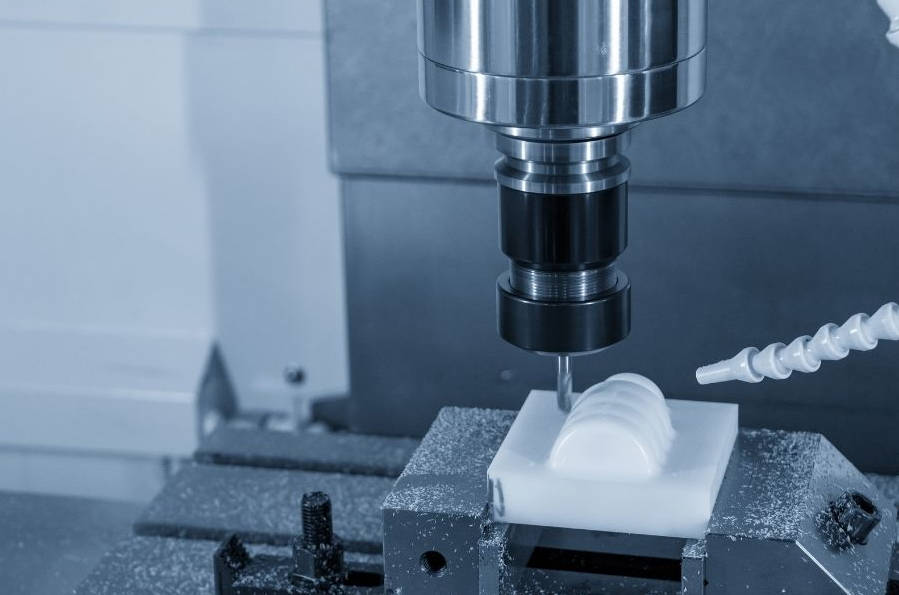
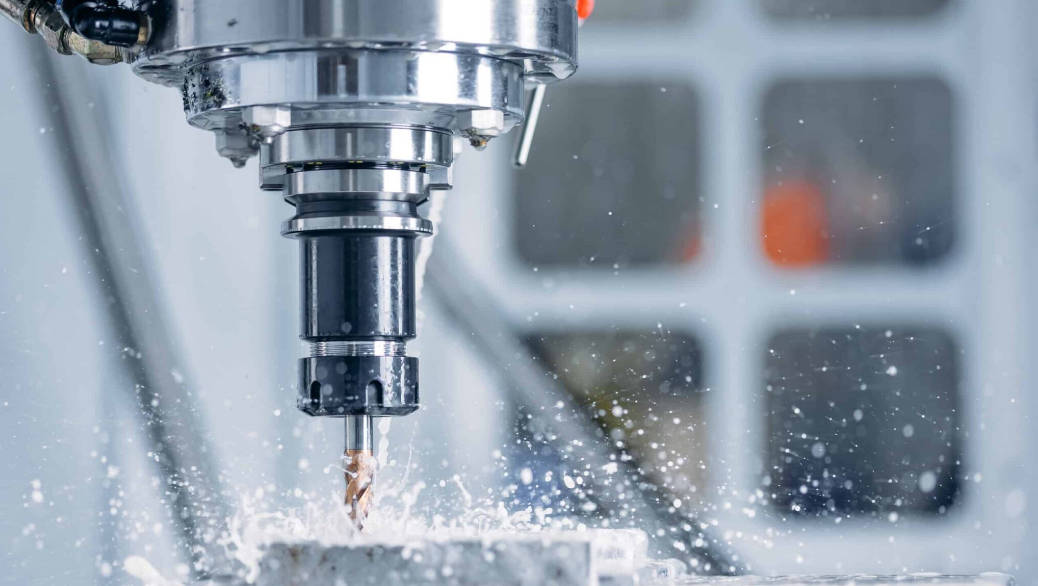
CNC (Computer Numerical Control) milling is a subtractive manufacturing process. It starts with a solid block of material, known as a billet or workpiece, and uses computer-controlled cutting tools (like end mills and drills) to progressively remove material and carve out the final part. A 3D CAD model is translated into G-code, which directs the machine’s multi-axis movement with incredible precision.
Think of it as digital sculpting. The primary advantage here is the lack of specialized tooling. The machine itself is the capital equipment, but for each new part design, you only need the material block and standard cutting tools. This makes it incredibly flexible and fast for one-off parts, prototypes, and low-volume production runs.
What is Injection Molding? The Formative Approach
Injection molding is a formative manufacturing process. It works by injecting molten material (most commonly thermoplastic polymers) under high pressure into a custom-made mold or die. The material fills the cavity within the mold, cools, solidifies, and is then ejected as the finished part. This cycle can be repeated very rapidly, sometimes in just a few seconds.
The key element here is the mold itself. These molds are typically machined from hardened steel or aluminum and are incredibly complex, two-part (or more) tools that must be engineered to perfection. The creation of this mold is a significant upfront investment in both time and money. However, once the mold is made, it can produce hundreds of thousands or even millions of identical parts at an extremely low cost per unit.
The Critical Cost Breakdown: A Head-to-Head Comparison
The question “which is more cost-effective?” can only be answered by examining three interconnected financial components: tooling cost, per-part cost, and the volume at which these two factors intersect.
Tooling and Setup Costs: The Biggest Differentiator
This is the most significant financial difference between the two processes. For CNC milling, the tooling and setup costs are minimal. Setup involves securing the workpiece in the machine and loading the correct program and cutting tools. There is no need to create a custom tool for each new part design. This is why CNC milling is the undisputed champion for prototyping and one-off custom parts. The cost to get the first part is relatively low.
For injection molding, the opposite is true. The primary cost is the creation of the mold. A simple, single-cavity mold made from aluminum might cost a few thousand dollars ($3,000 – $5,000). However, a complex, multi-cavity, hardened steel mold designed for high-volume production can easily cost anywhere from $10,000 to $100,000+. This massive upfront investment, known as Non-Recurring Engineering (NRE) cost, must be made before a single production part can be created.
Per-Part Cost: The Economics of Scale
Once the initial setup is complete, the cost dynamic flips entirely. With CNC milling, the per-part cost remains relatively high and mostly constant, regardless of volume. Each part requires a certain amount of machine time, material, and potential operator oversight. While there are some efficiencies in producing multiples, the cost for the 1,000th part is not dramatically lower than the cost for the 10th part. Costs are driven by material consumption and machine runtime.
With injection molding, the per-part cost is exceptionally low once the mold is paid for. The process is highly automated and extremely fast. Material is bought in bulk (pellets), and cycle times are measured in seconds. This means the cost of the 100,000th part is a tiny fraction of the first. The high initial tooling cost is amortized over the entire production run, and for large volumes, the per-part cost can be mere cents.
Production Volume and the Break-Even Point
The “break-even point” is the production quantity where the total cost of manufacturing via injection molding becomes equal to the total cost of manufacturing via CNC milling. Below this point, CNC is cheaper. Above this point, injection molding becomes the more cost-effective option.
Let’s illustrate with a hypothetical example:
- CNC Milling: $0 setup cost (for simplicity) and a $30 per-part cost.
- Injection Molding: $15,000 mold cost and a $1.50 per-part cost.
At 100 parts, the cost would be:
- CNC: 100 parts * $30/part = $3,000
- IM: $15,000 (mold) + (100 parts * $1.50/part) = $15,150
At 10,000 parts, the cost would be:
- CNC: 10,000 parts * $30/part = $300,000
- IM: $15,000 (mold) + (10,000 parts * $1.50/part) = $30,000
In this scenario, the break-even point is around 526 parts. For any quantity greater than that, injection molding provides a massive cost advantage. This calculation is the core of the financial decision-making process.
Beyond Cost: Key Factors Influencing Your Decision
While cost is often the primary driver, other technical and logistical factors can make one process more suitable than the other, sometimes irrespective of the break-even calculation.
How Does Production Speed and Lead Time Compare?
For initial parts, CNC milling is significantly faster. A part can often be machined from a CAD file in a matter of hours or days. This makes it ideal for rapid prototyping where design changes are frequent.
Injection molding has a long initial lead time, primarily due to the time it takes to design, manufacture, and test the mold. This can take anywhere from 4 to 12 weeks or more. However, once the mold is ready, the production speed per part is incredibly fast, allowing thousands of parts to be produced daily.
Material Selection and Versatility
Both processes offer a wide range of materials, but their strengths differ. CNC milling excels with a vast array of metals (aluminum, steel, titanium, brass) and hard plastics (ABS, Polycarbonate, PEEK). It is the go-to process for creating robust metal components.
Injection molding is primarily for thermoplastic polymers. The selection is immense, covering everything from commodity plastics like Polypropylene (PP) and Polyethylene (PE) to engineering-grade plastics like Nylon and glass-filled variants. While metal injection molding (MIM) exists, it’s a more specialized and costly process.
Design Complexity and Geometric Freedom
CNC milling offers great geometric freedom for features like deep pockets, intricate surfaces, and sharp internal corners that are difficult or impossible to mold. Since it’s a subtractive process, it isn’t constrained by the need to eject a part from a mold. However, features like undercuts can increase machining time and cost.
Injection molding design has more constraints. Designs must incorporate draft angles (a slight taper) to allow the part to be easily ejected from the mold. Uniform wall thickness is crucial to prevent warping and sink marks. Complex features like undercuts or threads require more complex and expensive mold mechanisms, such as side-actions or lifters.
Part Consistency and Surface Finish
Injection molding is the king of consistency. Once the mold is perfected, every part produced is virtually identical to the last, ensuring high repeatability over massive volumes. The surface finish is a direct replica of the mold’s internal finish, which can be polished to a very high, smooth standard (SPI-A1) or textured as needed.
CNC milled parts also have high precision and repeatability, but minor variations can occur between setups or due to tool wear over a long run. The default surface finish will show faint tool marks, though these can be removed through post-processing steps like bead blasting, anodizing, or polishing, which add to the overall cost and time.
Quick-Reference Comparison Table: CNC Milling vs. Injection Molding
| Factor | CNC Milling | Injection Molding |
|---|---|---|
| Best for Volume | Low to Mid (1 – 5,000+ parts) | High to Mass (10,000 – 1,000,000+ parts) |
| Tooling Cost | Very Low to None | Very High ($3k – $100k+) |
| Per-Part Cost | High and relatively constant | Extremely Low (at high volume) |
| Initial Lead Time | Fast (Hours to Days) | Slow (4 – 12+ Weeks) |
| Production Speed | Slow to Moderate (per part) | Very Fast (seconds per part) |
| Materials | Metals, Hard Plastics, Wood | Wide range of Thermoplastics |
| Design Changes | Easy and inexpensive to implement | Difficult and very expensive (requires mold modification) |
When Should You Choose CNC Milling?
Based on the factors above, CNC milling is the clear cost-effective winner in the following scenarios:
- Prototyping and Iterative Design: When you need to test form, fit, and function and expect to make multiple design changes, CNC’s speed and low setup cost are ideal.
- Low-Volume Production Runs: For projects requiring a few hundred to a few thousand parts, the total cost of CNC will almost certainly be lower than the cost of creating an injection mold.
- Parts Requiring High-Strength Metals: If your part must be made from aluminum, steel, titanium, or other metals, CNC milling is the standard and most direct manufacturing method.
- Complex Geometries without Draft Angles: For parts with deep pockets, sharp internal corners, or other features that are not mold-friendly, CNC provides greater design freedom.
When is Injection Molding the Right Choice?
Injection molding becomes the unbeatable, cost-effective choice when your project meets these criteria:
- Mass Production and High-Volume Runs: If you plan to produce 10,000 or more identical parts, the low per-part cost of injection molding will deliver the lowest total project cost.
- When the Lowest Per-Part Cost is Essential: For consumer products and other applications where price point is critical, injection molding’s economies of scale are necessary.
- For Stable, Finalized Designs: Once your design is thoroughly tested and finalized, investing in a mold for mass production is a financially sound decision. Making changes later is extremely costly.
- Projects Requiring Specific Thermoplastics: If your application requires a specific commodity or engineering-grade thermoplastic with certain properties (e.g., flexibility, color, UV resistance), injection molding offers the widest selection.
The Hybrid Approach: Using CNC to Create Molds
It’s important to recognize that these two processes are not always adversaries; they are often partners. The high-precision steel and aluminum molds used for injection molding are themselves created using CNC milling. A manufacturing partner will use a 5-axis CNC machine to carefully carve the intricate cavities and features into the mold blocks.
Furthermore, for “bridge” production or lower volume injection molding (around 5,000-10,000 parts), manufacturers can CNC machine a mold from a softer aluminum rather than hardened steel. These aluminum molds are cheaper and faster to produce but have a shorter lifespan. This hybrid approach leverages the speed of CNC to create a tool for the efficiency of molding, providing a middle-ground solution.
Conclusion: Making the Smart, Cost-Effective Choice for Your Project
Ultimately, the choice between CNC milling and injection molding is not about which process is inherently “better,” but which is strategically and financially aligned with your project’s specific goals. The decision boils down to a clear, data-driven analysis of your expected production volume.
Choose CNC milling for its low entry cost and flexibility when dealing with prototypes, low-volume runs, and metal parts. It provides speed for initial parts and freedom from costly tooling investments. Choose injection molding for its unparalleled efficiency and low per-part cost when you are ready for mass production with a finalized design. The significant upfront investment in a mold is quickly repaid by the incredible economies of scale. By calculating your break-even point and considering factors like material and lead time, you can confidently select the most cost-effective path to bring your product to life.
CNC milling cost, injection molding cost, CNC vs injection molding, cost-effective manufacturing, manufacturing cost comparison, break-even point injection molding, prototype manufacturing cost, low-volume manufacturing, high-volume production, tooling cost