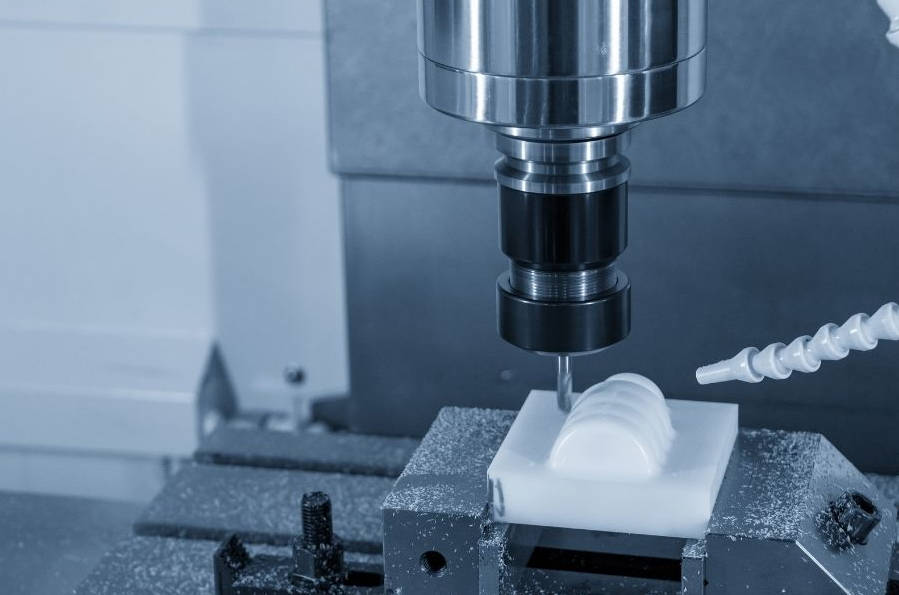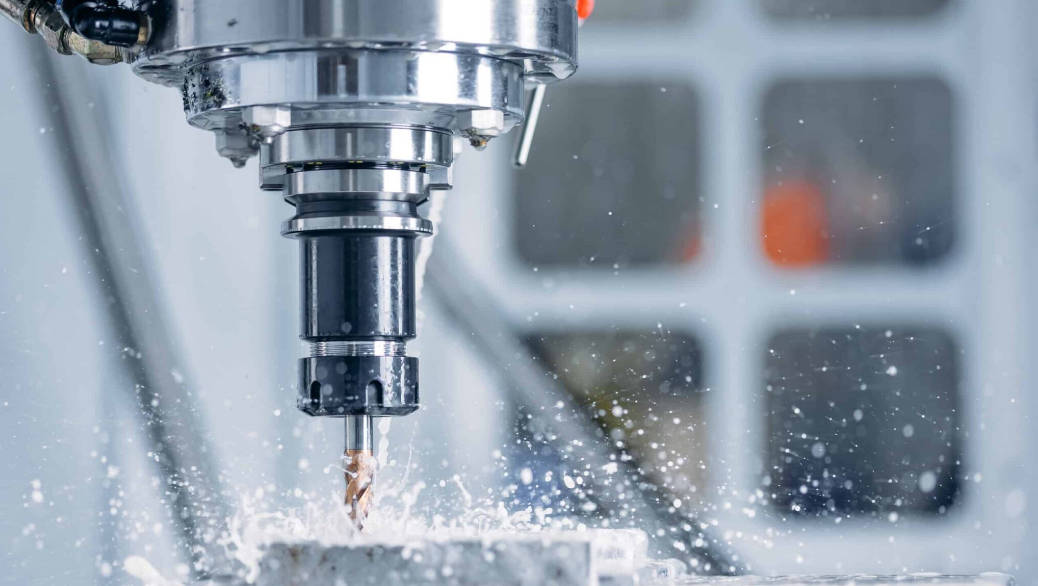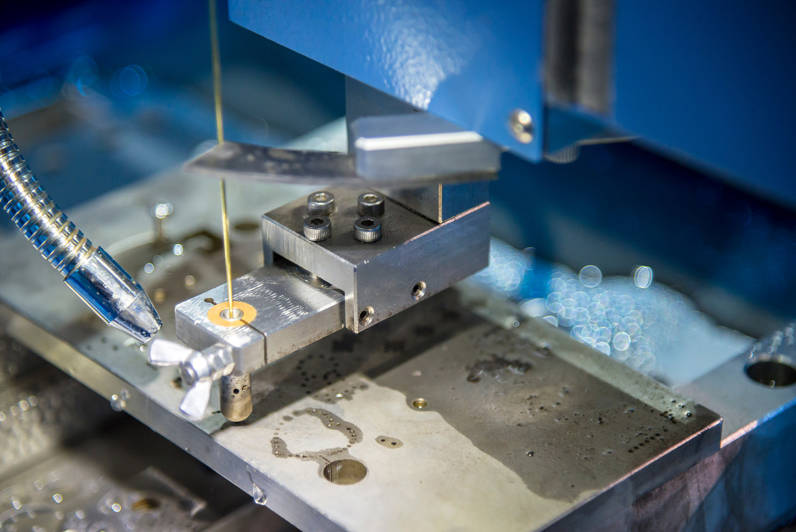
The cost of CNC milling can range from as little as $30 for a simple, single prototype to several thousand dollars for a complex, multi-axis part made from an exotic material. This wide range exists because the final price isn’t a flat fee but a calculation based on numerous interconnected factors. Understanding these variables is the key to managing your budget and optimizing your designs for manufacturing. The most significant cost drivers are material choice, part complexity and size, production volume, and the precision of required tolerances.
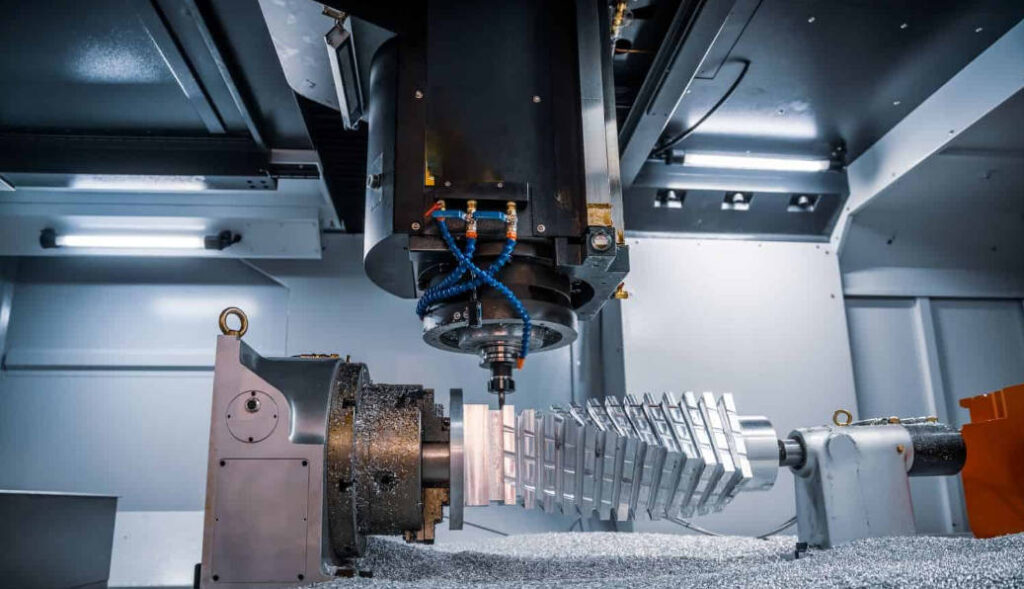
Table of Contents
- A Quick Answer: The Average Cost of CNC Milling
- Understanding the Core CNC Milling Cost Drivers
- Primary Factor 1: Material Selection and Cost
- Primary Factor 2: Part Complexity and Geometry
- Primary Factor 3: Production Volume and Quantity
- Secondary Factors That Influence Your Final Quote
- Factor 4: Tolerances and Precision Requirements
- Factor 5: Surface Finish and Post-Processing
- Operational Factors: The Machine Shop’s Costs
- Factor 6: Machine Time and Labor Rates
- Factor 7: Setup and Programming (NRE Costs)
- How to Reduce Your CNC Milling Costs: Actionable Tips
- CNC Milling Pricing: Frequently Asked Questions (FAQ)
- Conclusion: Getting an Accurate CNC Milling Quote
A Quick Answer: The Average Cost of CNC Milling
While a single definitive price is impossible, we can look at some general figures. A small, simple aluminum part with loose tolerances might cost between $30 – $70 for a one-off prototype. The same part in a quantity of 100 could see the per-unit price drop significantly to $10 – $20. Conversely, a highly complex, 5-axis aerospace component made from Titanium with extremely tight tolerances could easily cost $1,500 – $5,000+ for a single unit. The most influential variable is machine time—the longer a part takes to mill, the more it will cost.
Understanding the Core CNC Milling Cost Drivers
When you submit a CAD model for a quote, a machine shop’s software and engineers analyze it against several key metrics. These metrics can be grouped into primary, secondary, and operational factors. The primary factors have the most substantial impact on the price, while secondary and operational factors add to the total cost in more nuanced ways. A clear understanding of how these elements interact will empower you to design parts that are not only functional but also cost-effective to produce.
Primary Factor 1: Material Selection and Cost
The raw material you choose is a foundational element of your final cost. This isn’t just about the price-per-kilogram of the stock material but also its machinability. Materials that are harder, more abrasive, or have poor chip-breaking characteristics require slower cutting speeds, specialized tooling, and more machine time, all of which drive up the cost.
For example, Aluminum 6061 is popular because it’s lightweight, relatively inexpensive, and machines very easily, leading to lower costs. In contrast, materials like Stainless Steel 316 or exotic alloys like Inconel are much harder and tougher. They cause rapid tool wear and require significantly slower machining parameters, making the cost to mill them much higher, even for an identical part geometry.
Material Cost and Machinability Comparison
| Material | Relative Cost Index | Machinability | Key Characteristics & Common Uses |
|---|---|---|---|
| ABS Plastic | $ | Very Easy | Low-cost prototyping, enclosures, consumer products. |
| Aluminum 6061 | $$ | Easy | Excellent strength-to-weight ratio, general-purpose parts, brackets, housings. |
| Brass C360 | $$$ | Very Easy | Low friction, excellent for fittings, gears, and decorative parts. |
| Steel 1018 | $$ | Medium | Good strength and weldability, used for machine components, shafts. |
| Stainless Steel 304 | $$$ | Medium-Hard | Excellent corrosion resistance, used in medical and food-grade applications. |
| Titanium (Ti-6Al-4V) | $$$$$ | Hard | Highest strength-to-weight ratio, biocompatible, aerospace, and medical implants. |
| PEEK | $$$$$ | Medium-Hard | High-performance thermoplastic, chemical resistance, high-temperature applications. |
Primary Factor 2: Part Complexity and Geometry
The more complex your part’s geometry, the more it will cost to produce. Complexity directly translates to longer programming times, more sophisticated machine setups, and increased machining time. A simple rectangular block with a few holes is far cheaper than a part with organic curves, deep pockets, and features on multiple faces.
3-Axis vs. 5-Axis Milling
The type of CNC machine required has a massive impact on cost.
- 3-Axis Milling: The cutting tool moves in X, Y, and Z directions. It’s ideal for parts with features on a single plane. This is the most common and cost-effective type of milling.
- 5-Axis Milling (or 3+2 Milling): The machine can move the tool and/or the workpiece on five different axes simultaneously. This allows for the creation of incredibly complex geometries without needing to manually re-fixture the part. However, 5-axis machines have a much higher hourly rate and require more complex programming, making them significantly more expensive. If a part *can* be made on a 3-axis machine, it will almost always be cheaper.
Part Size and Bounding Box
The overall size of your part, often referred to by its “bounding box” (the smallest box the part can fit into), affects cost in two ways. First, a larger part requires a larger, more expensive piece of raw material stock. Second, it may require a larger CNC machine with more travel, which typically has a higher hourly rate. The sheer volume of material that needs to be removed also increases machine time, adding directly to the cost.
Primary Factor 3: Production Volume and Quantity
Economies of scale play a huge role in CNC milling pricing. The cost per part decreases significantly as the production quantity increases. This is because high one-time costs, known as Non-Recurring Engineering (NRE) costs, are amortized across the entire batch. These NRE costs include initial CAM programming, machine setup, and fixture creation. For a single prototype, 100% of these costs are applied to that one part. For a run of 1,000 parts, that same cost is divided by 1,000, drastically reducing the per-unit price.
Secondary Factors That Influence Your Final Quote
While material, complexity, and quantity are the primary drivers, several other design specifications can significantly alter the final quote. These factors often relate to the level of precision and finishing required after the main cutting operations are complete.
Factor 4: Tolerances and Precision Requirements
Tolerance refers to the acceptable range of deviation for a specific dimension. The tighter the tolerance, the more precise the part must be, and the higher the cost. Standard tolerances (e.g., ±0.005″ or ±0.127mm) are relatively easy and inexpensive to achieve. However, specifying very tight tolerances (e.g., ±0.001″ or ±0.025mm) requires more careful machining, slower cutting speeds, specialized inspection equipment, and potentially multiple finishing passes. This increases both machine time and the risk of scrapped parts, all of which contribute to a higher price. A key cost-saving tip is to only specify tight tolerances on critical features where they are absolutely necessary for function.
Factor 5: Surface Finish and Post-Processing
The standard “as-milled” surface finish is often sufficient for many functional parts. However, if your part requires a specific aesthetic or functional surface quality, additional finishing steps will be necessary, each adding to the cost.
- Bead Blasting: Creates a uniform matte or satin finish. A relatively low-cost option.
- Anodizing (for Aluminum): Adds a hard, corrosion-resistant, and often colored ceramic layer. This is a multi-step chemical process that adds moderate cost.
- Powder Coating: Applies a durable polymer finish, offering excellent protection and a wide range of colors. More expensive than anodizing.
- Polishing: Manual or automated processes to achieve a smooth, mirror-like finish. Can be very labor-intensive and costly.
- Heat Treating: A thermal process used to alter the physical and mechanical properties of a metal, such as increasing its hardness. This requires specialized ovens and adds significant cost.
Operational Factors: The Machine Shop’s Costs
Finally, the internal costs of the manufacturing partner also play a role. These are the costs you don’t directly control but are built into the quote they provide.
Factor 6: Machine Time and Labor Rates
This is the most direct cost factor. Every CNC machine has an hourly operating rate, which covers the cost of the machine itself, electricity, maintenance, tooling, and the skilled machinist operating it. A standard 3-axis mill might have a rate of $75 – $120 per hour, while a sophisticated 5-axis machining center could be $150 – $400+ per hour. Your part’s final cost is heavily influenced by the total time it spends on that machine. Designs with deep pockets, thin walls, or a high volume of material to remove will inherently have longer cycle times and higher costs.
Factor 7: Setup and Programming (NRE Costs)
As mentioned earlier, NRE (Non-Recurring Engineering) costs are the one-time charges required to prepare for a production run. This includes the time a CAM programmer spends creating the toolpaths from your CAD file, the time a machinist spends setting up the machine (loading tools, securing the workpiece in a vise or custom fixture), and performing the first article inspection. For low-volume orders, these setup costs can constitute a large percentage of the total price.
How to Reduce Your CNC Milling Costs: Actionable Tips
Armed with this knowledge, you can make specific design choices to lower your manufacturing costs without sacrificing functionality.
- Simplify Your Design: Remove any non-essential features, curves, and complex surfaces. A simpler design is always faster and cheaper to machine.
- Use Standard Tolerances: Only apply tight tolerances to critical interfaces and features. Use the shop’s standard tolerance for all other dimensions.
- Avoid Thin Walls and Deep Pockets: Thin walls are prone to vibration and require slow, careful machining. Deep pockets (where the depth is more than 6x the tool diameter) require specialized long-reach tools and are slow to machine.
- Increase Internal Corner Radii: CNC tools are round. A sharp internal corner requires a very small tool or a secondary process like EDM, both of which are expensive. Design internal corners with the largest possible radius. A radius of 1/8″ (3mm) or larger is ideal.
- Choose a Cost-Effective Material: Unless your application specifically requires a high-performance alloy, opt for a more machinable material like Aluminum 6061.
- Increase Your Order Quantity: If possible, order parts in larger batches to take advantage of economies of scale and reduce the per-unit setup cost.
CNC Milling Pricing: Frequently Asked Questions (FAQ)
What is the average hourly rate for a CNC machine?
The rate varies widely based on machine capability and location, but a general range is $75-$120/hour for a 3-axis machine and $150-$400/hour for a multi-axis or specialized machine.
Is CNC milling expensive for prototypes?
It can be more expensive than 3D printing for initial form-fit prototypes, but it is the best method for creating functional prototypes from engineering-grade materials. The NRE costs make single-part orders relatively high, but the quality is unmatched.
How can I get a fast and accurate quote?
The best way is to use an online quoting platform. You can upload your 3D CAD file (e.g., STEP, IGES), specify your material, quantity, and finishing requirements, and often receive an instant or near-instant quote that has analyzed your part’s geometry against all the factors discussed here.
Conclusion: Getting an Accurate CNC Milling Quote
Determining the exact cost of CNC milling requires a detailed analysis of your specific design. While there is no simple “cost per inch” formula, the price is not arbitrary. It is a logical calculation based on material, complexity, volume, tolerances, and finishing. By understanding how these key factors drive the final price, you can optimize your designs for manufacturability (DFM), communicate more effectively with your manufacturing partner, and ultimately reduce your production costs. The first step to getting a precise figure is to finalize your CAD model and submit it for a professional quote.
CNC milling cost, CNC machining cost, CNC milling pricing, factors affecting CNC machining cost, how much does CNC milling cost, custom CNC machining cost, cost of CNC machined parts, how to reduce CNC milling cost, CNC milling hourly rate, 3-axis vs 5-axis CNC cost